”Abdelhamid ben Ali-Fetsi tvivlar inte på Allahs godhet:

Jag tvivlar inte på Guds godhet, det är inte det jag gör. Jag har varit igenom det spörsmålet på mitt sätt: Genom en konkret händelse. Både när jag blev knuffad in i ett järnelement på tjugonde Knut och året därefter  på en julfest för några år sedan i början på december.

Hela familjen var inbjuden till julbordet och jag hade sett fram mot alla rätter; den fina dukningen och den festliga stämningen. Men knappt hade jag hunnit börja äta förrän en man i blankpolerade stövlar och uniform hade ryckt undan min tallrik och skrikit åt mig att ”ålaskinn” äter man inte.  Genast släppte jag besticken som jag fortfarande höll i händerna medan ålskinnet växte i munnen. Mamma som uppfattat min belägenhet sträckte fram sin servett till mig så att jag försiktigt och ljudlöst kunde spotta ut i den. Sedan vred jag på huvudet och såg upp i ett rödbrusigt vredgat ansikte, lika förvridet som en grisaknorr som tog sig en spatsertur bland borden och slagit ner på det som väckte hans ilska och obehag. Jag hade aldrig ätit ål förut och nu hade jag skämt ut mig inför mannen med epåletter som skrek så att varenda kotte närvarande kunde höra varenda bokstav. Sorlet i matsalen stannade av och flera personer grep efter servetterna och torkade sig diskret om munnen för att dölja sin skadeglädje innan de fortsatte att lassa in. Någon syrligt, en annan nedlåtande som för att visa att här var det klass.

”Har ni inte lärt er unge bordsskick”? Han dundrade anklagande och slog ner på ännu en familj längre inåt salen som försökt göra sig så små och obemärkta som möjligt. Det bara fick som effekt att han dök på dem först.

Han höjde sitt pekfinger sedan och lät det sikta på mina föräldrar. ”Kommunister förstår jag” Har inte lärt sina barn till något annat än rövare, skrävlare och tomt prat”. Jag hade gladeligen blivit kommunist bara jag var så långt ifrån hans auktoritära epålettglans som möjligt. För han beskyllde pappa och Erling för att inte vilja jobba och sko sig på de rika. Erling, Signes pappa, jobbade hårdast av alla och han var kommunist. Men den här mannen varken tålde eller ville ha någon som motsade eller trotsade honom. Hans saliv stänkte vida omkring. Erland som varit nazistpamp gav honom information om de olika ansiktena vid borden, viskade den rakt i örat på honom medan den uniformerade nickade och såg sig bistert om och tog sig om hakan.

”Jaha, ja. Skollärare. Jag förstår. Minsann motsatte han sig gossarnas värntjänst…fick de inte lära sig hantera ett gevär och vara karl för sin hatt? Vad skulle de då försvara sig med? Glosor”? Hans förakt visste inga gränser.

”Ville inte göra sin fosterlandsplikt?  Vapenvägrare? Vad är det ni säger”? Han kliade sig på hakan och stirrade fundersamt på en punkt framför honom i golvet. Han hötte med fingrarna mot min pappa. I det ögonblicket tog pappa mamma lätt under armen och sträckte sin hand efter mig. Han föste oss mot utgången, han var trött på att schavottera, det var så tydligt att vi inte var välkomna. Epålettmannen hytte med handen mot mamma och pappa som hade rest sig upp. Gjorda till åtlöje inför hela byn. Jag hade aldrig sett en ål förut, ändå skulle jag tvunget smaka en. Jag hade lärt mig att äta upp allting på tallriken och det var pappa som hade valt ut godbitarna. Vi levde fortfarande i ransoneringstider. Det måste ha varit 1941. Andra världskriget drev fram stora frågor som varför Gud tillät ondska; ondska i form av diktaturer och ideologier och fuhrers, (småpåvar). Varför tillät Gud Hitler och hans utrotningsideologi och rasläran? Han tillät det inte, sa min pappa bestämt. Gud vill inte att en enda människa ska dö eller mördas, vill inte krig. Men vi människor har ansvar för våra gärningar och våra ord. Gud har gett oss människor en fri vilja, utrustat oss med den. Eva åt av äpplet på eget bevåg, frestad av ormen som hon var. Det finns andemakter, Satans anhang som frestar och förgör, som vinner människor för sina syften. Människor som inte vill höra talas om Gud utan hellre vandrar ondskans väg. Det är den verkligheten vi lever i.  Så det var Satan som bedrev sitt spel med Mårtensson i kyrkan: Mårtensson hade öppnat upp sig för den onda kraften och lät sig bemäktigas av den. Lät sig eldas av Den Lede när han gav sig på mig. Långt tidigare hade jag nog förstått att han inte var Guds barn för han hade försökt slå sig i slang med mamma. Hans kärlek till Gud var inte äkta vad jag kunde se. Inga ord från hans mun slog blå dunster i mina ögon.

Signes pappa reste sig också under det där gemensamma julbordet. Hans fru Irma (eller Vera?) drog förtvivlat i hans smoking för att han skulle sätta sig, men han stod rakryggad och lyssnade med rynkad panna på allt som kom ur dignitärens mun. Irma fortsatte dra i kavajen, men han fortsatte att stå, solidarisk med mamma och pappa.  Men lyssnade inte på någon förutom den tidigare nazistpampen. Pappa försökte säga något, öppnade och stängde munnen ett par gånger och mamma såg ut som hon önskade att en lucka kunde öppnas under fötterna på henne som hon kunde fara ner i.

”Så här kan ni inte göra,” hörde jag Erling utbrista när vi i samlad trupp fördes ut.

”Tig, eller så åker du också med ut”.

Erling besinnade sig och satte sig ner. Man får välja sina strider sa han till pappa senare. Det är tydligt att det hade förberetts en hel del inför dignitärens besök och man hade satsat på att ändra om i rullorna i byn.

Erling suckade. Pappa satt stilla. Han sa ingenting.

”Jag vet var de håller till,” sa han slutligen,” och jag förstår att de har sett mig iaktta dem. Så jag förstår om de var ute efter min skalp. Men att låta det gå ut över min hustru och dotter, det tycker jag är lite väl magstarkt”.

”Ändå har du kanske kommit lindrigt undan”, sa Erling.

”Det vet man inte”.

”Ja, ja. Det beror ju på vad man jämför med”.

De var bekymrade över judarnas situation, allt det som hade börjat framkomma.

”Du sa att du vet var de håller hus”?

”Vi kan väl gå ta en promenad så kan jag visa dig på ett ungefär,” sa pappa. De försvann ut i den kyliga natten, (dåtid, 1941)

Det har gått några år och jag är inte längre skamsen olycklig längre över ”ålaskinns-incidenten”, det förpassades snabbt till glömskan, men ål äter jag fortfarande inte. Jag fick nog där och då. Pappa förlorade sitt lärarjobb, men fick tjänst hos kyrkoherden i stället. Han hade en permanent hälta som gjort att han inte blev inkallad. 

Paniken gjorde att jag inte kunde prata.

Edla:

Hade alltid trott att akademikerna hade rätt, men det visade sig att inte ens deras moraliska kompass fungerade som de skulle när det kom till judarna.

Älvlika Signe

Brevväxling mellan Erling och Agnes. (Teklas favoritfröken, betonar Abdelhamid).

Vendela hittade ett brev från Agnes bland sin pappas efterlämnade papper och brev.

Vem skulle kunna hjälpa mig? Med ens kände jag mig så utelämnad. Jag var bland främlingar. Det slog ner som en bomb i mitt hjärta och det sista av mina krafter rann ur mig. Jag var som ett tomt skal. Jag tvingade mig att packa ihop mina få saker, några böcker lät jag stå kvar/var jag tvungen att låta stå kvar/lämna efter mig för att få ihop resväskan. I ränseln på ryggen hade jag bara det allra viktigaste och så matsäck. Jag var redan tunn som jag var så jag hade inte råd att gå ner mer i vikt. Jag skyndade ut på vägen, bort och hoppades att hinna med ett tåg om jag fick skjuts till en järnvägsort av någon bonde. Jag ville hem till de mina, hem till en hembygd där jag visste jag var i trygga händer vad jag än hade att berätta. Jag försökte hålla mig upprätt, att inte låta tankarna spinna i väg och sysselsätta sig med det hemska: Skammen, allt det ångestfyllda som steg upp i mig som ur en krater. Jag får inte bli galen, inte gå över gränsen in i galenskapen. Jag föreställer mig gränsen ungefär som sjömännen förr i tiden trodde man kunde segla över kanten. Jag förnam branten inom mig, gränsen, att jag måste hålla huvudet ovanför ytan för bråddjupet lurade och det var svart som i en kolkällare. Bara hemma i min hembygd, hos mina föräldrar är jag trygg, tänkte jag för femtioelfte gången. Där skulle det bli bra. Mamma och pappa skulle ringa rektorn och säga upp mig. /Tack för att du pratade med rektorn att jag ville bli uppsagd från min tjänst. Ingen skulle få veta vad som hänt, om våldtäkten. Den skulle tryckas undan, stoppas under på ett säkert ställe/förvar. Jag var stoiker, ingen fjamsa.

På tåget började en medresenär prata med mig. Efter en trevande inledning började vi småprata. Hon hjälpte mig att behålla förståndet i det att vi höll igång ett samtal och ställde frågor till varandra: vi var nyfikna på varandra. När hon frågade om jag var på väg till Stockholm för att söka tjänst som hembiträde skrattade jag generat. Hon tog det som ett ja och jag orkade eller vågade inte säga emot henne för då kanske det skulle det brista för mig eftersom våldtäkten hade att göra med mitt yrke, det faktum att jag hade en lärarbostad ovanpå skolan och att våldtäktsmannen tagit sig upp via brandtrappan och på så sätt kunnat tränga in i mitt rum. Jag behövde vara stark ända in hem till Åminde och föräldrahemmet. När jag väl klarat mig hem och steg av hemmavid hade ett annat beslut växt fram: Jag hade föresatsen att inte berätta vad som hänt, inte ens för mina föräldrar. De skulle aldrig hålla tyst inför mina syskon utan skulle tycka att de hade rätt att veta vad som hänt mig och så ett tu tre så skulle allt vara ute på bygden. Men vad skulle jag ange för skäl till att jag lämnat mitt jobb hux flux?

Jag berättade för mina föräldrar ändå. De var inte överdrivet religiösa som de flesta i Åminskogen.

”Vem är barnafadern? röt prästen, rödbrusig i ansiktet, gåpåig, mästrande och beskäftig.

/Abdelhamid och Helena

Bild: talbart.blog
Bild: Gun Mattsson.

AI-conversation mellan Abdelhamid och CoPilot

öremål som kippa, bönemantlar (tallit) och böneboxar (tefillin). Om inkvisitionens spioner eller grannar såg det minsta tecken på judiska ritualer, rapporterades det omedelbart till domstolen. Kippor gömdes i lönnfack eller begravdes.2. Inkvisitionens spionagesystemInkvisitionen letade aktivt efter små tecken i vardagen på att någon inte var en ”sann kristen”. De höll utkik efter om någon:Bytte till rena kläder på fredagskvällen (inför sabbaten).Vägrade äta fläskkött.Täckte huvudet i hemmet när de bad eller välsignade brödet.Eftersom sefardiska (spanska) judar historiskt sett ofta täckte huvudet just vid bön eller måltider, blev själva handlingen att ta på sig en mössa eller sjal inomhus i smyg en extremt farlig och avslöjande handling.3. Skamdräkten: SanbenitoI stället för att få bära sina egna religiösa kläder tvingades de som dömdes av inkvisitionen att under offentliga rättegångar (auto-da-fé) bära en specifik skamdräkt. Denna bestod av en gul eller svart säckliknande tunika (sanbenito) och en hög, konformad struthätta (coroza) på huvudet. Dräkten var designad för att förnedra den anklagade offentligt.Att en jude bar kippa under inkvisitionens era var alltså otänkbart. Överlevnad handlade helt om att assimilera sig utåt i det kristna samhället, medan den judiska identiteten och rötterna fick bevaras som en osynlig hemlighet djupt i hjärtat – eller bakom lyckta dörrar i nattens mörker.Om du vill veta mer, berätta gärna:Vill du veta hur kryptojudarna ersatte eller dolda andra ritualer (som att baka sabbatsbröd)?Vill du veta vad som hände med de judar som flydde från Spanien under denna tid?AI-svar kan innehålla fel. Läs merHey AlmaUncovering the Mystery of My Family’s Sephardic Jewish History – Hey Alma23 sep. 2021 — According to one source, Hinojosa may have Sephardic origins. The source says that your ancestors may have practiced Judaism for centuries in Spain and the Iber…

forts. Lejontrappan – Voldemars strandvej.

”Jag antar att det är precis det du tänker,” fortsatte han, ”att jag har en romantisk slöja för ögonen och att du gärna skulle vilja rycka bort den, men det undanber jag mig. Tids nog kommer den att ryckas bort ändå”.

”Jag försöker inte att göra narr av dig,” skyndade jag mig att säga. ”Jag log för att du är öppen med dina känslor. Jag är tacksam för det. Att du vill dela dina tankar med mig”.

Han såg irriterat på mig för ett ögonblick, sedan veknade dragen kring ögonen.

”Sedan var det ju det att det ofta, enligt litteraturen i alla fall, var så att föräldralösa barn gärna valdes ut som lärjungar till shamanerna. Det underströk det hela, gav det lite mer glans. Du vet väl att Elias är föräldralös”?

Han såg ned på mig med ett överseende (??? Fråga Kristofer Leandoer om jag har chans på honom…) leende. Som om han bad om ursäkt för sina fantasier och överdrifter, sina boklärda kunskaper.

”Elias är bortadopterad på inuitiskt vis. I någon bok står det om en mamma som gav sitt barn en enda blick och beslöt sig för att hon inte ville behålla det. Så hon tog hem det till släktingar och lade en filt på golvet och sa att den som tar upp barnet i famnen får behålla det. Så farmodern tog det i sin famn och därmed var adoptionen fullbordad”.

Jag lyssnade andäktigt.

Elias mamma dog i barnsäng och pappan, tja, han var någon som bara var på besök i Danmark. Så mammans syster adopterade honom. Hon bodde i Danmark då, men hon flyttade tillbaka till Grönland åtta-nio år senare…

Sedan när jag verkligen lärde känna honom föreföll han ganska okunnig om shamanism och den inuitiska kulturen i stort. Det är väl mer buddhismen han har fastnat för”? Niklas såg frågande på mig.

Jag nickade.

”Jag tror det. Men,” tillade jag försiktigt, ”hans pappa lever väl? Om han inte har råkat ut för någon olycka eller sjukdom vill säga”?

Niklas svarade först inte.

Jag lyssnade andlöst, sedan:

”Finns det inuitiska shamaner i Danmark”?

Det glimmade till i blicken hos Niklas.

”I boken jag läste… en doktorsavhandling från 1985 av en Merkur, så skriver han att från västerländska observerares håll, så framhålls det att den mer eller mindre är på utdöende, men vissa förhoppningar på ett återuppväckande av traditionen finns väl. ..Sedan är det väl så att shamanismen och kristendomen gift ihop sig på något sätt. Jag vet faktiskt väldigt lite om hur det ser ut, och enligt Elias så är det nog en ganska väl bevarad hemlighet inom en liten krets om det finns traditionsenliga shamanismer kvar, och då ska man ha i minnet att traditionerna skiljer sig åt beroende på vilken region man talar om, oavsett om det rör sig om Grönland eller hela det geografiska område som är det inuitiska så att säga. Språket skiljer sig ju också från region till region – jag förenklade nog lite där inne på fiket…Men jag tror att Elias vet betydligt mer… han har haft ganska mycket kontakt med inuiter som kommit hit från Grönland, tillfälligt eller för att bosätta sig permanent”.

Jag kände av mitt dåliga samvete: Om jag bara hade kunnat fråga Elias direkt. Grejen var den att när jag var tillsammans med honom upplevde jag inget behov av att fråga ut honom om honom själv. Så länge jag var tillsammans med honom var det som om själva närvaron var nog, de rörelser runt i staden som vi gjorde tillsammans.

Niklas lutade sig tillbaka i stolen och knäppte händerna bakom huvudet.

  1. nske en ”jewish” scholar?

opilot

Menar du kanske formuleringen i sista punkten?

Om du vill säga det på svenska skulle jag föreslå:

  • ”Kanske en judisk forskare?”
  • eller mer naturligt i sammanhanget: ”Kanske en forskare med judisk bakgrund?”

Om du menar engelska blir det:

  • “Maybe a Jewish scholar?”

Obs: på svenska skriver man normalt judisk med liten bokstav, medan engelskan skriver Jewish med stor bokstav.

Ge feedback om BizChat

You said:

som gjort fieldwork on inuit adoption (not on sterilisering or homes for children the way Joh Watson the psychologist envisioned it

Agent mode said:

Copilot

Du är ute efter en verklig forskare/antropolog som har gjort fältarbete om inuitisk adoption, inte någon som kopplas till tvångssterilisering eller institutionsbarn à la John B. Watson.

Formuleringen i dokumentet kan bli t.ex.:

”Kanske en judisk antropolog? Någon som hade gjort fältarbete om inuitisk adoption, inte om sterilisering eller barnhem på det sätt som psykologen John B. Watson föreställde sig det.”

Men jag skulle vara försiktig med ”judisk” om det inte har en tydlig relevans i scenen. Annars riskerar det att låta som att personens judiskhet används som exotiserande markör. Om du bara vill signalera akademisk outsider/etnografisk auktoritet kan det vara bättre med:

”Kanske en amerikansk antropolog?”
eller
”Kanske en kvinnlig antropolog?”
eller
”Kanske en antropolog med östeuropeisk bakgrund?”

Och på engelska, om du antecknar för dig själv:

“Maybe a Jewish scholar who had done fieldwork on Inuit adoption — not on sterilization or children’s homes in the way John B. Watson, the psychologist, imagined it.”

I löpande svensk romanprosa skulle jag föreslå kortare:

”Kanske någon antropolog. En som faktiskt hade gjort fältarbete om inuitisk adoption, inte om steriliseringar eller barnhem och sådant som psykologen Watson hade föreställt sig.”

Ge feedback om BizChat

You said:

Stokes sh, she is a scholar and her background as jewish helped her get a feet into the inuit local community

Agent mode said:

Copilot

Ja — då blir judisk bakgrund faktiskt relevant, men jag skulle formulera det så att det låter som en konkret biografisk och social erfarenhet, inte som en essens eller stereotyp.

Om forskaren heter Stokes kan du skriva t.ex.:

”Kanske Stokes? Hon var forskare, och hennes judiska bakgrund hade på något sätt hjälpt henne att vinna förtroende i det inuitiska lokalsamhället.”

Lite mer romanprosa:

”Kanske Stokes. Hon hade själv skrivit om hur hennes judiska bakgrund oväntat gav henne en öppning in i det inuitiska lokalsamhället — inte för att erfarenheterna var desamma, men för att hon inte kom dit som helt självklar representant för majoriteten.”

Eller mer försiktigt/akademiskt:

”Stokes menade att hennes judiska bakgrund ibland gjorde henne lättare att placera för människor i det inuitiska lokalsamhället; hon kom inte enbart som vit, västerländsk forskare, utan också som någon med en egen erfarenhet av minoritetsposition.”

Jag skulle undvika “helped her get a feet into” — på engelska heter det “helped her get a foot in the door”, men i svensk text blir det bättre med:

  • ”gav henne en öppning”
  • ”underlättade kontakten”
  • ”hjälpte henne att vinna förtroende”
  • ”gjorde det lättare för henne att närma sig lokalsamhället”

Om du vill behålla Niklas lite boklärda/klumpiga röst passar kanske:

”- Kanske Stokes, mumlade han. Hon var judinna, tror jag, och skrev någonstans att det hjälpte henne in i det inuitiska lokalsamhället. Inte på grund av adoptionerna, alltså, utan för att hon själv inte riktigt hörde till majoriteten.”

Bild: talbart.blog
Ersa högskola. Lektor Carina håkansson, Familjevårdsstiftelsen. Bild: Abdelhamid Fetsi, talbart.blog.
Bild: Ghassam Sarris-Ohlsson, T-a, talbart.blog.
Foto: Maria, SFI-lärare.
Bild: Christin Jönsson-M
Bild: Abdelhamid Fetsi.
Magnus Bjenne, bild.
Linslus? Vet Lena Alebo vem det är? Bild: Carina Ring?
Bild: Mats Nordström, Ravlunda.
Bild: Abdelhamid Fetzi & Punzi.

Doktorand och kurator Annika Söderlund-Pelto-Piri, ”Mad Heritage”. Bild: Birgitta Elmqvist

Bild: talbart.blog

Abdelhamid Fetsi | Facebook

Bild: Yusuf Abdelham-Jallow
Bild: Abdelhamid Fetsi & Lookman
Bild: Lookman

Bild: Från souvenirståndet utanför synagogan i Kazsciemerska, Krakow.

Bild: Talbart.blog

Cecilia Sahlström, Lund – Abdelhamid Fetsi, Copenhagen. Bild: talbart.blog

Barn måste få vara barn. – TALBART

Bild: Talbart.blog

”Bygdegårdens Tekla.”

Teklas hjärta tog ett skutt upp i halsen. Sist hon hade varit i bygdegården levde hennes pappa. De hade lyssnat på ett föredrag med rubriken ”Fredsduvor och krigsherrar.” Inte turturduvor hade hennes mamma frågat med glimten i ögat.

Nej, hade pappa svarat.

Men visst finns det en evig maktkamp mellan de båda, hade Erling inflikat.

Ja, fortsatte hennes mamma ivrigt, brukar man inte tala om hökar och duvor inom politiken? Hon såg sig omkring på de närmast henne med glansiga ögon på resten av sällskapet och fick några nickningar till svar och ett svagt mummel från fru Petersson som inte gillade mamma.

Det var en riktig hök som talade, hade Erling sagt och med de orden vänt sig särskilt till Teklas mamma när de hade skilts åt utanför bygdegården. 

Tekla hade alltid tyckt att det var en härlig syn att se par efter par, familj efter familj i byn finklädda gå till den upplysta och med blomprakt dekorerade bygdegården. Det fanns några ensamma, mest äldre, men de flesta hade någon att slå följe med, som grannarna. Sedan fanns det de nyinflyttade, de från hyreshusen nära skyttepaviljongen som blev inflyttningsklara bara för ett par månader sedan. Men dem hade Tekla inte hunnit bekanta sig med. I skolan höll de barnen sig något ifrån de andra, de som likt Tekla var födda och uppvuxna i byn.

Nu stod hon på håll och betraktade det hela, väntade på mamma som hade sagt åt Tekla att hon kunde springa i förväg.

Mamma kom andfådd i kappan som hon sytt in i midjan, elegant i sin nya hatt. Det var en känd politiker som skulle tala och det skulle bli servering.

Mamma tog Tekla under armen, som ivrigt började dra i henne, för att se om det fanns någon plats för dem vid Signes och hennes familj bord. Där kände hon sig mest hemma, och till och med mamma slappnade av med dem. Linnedukarna var perfekt pålagda utan rynkor och dukat med en vacker servis med guldkant och dekorerad med gula rosor. Även servetterna bar gula rosor mot det vita. På varje assiett låg redan en smörgås med skinka och ost ett salladsblad. Det låg förväntan i luften.

Mannen, som var politiker, började sitt föredrag med pennan bakom öronen. Det har han tagit efter Edvin Adolphson i ”En enda natt” fnissade en kvinna i raden bakom Vendela som vred på huvudet och kastade en nyfiken blick på henne. En förtappad biobesökare, tänkte hon roat medan hon granskade frågeställarens smala okynniga ansikte som ramades in av en page. Politiker tog bort pennan från bakom örat som om han hört pagekvinnan. Stoppade den på sig i en tankspridd gest och började blicka ut över sin publik som satt vid borden, ännu utan bespisning.

Mannen började tala om landsbygden, hur allt fler flyttade ifrån och lämnade avfolkade byar bakom sig. Ungdomarna ville in till städerna. Efteråt innan det blev dags för servering ställde politikern upp på en frågestund.

Pagekvinnan flög upp och började ställa frågor.

”Du är väl inte ensam här,” sa en man några stolar bort, förargat till henne. ”Du ska väl inte ha ordet hela tiden.”

”Jag får väl ställa en fråga. Det pågår en frågestund eller har du missat det? Det är kanske ditt kaffesuget som talar?”

”Kaffe?” Mannen fräste som om hon sagt en oförskämdhet. ”Det som kommer att serveras här kallar jag inte kaffe.”

”Kan ni sluta vara i luven på varandra, vi har fler här som vill begära ordet.” Det var hennes bänkgranne till vänster om hade yttrat sig.

Kvinnan tycktes stirra ner mannen som yttrat de väl valda orden, han vände när han mötte hennes intensiva blick.

Därefter vände hon sig till föredragshållaren och beklagade att han kom och serverade ett tio år gammalt föredrag om än lite omstöpt.

”Är det vad du tror vi ska hålla till godo med här ute i obygden? Tror du inte att vi inte hänger med och att vi inte har ett bibliotek?”

Du borde inte få ut ditt arvode om det är så det står till, mumlade en man, i raden bakom de talförda med pagekvinnan i spetsen. Pagekvinnan vände sig om och gav honom ett uppmuntrande leende. Men han verkade inte se det, utan drog ut stolen och kom mödosamt på benen. Hans slips var för hårt knuten och han hade fått andnöd. Han var tvungen att lossa på slipsen och kunde förklara för den vid det här laget oroliga publiken vad som hänt. Då var doktorn påpassligt framme och förklarade frågestunden över. Stetoskopet var utbytt mot en lornjett prydd med ädla stenar som prydde den mörka skräddarsydda kostymen.  Han klappade i händerna och bad om att serveringen skulle komma i gång. Föredragshållaren tog av sig glasögonen och gnuggade sig i ögonen.

När smörgåsen, skuren i små bitar, var uppäten och saften urdrucken, bad Tekla och Signe om att få gå ifrån bordet. Men just då gick kyrkoherden upp på podiet framför dem alla och började tala om den himmelska vägledningen.  Om att ingen behöver stå ensam med sina beslut utan att man med varm hand kan överlämna dem till Gud, eller överlägga med honom. Vi är alla som Abraham, vi är alla Guds vän, poängterade han. Politik i all ära, men allt löser man inte med politik manade han. Hjärtats angelägenheter är våra egna inte statens, betonade han.

Tekla såg förundrat upp på honom. Vad menade han? Var det ett tal ämnat för politikern? frågade hon sig. Men han hade gått därifrån, förmodade hon, för hur hon än vred och vände på nacken kunde hon inte se honom någonstans. I sitt stilla sinne undrade hon om det här handlade om Mammon.

Det slog ner i henne att oskuldens tid var förbi. Nu var det Mammon som drog in med full kraft. Och hennes pappa var inte här att peka ut detta väsen för henne. Han hade inte gett henne någon beskrivning. Bara fått anvisningen att läsa i Bibeln, där stod allt hon behövde veta om detta världsliga väsen. Upplevde kyrkoherden något liknande? Hon blev inte klok på hans förmaningstal. Det väckte en genklang i henne…hade hon inte sett något liknande i hennes pappas anteckningar på skrivbordet? Var det i själva verket hennes pappas sista utkast till predikan som han skrivit till kyrkoherden som hon nu åhört? Om än i obearbetad form, för det måste vara kyrkoherden själv som lagt sista handen vid det…Hon tvivlade på att han var så bekant med Mammon…Rädslan stramade i bröstet och hon sökte med ögonen efter mamma. Men mamma var upptagen, hon samtalade med en man som inte suttit vid bordet förut. Tydligen hade människor gått omkring och bytt plats med varandra, slagit sig ner lite huller om buller efter kyrkoherdens tal. Hon spärrade upp ögonen. Det var Mårtensson. Det fick henne nästan att må illa. Hon sprang till Signe som hade flyttat på sig.

/Helena


Article Spooky secrets: Analysing the temporality and materiality of secrecy in critical security studies Tasniem Anwar Vrije Universiteit Amsterdam, Netherlands Abstract Security Dialogue 1 –18 © The Author(s) 2025 https://doi.org/10.1177/09670106251318174 Article reuse guidelines: sagepub.com/journals-permissions DOI: 10.1177/09670106251318174 journals.sagepub.com/home/sdi This article investigates the temporal and material relations of secrecy and revelation through the lens of haunting. Critical security scholars have contributed to a deeper understanding of (state) secrecy by unpacking the material and discursive practices that conceal, reveal, or expose information, showing that there is no linear process from secrecy to transparency and accountability. In this article, I contribute to this literature by developing haunting as a concept to study how secrets from the past continue to shape the possibilities of political and legal debate in the present and future. I propose attending to how secrets can haunt specifically in situations where legal transgressions and violent politics are erased. I illustrate this conceptual framework through a case study of two secret operations in the War on Terror by the Dutch Ministry of Foreign Affairs. I illustrate how in both instances, secrets refused to remain buried, but rather came back to haunt public and political discussions about accountability. Based on the empirical insights, the conclusion presents future possibilities for studying secretive security issues through a framework of haunting. Keywords Haunting, law, materiality, secrecy, temporality, War on Terror Introduction In 2019, two investigative journalists revealed that the Dutch government was involved in a secret programme to support armed groups in Syria (Holdert and Dahhan, 2018a). The purpose of this so called Non-Lethal Assistance programme (hereafter NLA programme) was to strengthen the position of Syrian ‘moderate’ armed groups vis-a-vis terrorist organizations and the Syrian regime (Holdert and Dahhan, 2018c). The publication of the secret support sparked a scandalous media representation of the NLA programme, including allegations that it could be a violation of international law. Media attention was focussed on speculations about terrorist groups benefitting from the materials sent as Corresponding author: Tasniem Anwar, Vrije Universiteit Amsterdam, De Boelelaan 1077, 1081HV, Amsterdam, Netherlands. Email: t.anwar2@vu.nl 2 Security Dialogue 00(0) part of the programme. Domestic lawyers involved in terrorism trials in the Netherlands anticipated a great impact on the possibility to prosecute and convict terrorism offences regarding terrorist organ izations in Syria. Despite these concerns, the concrete impact on terrorism trials remained very lim ited and the potential breach of international law was dismissed by the Ministry of Foreign Affairs (TK, 2018–2019, 32623, nr. 247: 4).The lack of accountability after the secrets were published con curs with Stampnitzky’s (2020: 608) analysis of revelations of torture in the War on Terror, where ‘[i]t is commonly assumed that exposures lead directly to accountability, or realigning actions so as to be compatible with stated normative commitments’. Yet, as she eloquently shows, the revelation of state secrets does not automatically translate into a correction of norms violated, but is a political process that requires more scholarly attention to better understand its effects. In a similar way, there is more to the story of the NLA programme than a (disappointing) revela tion of state secrets. As I will show in this article, during the process of scandalous exposés related to the NLA programme, secret information was first revealed, then reclassified. Important docu ments containing state secrets disappeared, only to reappear later through accidental leaks. Even though many details of the programme were accidentally revealed, this information remained offi cially classified and could not be used in a court of law. Furthermore, the legal discussions about the programme were linked to previous Dutch interventions that were also (partially) secret. While there were no concrete legal consequences for the violations of legal norms, the NLA programme continues to be invoked during court cases and legal debates. This is an example of a state secret that lingers, not fully materializing into accountability or normative change, yet also not com pletely covered up or dismissed. How can we understand the afterlives of secret counter-terrorism practices, especially when those secrets remain in an ambiguous state? To answer this central question, I propose to study secrecy and state violence through the lens of haunting (Gordon, 2008). While critical security scholars have enriched our understanding of secrecy as a complex sociomaterial practice (De Goede et al., 2019), or by unpacking the processes of exposure and revelations (Birchall, 2021; Stampnitzky, 2020), the debates on critical security studies, secrecy and silences pay surprisingly little attention to the temporal dimensions of secrecy. Nevertheless, to better understand how past secrets shape politics in the present or future, we need examine temporal workings of secrecy. The concept of haunting allows researchers to unpack how secrets follow a non-linear temporality where secret operations refuse to remain in the past and continue to shape what is made (un)intelligible in the present and future. Thus, by using haunting as a conceptual metaphor, this article offers a fresh perspective on how the unruly, invisible and often violent histories of state secrecy are part of the present and future. Haunting as a concept strengthens the scholarly debates in critical security studies on secrecy, showing how (partial) revelations of legal transgressions and erased forms of violence haunt political and legal debate in the present and future. More broadly, haunting connects the security studies to debates on temporality, secrecy and silence, and allows researchers to explicitly engage with the non-linear and disruptive ways in which materials reveal, conceal, or suppress secrets. The purpose of this article is to set forth a novel theoretical framework of haunting to study secrecy in security settings. First, I briefly summarize the different strands of research within criti cal security studies on secrecy. After this summary, I develop a conceptual framework on haunting, building on the literature on secrecy and connecting to broader themes in international relations on temporality, legality and memory. In the second part of the article, I empirically illustrate how we can mobilize haunting for studying state secrecy in case of legal transgressions, applying the con cept to an empirical case study of two counter-terrorism interventions by the Dutch state. The conclusion summarizes how haunting pushes current debates by allowing researchers to capture the non-linear temporalities of secrecy and security. Furthermore, haunting strengthens the litera ture on materiality and secrecy by emphasizing the agency of ‘buried’ or ‘erased’ materials coming Anwar 3 back to haunt. In sum, this article proposes that haunting is useful for understanding secrecy in the War on Terror, but its applicability extends to other fields of controversies and violent histories. State secrecy in critical security studies Over the past years, critical security scholars have expanded our understanding of secrecy not as a given, but as a practice involving multiple security actors and devices (De Goede and Wesseling, 2017; De Goede et al., 2019; Walters, 2021). This comes as no surprise, as the field of security is inherently characterized by practices of classification and confidentiality, especially when it comes to counter-terrorism policies (Gilbert, 2023). Within critical security studies, several conceptual debates have furthered our ability to study secrecy. Critical security scholars (De Goede and Wesseling, 2017; Glouftsios, 2023), inspired by actor-network theory, have proposed to study the material devices and processes that produce secrecy. Burying documents, classifying reports or severely obstructing freedom of information (FOI) requests show the central role materials can have in maintaining secrecy (Hughes and Garnett, 2019). Within this research agenda, secrecy is not a general phenomenon that is easily translatable into a theory, but researchers attune to the fluid and material characteristics of secrecy and its practices (Glouftsios, 2023; Walters, 2021). This research approach illustrates that secrecy is a complex process of publication, withdrawal, concealment and other messy material practices. More recently, critical security studies scholars have turned their attention to the process of revelation and exposure, critiquing the assumption that secrecy opposes openness (Birchall, 2021) or forms ‘a stumbling block on the road to transparency’ (De Goede and Wesseling, 2017: 259). Treating exposure not as a sudden revelation that breaks through the veil of secrecy but as ‘a socially and politically constructed process’ is at the core of Stampnitzky’s (2020) argument. She proposes to distinguish between an exposure, which is the release of classified information, and a revelation, where information gains meaning through a process of public recognition. Similarly, Rappert (2010) and Gilbert (2023) have reflected critically on moments of disclosure, criticizing the assumption that these moments are an unmediated exposure to the truth. This research agenda illustrates how processes of exposure, revelation, or access require further scholarly attention to better understand what is made possible or knowable (Aradau, 2017; Birchall, 2021; Gilbert, 2023; Rappert, 2010; Stampnitzky, 2020). Lastly, critical security scholars have proposed to study the material and discursive processes that lead to afterlives, such as public inquiries, memory-related practices, or journalism. This strand of research is particularly important to further develop our understanding of the normative aspect of secrecy. As such, scholars such as Stampnitzky (2020), Birchall (2021) and Aradau (2017) push back against a linear trajectory that supposes that revelation of secrets will lead to transparency, knowledge, acknowledgement of wrongdoing and justice. For example, the exposure of information on the use of torture by the US government in the War on Terror did not automati cally lead to a normative reaction or accountability (Stampnitzky, 2020). Particularly in the context of the War on Terror, which is heavily characterized by classified information for security pur poses, it is important to understand the afterlives of secret state programmes. Kearns (2017), for example, draws our attention to the notion of ‘residues’ as a way to understand absences in the public knowledge in the aftermath of drone warfare. He defines residues as ‘processes of state violence that are ongoing in the present but remain absent from the public sphere’ (2017: 16). This aligns with the growing research agenda to take secret state actions as researchable, even if it is through fragments, memories or leaks, by moving beyond the stark bifurcation of knowledge on the state as public or concealed, absent or present (Gilbert, 2023; Hughes and Garnett, 2019: 222; Rappert, 2010). 4 Security Dialogue 00(0) These debates within international relations and critical security studies illustrate a growing and vibrant debate on secrets and their (material) afterlives. The notion of secrets coming back to haunt is recognized on a superficial level by security scholars (Kearns, 2017; Rappert, 2010; Walters, 2021). De Goede and Wesseling (2017: 264) write that ‘Secrets continue to haunt the publicness of post-9/11 security programmes, in the sense that they entail complex regulations of knowledge and have a material effect on how public debate is (not) able to unfold’. It should not come as a surprise that the field of security politics is haunted by a violent past. Devetak (2005: 622) argues that ‘poli tics and international relations have always been haunted by monsters and ghosts . . . but since September 11, the gothic scene has become a much more prominent discursive feature of interna tional relations’. While this shows that critical security scholarship has already hinted at state secrecy in the War on Terror as a haunted practice, a comprehensive understanding of haunting as a useful concept in security studies has not been developed. Haunting for critical security scholars The concept of haunting and the literature on spectrality is indebted to Derrida’s (1994: 75) work ‘specters of Marx’, where he proposes that ‘the ghost should remain, be lived with, as a conceptual metaphor signaling the ultimate disjointedness of ontology, history, inheritance, materiality and ideology’. Although this article does not delve deeply into Derrida’s work or the ‘spectral turn’ (Del Pilar Blanco and Peeren, 2013), it follows Derrida’s suggestion to stay with the ghostly and the haunted. Scholars such as Gordon (2008), Spivak (2013), Salem (2019) and Del Pilar Blanco and Peeren (2013) use haunting as a conceptual tool to interrogate forms of knowledge production, and as a vocabulary to capture what is systematically removed from visibility and written out of history, yet somehow remains lingering in articulations in our daily lives. Haunting is political: the politics of slavery, national security, imperialism continue to haunt new political projects or ideolo gies and shape what can be said or done in novel forms of governance (Salem, 2019). This theoretical framework sets out how haunting as a concept is useful for security scholars studying state secrecy. Haunting provides a non-linear temporal approach to research how the past controls the present and future. In a sociolegal context, haunting allows us to understand how nor mative legal decisions in courts are shaped by, and cannot escape, historical violence and silence (Wilke, 2010). Similarly, haunting has been used to understand how societies in transition are haunted by previous politics, oppression and state violence (Gordon, 2008; Salem, 2019). In this framework, I set out how critical security scholars can use the concept to research how secrets from the past hold a power over the future, shaping the possibilities of political debate and contestation. As such, this conceptual framework illustrates how haunting is a useful tool to problematize the linear path from secrecy to knowledge to accountability by illuminating the non-linear temporali ties of secrets and their political or legal effects. I propose that two characteristics of haunting are essential to deploy the concept for the study of secrecy: first, a non-linear engagement with tempo rality, and second, attention to silences and absence. Both characteristics place haunting in the existing debates in international relations on temporality, memory, materiality, but also push our understanding of secrecy and security. Secrecy, security and temporality Secrets are inherently entangled with temporality. Secrets can be temporally limited when docu ments or policy information are automatically declassified after an amount of time (Thompson, 1999). Sometimes secret spaces contain traces of multiple pasts, rather than only a singular tempo rality, as they become repurposed or reclassified (Walters, 2020). Specifically for security scholars, Anwar 5 understanding the temporality of secrecy is essential as pre-emptive security measures are also justified by temporal practices. Think for example of pre-emptive security logics that build on imaginations of a potential terrorist attack (Anwar, 2022), climate disaster (Wolff, 2021), or the framing of violence in wartime (McIntosh, 2022; Palestrino, 2022). Secrecy in security measures is therefore already entangled with temporal politics. Similarly, narratives of the past have been essential in the securitization of memories, shaping identities of states and their security policies (Mälksoo, 2015; Purdeková, 2022; Steele, 2013). Indeed, memory studies have contributed greatly to international relations scholarship by illustrat ing how events in the past continue to shape security objectives, (state) identity and politics in the present (Mälksoo, 2015). There is an obvious link between haunting and the security–memory nexus as established by other scholars (Derrida, 1994; Gordon, 2008; Roccu and Salem, 2019). Both memories and haunting cannot be confined to the realm of the past, nor are they an individual private experience. Rather, they continue to shape social relations, material conditions and politics of the future (Salem, 2019). As a concrete example, Gordon (2008) and Hartman (2008) have stud ied the transatlantic slavery archives as haunted records of an unfinished past. Those who are forced into slavery and erased from historical records are not absent but continue to linger and live on in memories (Hartman, 2008) but also in material and political relations in the present and future (Gordon, 2008). Similar to memories, haunting provides the vocabulary and ontology for studying events that continue to linger on, even after they were supposed to be ‘finished’ or ‘forgot ten’ (Gordon, 2008; Purdeková, 2022). While the literature on secrecy in critical security studies has moved beyond the assumed binary between secrecy/transparency (Birchall, 2021), scholars have paid only limited attention to how secrecy and transparency are linked with temporality. Haunting as a concept is useful for critical security scholars when unpacking how secrecy orders and disrupts temporality. While govern ments might aspire to contain information in a specific time through secrecy measures, haunting allows us to study ways in which past secrets or future revelations can determine the conditions of what can be said in present-time political and public debate. Thus, haunting attunes us to disrup tion: past violence, exploitation, or imperialism does not only shape our present and future under standing of (international) security, but the concept allows us to study how silenced episodes of violence come back to haunt, demonstrating an unexpected agency to make the past knowable. Haunting moves us beyond a linear narrative on temporality by allowing researchers to actively investigate reparations, recognition, restoration and other practices that transcend the neat catego ries of past, present, future (Gordon, 2008). Such moments are temporal practices but require a specific non-linear attention to temporality that haunting provides. Silence and security Scholars studying archives have reflected extensively on how to study silences and histories that are silenced (Gordon, 2008; Hartman, 2008; Manchanda and Salem, 2020), for example by re telling their stories through fiction and fabulation (Hartman, 2008). Similarly, international rela tions scholars have examined silences in international relations as a spectrum: not the opposite of disclosure but rather as ‘layers of silences’ through ‘ambiguities, delays, explicit refusals to answer’ (Schweiger, 2022). Schweiger’s layers of silences speaks explicitly about the question of account ability in relation to silence and speaking up. Schweiger (2022: 125) warns us that ‘[c]alling for less secrecy can end up reaffirming the power position of Western state actors who are asked to speak while the subaltern become further essentialised and silenced’, thus resulting in further injustice. 6 Security Dialogue 00(0) Haunting as a metaphor provides a novel way to study secrecy through its disruptive temporal understanding. Through haunting, we acknowledge that secrecy is not a matter of transparency or disclosure (Birchall, 2021), but that the concealed knowledge or erased experiences live on in vari ous and unexpected ways. More specifically, as Gordon (2008: xvi) writes, haunting occurs not for all secrets, but ‘what’s distinctive about haunting is that it is an animated state in which a repressed or unresolved social violence is making itself known’. As such, haunting pushes the existing litera ture on secrecy and transparency (Birchall, 2021; De Goede and Wesseling, 2017), as well as the debates on silences (Rappert, 2012; Schweiger, 2022), by focusing on a longer temporality in which secrets return or how material traces of the secret re/disappear again. According to Gordon (2008), haunting makes itself known through ‘uncanny repetitions’. Thus, haunting specifically draws our attention to reappearances of security objects: whether classified documents (Gilbert, 2023), residues (Kearns, 2017), or restored malls after a violent attack (Purdeková, 2022), haunted secrets are repetitive. Therefore, haunting as a concept moves us beyond the acknowledgement that materials break through binaries of secrecy and transparency: haunting requires attention to how objects are lost, gained again, reshaped or disappear (Gordon, 2008; Hartman, 2008). Haunting does not end with (partial) disclosure, as haunting rejects a linear approach to temporality alto gether, but rather invites us to look at reappearances of materials and their resistance against disap pearance. Indeed Spivak (2013) proposes that ‘the end of the ghost dance is to make the past a future’, referring to a future in which past injustices are faced and accounted for. In other words, researching secrecy through haunting is less about the visibility of the knowledge or the concealed materiality, and more about how secrets of the past hinder normative response or obstruct accountability. Haunting and political possibilities The two interrelated characteristics, namely a non-linear focus on temporality and a novel attention to silences through reappearances, are key to understand the conceptual relevance of haunting. By following a non-linear temporality, haunting allows us to study how past secrets and silence around violence and transgression shape the possibilities of accountability in a present and future. Therefore, we gain a better understanding how state secrecy shapes security policies, particularly in the absence of accountability and normative change. It is no coincidence that the contributions mentioned in this conceptual part mainly focus on the workings of empire, colonialism and violence. As Stoler (2016) has argued, postcolonial politics, even if their workings are made invisible, continue to haunt and shape contemporary political nar ratives. As explained above, there are different ways to examine violent injustices, ranging from memory studies to tracing the spectres of coloniality. Yet, what is distinct about haunting is that it attunes us to how past violence shapes political possibilities particularly sensitive to postcolonial and imperialist politics (Gordon, 2008; Salem, 2019). Haunting is not only about acknowledging or remembering the past, but understanding how it fits into a longer colonial trajectory and how its afterlife creates or prohibits opportunity for (future) political change. For example, Salem (2019) shows how Nasserism as a political project in postcolonial Egypt has profoundly influenced ideas about what politics should look like, shaping the (im)possibilities of a capitalist politics in Egypt. Similarly, Wilke (2010) uses haunting to trace the trials of Nazi perpetrators and the impunity of Nazi judges, illustrating that the prosecution of former Nazis in the 1990s in Germany was haunted by earlier judicial decisions in 1940–1950. Earlier trials and injustices curtailed the possibilities of the court to sentence, for fear of moral and legal criticism. In sum, secrets come back to haunt the present in situations of an absence of accountability or justice for legal or normative transgressions. Anwar 7 Haunting therefore shapes the conditions of security policies and politics more broadly (Salem, 2019), yet has not explicitly addressed secrecy as an inherent part of security (but see Walters, 2021). It is through secrecy that policies gain or lose legitimization. Security professionals insist on keeping information classified, to not alert potential terrorists or criminals to their security measures (De Goede et al., 2019; Walters, 2021). Secrecy holds power over security practices, by creating hierarchies of knowledge and authenticity, even though secrecy is fragmented, sometimes invisible, and not easily accessible (Walters, 2021). Considering such characteristics of secrecy, haunting provides a useful vocabulary to study how secrecy works as a condition for security practices. It can attune us to how erased histories of state violence and imperial forms of governance shape security politics during and after revelations of security secrets. Thus, as I will illustrate with an empirical case study below, haunting is different from Kearns’ (2017) conceptualization of ‘residues’, ‘absent presences’ (Rappert, 2010), amnesia (Purdeková, 2022), or silence (Schweiger, 2022), and pushes our understanding of how haunted secrets of the past live on in our present and future. Haunted histories of military intervention: A methodology This article illustrates the relevancy of haunting through an empirical case study of two Dutch counter-terrorism interventions, namely the Dutch participation in the 2003 intervention in Iraq, led by the US, and the NLA programme between 2015-2018. I started this research by studying the news coverage around the NLA programme. During the data collection, I learned about another counter-terrorism intervention in 2003. Secrets were revealed about both interventions in a very similar way, as were the legal boundaries that had been crossed. In the public inquiry that followed the revelation of the NLA programme, this 2003 scandal was frequently mentioned and seemed to ‘haunt’ what happened in the programme. For this reason, I proceeded to analyse the two cases side by side, to better understand how these past events from 2003 had impacted the NLA programme more than 10 years later and how haunting connected both secrets. While the 2003 scandal was not the initial focus of this research, Gordon (2008: 37–39) argues that haunting requires a methodol ogy of detours. Between 2018 and 2022 I collected data to conduct a qualitative analysis on the question of secrecy and haunting. I collected various sources of government documents, including the FOI requests on all governmental correspondence about the NLA programme consisting of 600+ pages, reports of both public inquiries of the NLA programme published in 2022 (Commissie Cammaerts, 2022) and the Iraq intervention published in 2010 (Commissie Davids, 2010) and parliamentary debates on the NLA programme (TK, 2018–2019, 32623, nr. 247; TK, 2018–2019, 32623, nr. 268; TK, 2019–2020, 32623, nr. 292). This data was complemented by court transcripts of terrorism trials debating the NLA programme (The Appeal Court of The Hague, 2019; The District Court of Rotterdam, 2019) and news reports by NOS/Nieuwsuur (Holdert and Dahhan, 2018a, 2018b, 2018c). The documents were retrieved by searching LexisNexis and the Dutch data base for government documents using keywords including ‘NLA program’; ‘non-lethal assistance’; ‘Syria’. I analysed two public inquiries reports and news coverage related to both scandals in line with the conceptual framework established in the previous section. After a process of coding the docu ments along these themes, I traced how the data of the NLA programme related to the data of the Iraq intervention of 2003. Reading both public inquiry reports through the lens of haunting shows us how the two interventions, a decade apart, haunt each other. This is a methodology of detours, following the data rather than selecting it, and allowing the secrets to haunt freely. In the following sections I unpack the afterlives of both secrets using haunting as a conceptual framework. The 8 Security Dialogue 00(0) conclusion connects the empirical insights of this study to a conceptual framework of haunted materials that can be explored in further research. Haunting as temporal ordering In 2003, the Dutch government politically supported the US-led coalition in Iraq that eventually resulted in the toppling of former Iraqi president Saddam Hussein (Aalberts, 2011). Participating in this coalition was already highly contested and questioned by legal advisors within the govern ment and members of Parliament (Aalberts, 2011). At first, the discussion mainly concerned infor mation of foreign intelligence services claiming the presence of weapons of mass destruction, which formed the justification of the intervention (Commissie Davids, 2010). However, approxi mately in April 2003, an administrative memo was sent to the Minister of Foreign Affairs clearly outlining the judicial concerns of the legality of the US-led intervention and concluding that the legal justifications for the intervention could best be understood as ‘paper thin’ (see Figure 1). The memo, however, never reached the minister as it ‘disappeared’. At the top of the memo, a military officer scribbled ‘Carefully store in a drawer for the next generation. The discussion is now closed.’ The note on the memo, ‘Carefully store in a drawer for the next generation. The discussion is now closed’, showed the desired temporal working of the secret: to be erased from the present, and to be considered by future colleagues as a question that came to a (temporary) closure. Secrets and their revelations illustrate a temporal practice of placing certain objects and information into the past, present or future. After the memo was leaked and printed in the Dutch newspapers in 2009, a committee was established to conduct a public inquiry into Dutch support of the Iraq invasion. The Commissie Davids was tasked with reconstructing the events and material documentation that could answer questions of international law and domestic political procedures. The report was published in 2010, consisted of more than 500 pages, and laid bare the poor decision making in 2003. The report was therefore considered a public acknowledgement of past wrongdoings and provides clear recom mendations for the future: an international lawyer should be consulted for advice on new interven tions, information sharing between the departments should be improved, and classified information should be periodically evaluated on their secret status (Commissie Davids, 2010). In other words, not only was there a collective agreement on preventing such legal and political scandals, but there was also a clear outlook for the future on ways to act differently. This ‘future’ came in 2015, when the Ministry of Foreign Affairs was contemplating whether to join other European states in supporting moderate armed groups in Syria. Bureaucrats at the Ministry of Foreign Affairs argued that seeking official advice from the newly appointed lawyer on the legality of the programme and possible breaches under international law was not necessary (Commissie Cammaerts, 2022). Strictly speaking, the NLA programme was framed as a civil oper ation and only provided non-lethal assistance. The materials that were part of this so-called non lethal assistance were pick-up trucks, satellite phones, medical kits and food packages. The question whether these materials could potentially be used for lethal objectives during combat was strategically dismissed (Anwar, 2024). The choice to conduct a civil operation rather than provid ing groups with military support justified the decision to avoid seeking legal advice from interna tional lawyers on the legality of the programme. The Ministry only sought internal advice that classified the secret programme as ‘a grey area’ and ‘risky but acceptable under international law’ (Commissie Cammaerts, 2022). This example illustrates how secrecy can hold a temporal power over events and how past secrets disrupt or shape the present. Secrets are not contained controversies in a closed-off past but can haunt the future by shaping the boundaries of political and legal discussion. In the NLA pro gramme, the decision-making process related to providing non-lethal support was clearly haunted Anwar 9 Figure 1. Screenshot by the author of the disappeared memo to the minister as published in the NRC Handelsblad. Source: Oranje (2009) ‘Buitenlandse Zaken hield kritisch Irak-advies achter [Ministry of Foreign Affairs witheld critical Iraq-advice] NRC Handelsblad 17 januari 2009. 10 Security Dialogue 00(0) by these earlier revelations from 2003: the Dutch government wanted to participate in an interna tional effort to strengthen Syrian armed groups, yet did not want to be involved in another scandal around military interventions and transgressions of international law. In seeking a ‘grey area’ by framing the operation as a civil, rather than military operation, the Ministry of Foreign Affairs circumvented a public and political debate on legality. The Dutch government therefore posed the NLA programme as a novel type of intervention, in an attempt to escape the haunting of the 2003 intervention and the recommendations of the Commissie Davids. In doing so, the programme could be decided in a present in which the legality of the intervention is simply undecided and unprecedented. Haunting illuminates a form of politics behind secrecy: the act of burying and neglecting, and the strategic dismissal of the past. However, as I will show, the government was not able to fully escape the hauntings of the 2003 intervention. After the NLA programme, including its funding and cooperating parties, was exposed, a public inquiry was again conducted to investigate decision making on the legality of non-lethal assistance to Syrian armed groups. In its report, the Commissie Cammaerts (2022) connected the insistence of the Dutch government to keep the NLA programme secret and the reluctance of seeking international legal advice to the decision-making process around the Iraq intervention. In appendix M of the report (2022: 51) it argued that ‘the tensions that shape the practices of internal lawyers is previously discussed in the Commissie Davids. This committee recommended a grounded contribution of international legal expertise.’ In general, the investigative committee of the NLA programme came to similar conclusions as the Commissie Davids: there were lim ited options to share information between departments as a result of state secrecy, the Ministry of Foreign Affairs ignored critical advice from legal experts inside the department, the secret status of information was not re-evaluated after exposure, and official legal advice was not sought, resulting in the Dutch government likely breaching international regulations. According to the report, it was not unusual that the Ministry turned to ‘internal lawyers to “fix” a judicial solution and to “polish” this until it has an acceptable shape’ (Commissie Cammaerts, 2022: 51, appendix M). Taking a closer look at our case study, it becomes clear that state secrecy and their (partial) revelations often attempt to order objects, events and information in the past, present and future. Burying documents to keep secrets functions as a tactic to keep information in the past, or ‘to close a discussion’. Similarly, the exposure of secrecy also leads to attempts by the government to restore a disturbed temporality. What has been obfuscated in the past needs to be investigated in the pre sent to take lessons for the future. In the public inquiry following the NLA programme revelations, the Commissie Cammaerts (2022: 8) stated that ‘complete transparency can contribute to the clo sure of the debate around the NLA program’. Both public inquiries are supposed to investigate the obfuscated information in a temporal order and to make visible what the government knew and decided at what time. In such a way, public inquiries produce a narrative that orders and contains specific documents and events in a linear fashion. Haunting shows us how secrets work through uncanny repetitions beyond a linear temporality. Secrets that are supposed to remain in the past come back and shape the conditions of politics in the present and future. In our case study this became evident: the decision to frame the NLA pro gramme as a civil operation, rather than a military one, was an attempt to erase past legal contro versies on justifying interventions. As such, the decision making of the NLA programme was haunted by the scandal that followed the 2003 Iraq intervention. Similarly, the subsequent accountability mechanisms in the form of public inquiries illustrate a desired temporal ordering from secrecy to transparency to normative transformation. However, deploying the lens of haunt ing, we can better understand how in the absence of legal accountability, ‘closed’ discussions Anwar 11 become alive again, and how political decision making in the present is haunted by past state secrets. Little pockets of haunting, or present-absences in classified documents In both the NLA programme and the Iraq intervention, paper documents were deliberately buried or concealed as a means to uphold secrecy. In 2010, the Commissie Davids reconstructed the jour ney of the ‘disappeared’ memo containing a critical note on the legal justification for the interven tion in Iraq. This advice was not necessarily new, the legal department (DJZ) had always positioned itself critical towards the United States’ claim that there was an international legal basis for military intervention in Iraq. Indeed, the head of the legal department confirmed that they stopped produc ing any written reports because nothing was done with their critique (Commissie Davids, 2010: 251). The secretary-general who buried the memo recalled that he did not see the added value of the ‘8 page long and mostly repetitive memo’ (Commissie Davids, 2010: 250). The memo should, however, not be taken as a buried document that simply reappears, but rather we should stay with its ghostly position. At first glance it was reported (Oranje, 2009) that this buried memo contained crucial information that could have altered political decision making in this period on joining the United States in their intervention. However, through the public inquiry report, we learn that this information and critique was not necessarily new or crucial, and even before being buried in a drawer the information in the memo was already known, but strategically ignored. Through this lens, the memo is haunted: information it contained was visible and public, yet secretive and obfus cated at the same time. This haunted position of documents can also be illustrated through the process of publishing FOI request on the NLA programme 10 years later. On 8 November 2018, a FOI request to publish information on the NLA programme by two journalists was granted and over 1800 pages were sent containing the documentation of the NLA programme, including email exchanges with suppliers and the coordinators, pictures of the materials sent, and inventory lists. In the pictures showing the delivery of the materials, the faces of the people were covered, but logos and flags still lead to the identification of the groups – information that was supposed to be a state secret. Furthermore, it was now confirmed that aside from food and medicine, the Dutch government also provided pick up trucks, satellite phones, laptops and military vests. On 22 November 2018, all the documents were retracted by the government. After thorough investigation and additional measures, on 12 June 2019, the government published again the docu mentation of the NLA programme, this time with more information blacked out and documents labelled as classified information (TK 2019–2020, 32623, nr. 292: 2). Yet, still the documents revealed secret information about individuals and groups involved in the programme and the gov ernment was forced to retract more information. In the final publication of the FOI request on 28 November 2019, even more information was blacked out (TK 2019–2020, 32623, nr. 292). According to the government, the accidental revelation of state secrets is the result of ‘an assem blage of actors including the huge volume of documents and required practices of blacking out information, the less-than-optimal facilities such as software and working spaces and the lack of experience of the officials tasked with this responsibility’ (Commissie Cammaerts, 2022: 33). Figure 2 shows black stripes and boxes concealing the information that was previously exposed, which we can better understand as little pockets of haunting: information that was revealed in the past, inaccessible in the present; information that is already known yet made unknowable in a new form. Because of this process, both the materials and the information they contain can be best 12 Security Dialogue 00(0) Figure 2. Screenshot by the author from a document in the FOI request on the NLA programme, showing the blacking out of information. All documents available through: https://www.rijksoverheid.nl/ documenten/woo-besluiten/2022/12/20/besluit-op-wob-woo-verzoeken-over-nla-programma-syrie. understood to be in a state of haunting, where it is not possible to treat the data as public knowl edge, yet it is no secret either. Working with FOI requests is important for academics and journal ists to contest state power; however, Gilbert (2023: 189) reminds us that ‘even full access to government archives would only provide a partial account’. The reappearance of the documents and the information they contain point us to an unresolved question of accountability. Indeed, the haunted state of the documents has a great impact on questions of accountability and justice. In 2017, the Appeal Court in The Hague heard a case of an individual who allegedly had travelled to Syria and joined Jabhat al-Shamiya. The defence lawyer argued during the appeal trial that the case should be dismissed because this organization had received material support as part of the NLA programme. Because the names of the groups participating in the NLA pro gramme were officially a state secret, the Dutch government would not confirm or deny that this organization was a participant which received material support. Nevertheless, the lawyer brought the news coverage of the accidental revelations as part of their evidence, to argue that: ‘When Anwar 13 the government supports certain organization, it legitimizes these groups. The state should give a good example and as a citizen you should be able to trust the actions of the Dutch government.’1 Because of this sitting, members of Parliament requested an explanation from the Ministry of Foreign Affairs as to whether Jabhat al-Shamiya should be classified as a terrorist organization or a moderate armed group. Here the Minister of Foreign Affairs simply stated that there is no inter national definition of terrorism and that different departments use different criteria to define groups or individuals (TK 2018–2019, 32623, nr. 247: 23). The Ministry of Justice and the office of the prosecution applies a legal framework, while the Ministry of Foreign Affairs ‘simply’ fol lows the UN and EU terrorism lists. To the questions on the conditions and decisions of the NLA support to this organization, the Minister replied: ‘The government does not make any public statements about supported or not-supported groups. The answer to this question can be found in the confidential document of this reply’ (TK, 2018–2019, 32623, nr. 247: 24). This refusal to answer in public is important, not only because this information has already been revealed, but also because it would fundamentally challenge the legality of the NLA programme if terrorist organizations had been supported.2 What both examples illustrate is the simultaneous existence of ‘knowing and not knowing’ of documents (Gordon, 2008: 110). Blacking out (published) data, containing explanations in a con fidential part of a public meeting, or simply making documents disappear, are different material practices that aim to conceal and erase particular past events to avoid accountability for counter terrorism policies. This practice concurs with what Gordon (2008: 110) describes as producing haunted secrets: ‘everyone must know just enough to be terrified, but not enough either to have a clear sense of what is going on or to acquire the proof that is usually required by legal tribunals or other governments for sanctions.’ In our example of state secrecy, haunting goes even further. Even if courts or Parliament demand a full disclosure of evidence for the purpose of legal proceedings, our empirical examples illustrate that this demand in turn produces new forms and techniques of obfuscation and haunting. Mechanisms of accountability therefore end up producing their own forms of haunting, limiting possibilities for normative change in the future. Haunting of imperial histories The two previous sections have illustrated how practices of secrecy order events in time and how a lens of haunting allows for an investigation into the disruptions of such linear temporal narrative. Furthermore, I have shown how haunting attunes us not to what becomes visible, but how knowl edge remains in a haunted state, obstructing justice and accountability. So far, I have focused on how the two secret operations haunt each other. In this section I investigate how both interventions are haunted by broader questions of violence, empire, and justice or accountability. The question of (military) intervention in the War on Terror has long been the subject of conten tious political and legal debate. Anthonie Anghie writes that the War on Terror has fundamentally changed the concept of (military) intervention in both international law and relations (2007: 276). Initially, during the invasion of Iraq, this discourse was centred around the principle of self-defence. The discourse rested on the portrayal of rogue states posing a threat through their possession of weapons of mass destruction, and the responsibility to promote liberal democratic values. According to Anghie, the War on Terror’s legal justification is based on the construction of a rogue ‘Other’ and should not be understood as an exceptional way to justify interventions in the Middle East, but a continuation of an imperialist mission to intervene and civilize the former colonies, ‘thus affirming the enduring hold of these formations on the structure and imagination of interna tional law’ (Anghie, 2007: 292). 14 Security Dialogue 00(0) The legal debates are crucial here, because not only in this empirical case study but also Stampnitkzy’s analysis of torture (2020), it is the legality of the intervention that is at the core of what holds the secret together and what causes the scandal when revealed. State legal practices are key to security measures, both in maintaining secrecy (e.g. classification rules) and lifting secrecy (e.g. FOI requests or public inquiries). Nevertheless, such legal procedures are filled with ghostly possibilities, as Wilke (2010: 88) proposes that ‘Attempts to address state atrocities are bound to encounter ghosts: past injustices make their presence felt in a time that is not properly theirs, courts are unsettled in their authority by the inheritances they have made, and the asserted line between past and present appears elusive’. The secrecy around the interventions does not only concern whether there are enough legal arguments to justify a Dutch contribution to a (military) intervention, but equally on what secret information such decisions can be based, and to what extent a public debate is possible. The committee that evaluated Dutch policies around the Iraq intervention drew a devastating con clusion: there was no argument that would justify the breach of the non-intervention principle and relevant information was kept from Parliament (Commissie Davids, 2010). Similarly, the committee that evaluated the NLA programme concluded that the government wrongfully assumed that civil assistance was an exception to the non-intervention principle (Commissie Cammaerts, 2022). In other words, what haunts both cases is how secrecy was strategically used to conceal trans gressions of international law. Both operations justified the absence of international law in public debate on grounds of ‘national security’. In the case of the Iraq intervention, classified information by the US intelligence services could not be discussed in public, and in the NLA programme the characteristics of the groups and their combat status or history could not be discussed in Parliament out of safety concerns if it became known that the organizations cooperated with the West. Both forms of denying a debate on legality are not novel: imperialist motives to intervene in the Middle East have historically been discussed in selective circles, closed off from the public, with little regard for the sovereignty of the countries to be invaded (Anghie, 2007). Injustice encompasses much more than simply the transgression of legal boundaries; it con cerns those violent instances that have been condemned to the past (discussion is now closed) within social structures of domination (Gordon, 2008: xix). Indeed, these instances are haunted because the larger structures of domination or colonialism remain uninterrogated and evidence of violence is erased. Similarly, the secret programmes fit into a history of transgressing inter national law without accountability, and as such both programmes are haunted by imperialist assumptions on accountability when it comes to interventions in the Middle East. Whether it is the materialization of evidence of civilian deaths (Rappert, 2012), weapons of mass destruction that lingered as ‘an absence of evidence but not evidence of absence’ (Thomas, 2017), or F-16 fighter planes that leave a data trace of casualties (Gould and Stel, 2022), violent security poli cies leave their material traces, albeit seldom followed by accountability or normative change. Following these materials, as they haunt our knowledge and security practices, can illuminate ‘that all these ghostly aspects of social life are not aberrations but central to modernity itself’ (Gordon, 2008: 197). In our case, the civilizing argument continues to inform notions of statehood, legitimate vio lence and exploitation (Tzouvala, 2020). The concept of haunting shows us that those contempo rary doctrines, including the way knowledge is concealed or presented to justify these legal doctrines, find their origins in racialized tropes and colonial imaginaries (Tzouvala, 2020). Part of the violence in both interventions is the way the postcolonial world and its populations are ren dered disposable or invisible. Public inquiries might strive to full transparency and accountability, yet limit this notion to ‘civilized countries’ and foreclose how interventions continue colonial Anwar 15 legacies. Haunting should attune us to what this future might look like, not from the perspective of bureaucrats in the West, but free from imperialist (epistemic) violence. Conclusion In this article, I have presented a new conceptual framework to study secrecy and its ambiguous afterlives. The concept of haunting allows researchers to study how secrecy shapes politics in the past, present and future. Through the empirical case study, I show that despite the efforts to make documents disappear or unreadable, materials persistently resurface. Haunting draws our attention not only to reappearing secret documents, but to what kind of security knowledge and measures are produced through them. Through haunting, I argue that the re-emergence of documents creates new insights, opportunities for inquiries, and connections to older scandals. Haunting opens up the possibility for researchers to examine how (partial) revelations of state violence haunt and persist to shape political and legal debate in a non-linear way. This analysis fits into a growing and vibrant literature in security studies on temporality, silence and memory, yet pays more specific attention to the way secrets are temporally ordered to dis/foreclose normative questions. Concretely, I propose some reflections on how haunting contributes to the literature on secrecy and security. First, attuning to forms of haunting forces us to reflect on the temporalities of secrecy. In the scholarly debates on secrecy and security, the assumption of moving from full secrecy to full transparency remains pertinent (Birchall, 2021). Haunting challenges this assumption and there fore strengthens the existing contributions within critical security studies pushing back against the binary of secret knowledge as either opaque or transparent (Birchall, 2021). Nevertheless, while in critical security studies scholars have already focused on the detailed process through which secrets are maintained or lost (De Goede et al., 2019; Walters, 2021), there is little reflection on how secrecy is entangled with temporalities. Haunting provides an opportunity for researchers inter ested in secrecy and (critical) security studies to examine how material processes around secrecy and revelation are entangled with the production of temporalities of the past, present and future. The concept of haunting reminds us that such processes are not linear but unpredictable, uncanny, and complicate what we assume about temporality. The ghost, as Del Pilar Blanco and Peeren (2013: 13) describe, is a form of traumatic repetition ‘which is always both revenant (invoking what was) and arrivant (announcing what will come) – as operating on a number of temporal planes, most crucially the future and its possible interactions with the present and the past’. Haunting forces us to take seriously the non-linear and disruptive temporal ways in which materi als keep, lose, obfuscate, or expose secrets. Second, haunting provides a concrete vocabulary to complicate the assumed linear process from secrecy to exposure to accountability (Stampnitzky, 2020). Security scholars have already acknowl edged that secrets can be ‘unsecret but they remain opaque’ (Birchall, 2021: 180). In the cases above, I illustrated how secret information can be in a liminal state of exposure and secrecy at the same time. Haunting is particularly useful for studying moments where security policies result in legal transgressions and moments of injustice. In such instances, haunting pushes us not only to examine secrecy, but to investigate how information can remain in a haunted state, which prevents knowledge from materializing in courts, public debates and other arenas of accountability. Here, haunting allows us to study how material objects used in public inquiries, court cases and other mechanisms of accountability – which are dependent on full transparency –noperate in a security setting where secrets are layered and complex (De Goede et al., 2019; Schweiger, 2022). Finally, I propose that taking haunted secrets seriously requires an engagement with violence in the context of imperialism or fascism (Gordon, 2008; Manchanda and Salem, 2020). Mbembe (2013) and Gordon (2008) use haunting to not only unravel this violence, but to investigate what 16 Security Dialogue 00(0) fictions or imaginaries of states are entangled with the practice of burying secrets. This is not to claim that all state secrets on violence have a linear identifiable linkage with colonial governance or imperial projects. Mbembe (2013) reminds us that ghosts do not operate along a genealogy. Nevertheless, colonial and imperial pasts are essential in understanding why states are reluctant to commit to normative change after the revelation of secret security measures. While our case study was particularly frightening, haunting can evoke a range of affective emotions. In sum, haunting points to questions of temporality, accountability and justice in the afterlives of secrets not only useful to unpack secrets in the War on Terror, but for security studies more broadly. Acknowledgements This article has improved significantly thanks to the suggestions of both reviewers. I am especially thankful to the editors of Security Dialogue for their guidance in this process, as well as their trust and confidence in this article. William Walters, Keri van Douwen and Beste İşleyen have provided essential feedback on earlier drafts of the article and I am grateful for their support. My sincere thanks to the panellists and discussant of ‘Critical Security Methods’ at the 2023 ISA conference for their critical questions and engagement with the paper. Funding The author received no financial support for the research, authorship, and/or publication of this article. ORCID iD Tasniem Anwar Notes 1. https://orcid.org/0000-0002-6110-9144 ECLI:NL:GHDHA:2019:1676. Important to note is that the court eventually reached a conclusion in the case that did not answer the question whether the organization in question was to be considered terrorist or not. Therefore, the classification of the Ministry of Foreign Affairs of this group as ‘moderate’ and the classification of the Ministry of Justice as ‘terrorist’ remains an unresolved issue. 2. Ultimately, the investigative committee concluded that no terrorist organizations were supported, yet this conclusion is based on a limited definition of terrorist organizations that is not used by the Dutch courts. References Aalberts TE (2011) Forging international order: Inquiring the Dutch support of the Iraq invasion. Netherlands Yearbook of International Law 42: 139–175. Aradau C (2017) Assembling (non) knowledge: Security, law, and surveillance in a digital world. International Political Sociology 11(4): 327-342. Anghie A (2007) Imperialism, Sovereignty and the Making of International Law. Cambridge: Cambridge University Press. Anwar T (2022) Time will tell: Defining violence in terrorism court cases. Security Dialogue 53(2): 130-147. Anwar T (2024) The law and politics of funding armed groups in Syria: How states (fail to) counter terrorism. European Journal of International Relations 30(1): 104–125. Birchall C (2021) Radical Secrecy: The Ends of Transparency in Datafied America. Minneapolis: University of Minnesota Press. Commissie Cammaerts (2022) Rapport Commissie van onderzoek NLA-programma in Syrië [ Report Committee of investigation NLA program in Syria]. Available at: https://www.rijksoverheid.nl/docu menten/rapporten/2022/12/09/rapport-commissie-van-onderzoek-nla-programma-syrie (accessed 12 December 2024). Commissie Davids (2010) Rapport commissie van onderzoek besluitvorming Irak [Report Committee of investigation decision-making Iraq]. Available at: https://actorenregister.nationaalarchief.nl/sites/ default/files/2020-11/rapport-commissie-irak.pdf (accessed 12 December 2024). Anwar 17 De Goede M, Bosma E and Pallister-Wilkins P (eds) (2019) Secrecy and Methods in Security Research: A Guide to Qualitative Fieldwork. London: Routledge. De Goede M and Wesseling M (2017) Secrecy and security in transatlantic terrorism finance tracking. Journal of European Integration 39(3): 253–269. Del Pilar Blanco M and Peeren E (2013) Introduction. In: Del Pilar Blanco M and Peeren E (eds) The Spectralities Reader: Ghosts and Haunting in Contemporary Cultural Theory. London: Bloomsbury Publishing USA. Derrida J (1994) Specters of Marx: The State of the Debt, the Work of Mourning, and the New International. Trans. Peggy Kamuf. New York, NY: Routledge Classics. Devetak R (2005) The Gothic scene of international relations: Ghosts, monsters, terror and the sublime after September 11. Review of International Studies 31(4): 621–643. Gilbert E (2023) Keeping secrets. Freedom of information requests and critical security studies. In: Salter MB, Mutlu CE and Frowd PM (eds) Research Methods in Critical Security Studies: An Introduction. London: Routledge, 28–34. Glouftsios G (2023) Secrecy’s performativity: Imaginaries, encounters, distributions. Geopolitics 28(4): 1658–1665. Gordon AF (2008) Ghostly Matters: Haunting and the Sociological Imagination. Minneapolis: University of Minnesota Press. Gould L and Stel N (2022) Strategic ignorance and the legitimation of remote warfare: The Hawija bombard ments. Security Dialogue 53(1): 57–74. Hartman S (2008) Venus in two acts. Small Axe 12(2): 1–14. Holdert M and Dahhan G (2018a) Meer fouten kabinet bij steun aan strijdgroepen Syrië [More mistakes Cabinet with support to armed groups Syria]. NOS, 11 September. Available at: https://nos.nl/nieuwsuur/ artikel/2249884-meer-fouten-kabinet-bij-steun-aan-strijdgroepen-syrie (accessed 19 February 2025). Holdert M and Dahhan G (2018b) Kabinet vroeg geen advies aan volkenrechtelijk adviseur over steun aan Syrische groepen [ Cabinet did not request advice from international law expert on support for Syrian groups]. NOS, 11 September. Available at: https://nos.nl/nieuwsuur/artikel/2249954-kabinet-vroeg geen-advies-aan-volkenrechtelijk-adviseur-over-steun-aan-syrische-groepen (accessed 19 February 2025). Holdert M and Dahhan G (2018c) Overzicht: Onderzoek naar steun aan Syrische strijdgroepen [Overview: research into support Syrian forces]. 15 September. Available at: https://nos.nl/nieuwsuur/artikel/2250548 overzicht-onderzoek-naar-steun-aan-syrische-strijdgroepen (accessed 19 February 2025). Hughes SM and Garnett P (2019) Researching the emergent technologies of state control: The court-martial of Chelsea Manning. In: De Goede M, Bosma E and Pallister-Wilkins P (eds) Secrecy and Methods in Security Research: A Guide to Qualitative Fieldwork. London: Routledge, 213–228. Kearns O (2017) Secrecy and absence in the residue of covert drone strikes. Political Geography 57: 13–23. Mälksoo M (2015) ‘Memory must be defended’: Beyond the politics of mnemonical security. Security Dialogue 46(3): 221–237. Manchanda N and Salem S (2020) Empire’s h(a)unting grounds: Theorising violence and resistance in Egypt and Afghanistan. Current Sociology 68(2): 241–262. Mbembe A (2013) From life, sovereignty, and terror in the fiction of Amos Tutuola. In: del Pilar Blanco M and Peeren E (eds) The Spectralities Reader: Ghosts and Haunting in Contemporary Cultural Theory. London: Bloomsbury Publishing USA, 131–149. McIntosh C (2022) Framing collective violence as war time: Temporality, circulation, resistance. Security Dialogue 53(6): 515–530. Oranje J (2009) Buitenlandse Zaken hield kritisch Irak-advies achter; Juridische onderbouwing van politieke steun aan Amerikaans-Britse inval zorgde in 2003 voor strijd op ministerie. NRC Handelsblad, 17 januari. Palestrino M (2022) Inking wartime: Military tattoos and the temporalities of the war experience. International Political Sociology 16(3): 1–20. Purdeková A (2022) Memory as vulnerability: Reinhabiting sites of violence and the politics of triumphalist amnesia in Kenya’s war on terror. Security Dialogue 53(5): 385–401. Rappert B (2010) Revealing and concealing secrets in research: The potential for the absent. Qualitative Research 10(5): 571–587. 18 Security Dialogue 00(0) Rappert B (2012) States of ignorance: The unmaking and remaking of death tolls. Economy and Society 41(1): 42–63. Roccu R and Salem S (2019) Making and unmaking memories: The politics of time in the contemporary Middle East. Middle East Critique 28(3): 219–226. Salem S (2019) Haunted histories: Nasserism and the promises of the past. Middle East Critique 28(3): 261–277. Schweiger E (2022) Fighting silence covert warfare and the uphill battle against the unsaid. European Journal of International Relations 28(1): 110–130. Spivak G (2013) Ghostwriting. In: del Pilar Blanco M and Peeren E (eds) The Spectralities Reader: Ghosts and Haunting in Contemporary Cultural Theory. London: Bloomsbury Publishing USA. Stampnitzky L (2020) Truth and consequences? Re conceptualizing the politics of exposure. Security Dialogue 51(6): 597–613. Steele BJ (2013) Maintaining (US) collective memory: From Hiroshima to a critical study of security history. Critical Studies on Security 1(1): 83–100. Stoler AL (2016) Duress: Imperial Durabilities in our Times. Duke University Press. The Appeal Court of the Hague (2019) ECLI:NL:GHDHA:2019:1676. Available at: https://uitspraken.recht spraak.nl/details?id=ECLI:NL:GHDHA:2019:1676 (accessed 12 December 2024). The District Court of Rotterdam (2019) ECLI:NL:RBROT:2019:2421. Available at: https://linkeddata.over heid.nl/front/portal/document-viewer?ext-id=ECLI:NL:RBROT:2019:2421 (accessed 12 December 2024). Thomas OD (2017) Good faith and (dis) honest mistakes? Learning from Britain’s Iraq War Inquiry. Politics 37(4): 371–385. Thompson DF (1999) Democratic secrecy. Political Science Quarterly 114(2): 181–193. TK [Tweede Kamer/Dutch Parliament], 2018–2019, 32623, nr. 247. Available at: https://zoek.officiele bekendmakingen.nl/kst-32623-247.pdf (accessed 12 December 2024). TK [Tweede Kamer/Dutch Parliament], 2018–2019, 32623, nr. 268. Available at: https://zoek.officiele bekendmakingen.nl/kst-32623-268.pdf (accessed 12 December 2024). TK [Tweede Kamer/Dutch Parliament], 2019–2020, 32623, nr. 292. Available at: https://zoek.officiele bekendmakingen.nl/kst-32623-292.pdf. Tzouvala N (2020) Capitalism as Civilisation: A History of International Law. Cambridge: Cambridge University Press. Walters W (2020) Everyday secrecy: Oral history and the social life of a top-secret weapons research estab lishment during the Cold War. Security Dialogue 51(1): 60–76. Walters W (2021) State Secrecy and Security: Refiguring the Covert Imaginary. London: Routledge. Wilke C (2010) Enter ghost: Haunted courts and haunting judgments in transitional justice. Law and Critique 21: 73–92. Wolff L (2021) The past shall not begin: Frozen seeds, extended presents and the politics of reversibility. Security Dialogue 52(1): 79–95. Dr. Tasniem Anwar is assistant professor at the department of Criminology at the Vrije Universiteit Amsterdam. She conducted her PhD on the prosecution of terrorism financing at the department of political science at the University of Amsterdam. The findings are published in academic journals including Security Dialogue and the Journal of Law and Society. Her current research interests include: counter-terrorism finan
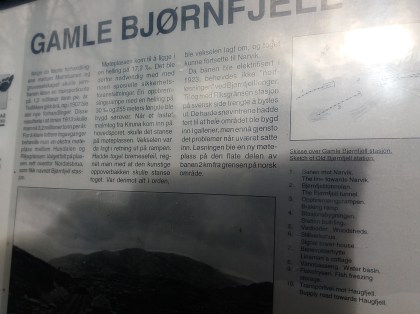
”Bygdegårdens Tekla.”

Teklas hjärta tog ett skutt upp i halsen. Sist hon hade varit i bygdegården levde hennes pappa. De hade lyssnat på ett föredrag med rubriken ”Fredsduvor och krigsherrar.” Inte turturduvor hade hennes mamma frågat med glimten i ögat.

Nej, hade pappa svarat.

Men visst finns det en evig maktkamp mellan de båda, hade Erling inflikat.

Ja, fortsatte hennes mamma ivrigt, brukar man inte tala om hökar och duvor inom politiken? Hon såg sig omkring på de närmast henne med glansiga ögon på resten av sällskapet och fick några nickningar till svar och ett svagt mummel från fru Petersson som inte gillade mamma.

Det var en riktig hök som talade, hade Erling sagt och med de orden vänt sig särskilt till Teklas mamma när de hade skilts åt utanför bygdegården. 

Tekla hade alltid tyckt att det var en härlig syn att se par efter par, familj efter familj i byn finklädda gå till den upplysta och med blomprakt dekorerade bygdegården. Det fanns några ensamma, mest äldre, men de flesta hade någon att slå följe med, som grannarna. Sedan fanns det de nyinflyttade, de från hyreshusen nära skyttepaviljongen som blev inflyttningsklara bara för ett par månader sedan. Men dem hade Tekla inte hunnit bekanta sig med. I skolan höll de barnen sig något ifrån de andra, de som likt Tekla var födda och uppvuxna i byn.

Nu stod hon på håll och betraktade det hela, väntade på mamma som hade sagt åt Tekla att hon kunde springa i förväg.

Mamma kom andfådd i kappan som hon sytt in i midjan, elegant i sin nya hatt. Det var en känd politiker som skulle tala och det skulle bli servering.

Mamma tog Tekla under armen, som ivrigt började dra i henne, för att se om det fanns någon plats för dem vid Signes och hennes familj bord. Där kände hon sig mest hemma, och till och med mamma slappnade av med dem. Linnedukarna var perfekt pålagda utan rynkor och dukat med en vacker servis med guldkant och dekorerad med gula rosor. Även servetterna bar gula rosor mot det vita. På varje assiett låg redan en smörgås med skinka och ost ett salladsblad. Det låg förväntan i luften.

Mannen, som var politiker, började sitt föredrag med pennan bakom öronen. Det har han tagit efter Edvin Adolphson i ”En enda natt” fnissade en kvinna i raden bakom Vendela som vred på huvudet och kastade en nyfiken blick på henne. En förtappad biobesökare, tänkte hon roat medan hon granskade frågeställarens smala okynniga ansikte som ramades in av en page. Politiker tog bort pennan från bakom örat som om han hört pagekvinnan. Stoppade den på sig i en tankspridd gest och började blicka ut över sin publik som satt vid borden, ännu utan bespisning.
Mannen började tala om landsbygden, hur allt fler flyttade ifrån och lämnade avfolkade byar bakom sig. Ungdomarna ville in till städerna. Efteråt innan det blev dags för servering ställde politikern upp på en frågestund.

Pagekvinnan flög upp och började ställa frågor.

”Du är väl inte ensam här,” sa en man några stolar bort, förargat till henne. ”Du ska väl inte ha ordet hela tiden.”

”Jag får väl ställa en fråga. Det pågår en frågestund eller har du missat det? Det är kanske ditt kaffesuget som talar?”

”Kaffe?” Mannen fräste som om hon sagt en oförskämdhet. ”Det som kommer att serveras här kallar jag inte kaffe.”

”Kan ni sluta vara i luven på varandra, vi har fler här som vill begära ordet.” Det var hennes bänkgranne till vänster om hade yttrat sig.

Kvinnan tycktes stirra ner mannen som yttrat de väl valda orden, han vände när han mötte hennes intensiva blick.

Därefter vände hon sig till föredragshållaren och beklagade att han kom och serverade ett tio år gammalt föredrag om än lite omstöpt.

”Är det vad du tror vi ska hålla till godo med här ute i obygden? Tror du inte att vi inte hänger med och att vi inte har ett bibliotek?”

Du borde inte få ut ditt arvode om det är så det står till, mumlade en man, i raden bakom de talförda med pagekvinnan i spetsen. Pagekvinnan vände sig om och gav honom ett uppmuntrande leende. Men han verkade inte se det, utan drog ut stolen och kom mödosamt på benen. Hans slips var för hårt knuten och han hade fått andnöd. Han var tvungen att lossa på slipsen och kunde förklara för den vid det här laget oroliga publiken vad som hänt. Då var doktorn påpassligt framme och förklarade frågestunden över. Stetoskopet var utbytt mot en lornjett prydd med ädla stenar som prydde den mörka skräddarsydda kostymen.  Han klappade i händerna och bad om att serveringen skulle komma i gång. Föredragshållaren tog av sig glasögonen och gnuggade sig i ögonen.

När smörgåsen, skuren i små bitar, var uppäten och saften urdrucken, bad Tekla och Signe om att få gå ifrån bordet. Men just då gick kyrkoherden upp på podiet framför dem alla och började tala om den himmelska vägledningen.  Om att ingen behöver stå ensam med sina beslut utan att man med varm hand kan överlämna dem till Gud, eller överlägga med honom. Vi är alla som Abraham, vi är alla Guds vän, poängterade han. Politik i all ära, men allt löser man inte med politik manade han. Hjärtats angelägenheter är våra egna inte statens, betonade han.

Tekla såg förundrat upp på honom. Vad menade han? Var det ett tal ämnat för politikern? frågade hon sig. Men han hade gått därifrån, förmodade hon, för hur hon än vred och vände på nacken kunde hon inte se honom någonstans. I sitt stilla sinne undrade hon om det här handlade om Mammon.

Det slog ner i henne att oskuldens tid var förbi. Nu var det Mammon som drog in med full kraft. Och hennes pappa var inte här att peka ut detta väsen för henne. Han hade inte gett henne någon beskrivning. Bara fått anvisningen att läsa i Bibeln, där stod allt hon behövde veta om detta världsliga väsen. Upplevde kyrkoherden något liknande? Hon blev inte klok på hans förmaningstal. Det väckte en genklang i henne…hade hon inte sett något liknande i hennes pappas anteckningar på skrivbordet? Var det i själva verket hennes pappas sista utkast till predikan som han skrivit till kyrkoherden som hon nu åhört? Om än i obearbetad form, för det måste vara kyrkoherden själv som lagt sista handen vid det…Hon tvivlade på att han var så bekant med Mammon…Rädslan stramade i bröstet och hon sökte med ögonen efter mamma. Men mamma var upptagen, hon samtalade med en man som inte suttit vid bordet förut. Tydligen hade människor gått omkring och bytt plats med varandra, slagit sig ner lite huller om buller efter kyrkoherdens tal. Hon spärrade upp ögonen. Det var Mårtensson. Det fick henne nästan att må illa. Hon sprang till Signe som hade flyttat på sig.

/ Helena

Tips och länkar:

https://www.msn.com/sv-se/nyheter/other/rysslands-nato-kopia-gick-upp-i-r%C3%B6k/vi-AA2cux5L?ocid=socialshare

Kristallgade och Södermalm bör bli som ”fridlysta öar” i Nordens storstäder, säger Abdelhamid Fetsi.

Koranpodden – Vi hjälper dig förstå Allahs ord

Liv måste räddas, räddas medan det går. Så många protesterar mot krig, vill rädda liv.

Kanske skulle en internationell fredskonferens kunna skapa påtryckningar i riktning mot fred? Eller har fredskonferenser helt spelat ut sin roll?

Militär och polis bevakar synagogan på Kristallgade i Köpenhamn dag som natt. Jannika och jag var en natt på hotell Ansgar i Köpenhamn innan Jannika åkte på ett bröllop dagen därpå. Abdelhamid smsade eller mejlade Imam Mahmouf Khalfi och sa att om muslimerna i Grande Mosque på Södermalm i Stockholm är rädda ska de inte dra sig för att begära in militärpolis eller polis för bevakning dygnet runt. Särskilt efter det att Rikard Jomshofs bok ”Kafr” kom ut nyligen. (Eller var det ”Quisling” undrar Jesper Nyström, Frihamnskyrkan)?

AI:s svar till Abdelhamid:

Militär och polis bevakar synagogan på Kristallgade i Köpenhamn dag som natt. Jannika och jag var en natt på hotell Ansgar i Köpenhamn innan Jannika åkte på ett bröllop dagen därpå. Abdelhamid smsade eller mejlade Imam Mahmouf Khalfi och sa att om muslimerna i Stora mosken på Södermalm i Stockholm är rädda ska de inte dra sig för att begära in militärpolis eller polis för bevakning dygnet runt. Särskilt efter det att Rikard Jomshofs bok ”Kafr” kom ut nyligen. Jannika och jag var och besökte Kristallgade; jag satt utanför och fikade som vid en trattoria. Arla morgon nästa dag följde jag Jannika till Kastrup där hon skulle möta upp två släktingar för vidare färd till Portugal. Jag hörde på tåget in över bron att en svensk civilklädd polis blivit mördad efter ett bråk på en krog som han försökte avstyra i samband med att VM i fotboll visades på storbildsskärm.

AI:s svar till Abdelhamid:

Så mitt (AI:s min anmärkning) korta svar är:

  • Ja, det är fullt rimligt att en religiös församling kontaktar polis om man känner oro eller uppfattar ett hot.
  • Ja, polisbevakning kan förekomma om myndigheterna bedömer att det finns ett säkerhetsbehov.
  • Men beslut om bevakning bör grundas på konkreta säkerhetsbedömningar, inte bara på att en kontroversiell bok har publicerats. 🌿
Bild: Roger, guiden
Bild: Abdelhamid ben Ali-Fetsi

https://www.msn.com/sv-se/ekonomi/allm%C3%A4nt/skola-utrymd-efter-hot-stor-polisinsats-p%C3%A5g%C3%A5r/ar-AA2bz1L0?ocid=socialshare

26. 9 lögner om islam av en ex-muslim – Koranpodden

Article
Spooky secrets: Analysing the
temporality and materiality of
secrecy in critical security studies
Tasniem Anwar
Vrije Universiteit Amsterdam, Netherlands
Abstract
Security Dialogue

1 –18
© The Author(s) 2025
https://doi.org/10.1177/09670106251318174
Article reuse guidelines:
sagepub.com/journals-permissions
DOI: 10.1177/09670106251318174
journals.sagepub.com/home/sdi
This article investigates the temporal and material relations of secrecy and revelation through the lens
of haunting. Critical security scholars have contributed to a deeper understanding of (state) secrecy by
unpacking the material and discursive practices that conceal, reveal, or expose information, showing that
there is no linear process from secrecy to transparency and accountability. In this article, I contribute to
this literature by developing haunting as a concept to study how secrets from the past continue to shape
the possibilities of political and legal debate in the present and future. I propose attending to how secrets
can haunt specifically in situations where legal transgressions and violent politics are erased. I illustrate this
conceptual framework through a case study of two secret operations in the War on Terror by the Dutch
Ministry of Foreign Affairs. I illustrate how in both instances, secrets refused to remain buried, but rather
came back to haunt public and political discussions about accountability. Based on the empirical insights,
the conclusion presents future possibilities for studying secretive security issues through a framework of
haunting.
Keywords
Haunting, law, materiality, secrecy, temporality, War on Terror
Introduction
In 2019, two investigative journalists revealed that the Dutch government was involved in a secret
programme to support armed groups in Syria (Holdert and Dahhan, 2018a). The purpose of this so
called Non-Lethal Assistance programme (hereafter NLA programme) was to strengthen the position
of Syrian ‘moderate’ armed groups vis-a-vis terrorist organizations and the Syrian regime (Holdert
and Dahhan, 2018c). The publication of the secret support sparked a scandalous media representation
of the NLA programme, including allegations that it could be a violation of international law. Media
attention was focussed on speculations about terrorist groups benefitting from the materials sent as
Corresponding author:
Tasniem Anwar, Vrije Universiteit Amsterdam, De Boelelaan 1077, 1081HV, Amsterdam, Netherlands.
Email: t.anwar2@vu.nl
2
Security Dialogue 00(0)
part of the programme. Domestic lawyers involved in terrorism trials in the Netherlands anticipated
a great impact on the possibility to prosecute and convict terrorism offences regarding terrorist organ
izations in Syria. Despite these concerns, the concrete impact on terrorism trials remained very lim
ited and the potential breach of international law was dismissed by the Ministry of Foreign Affairs
(TK, 2018–2019, 32623, nr. 247: 4).The lack of accountability after the secrets were published con
curs with Stampnitzky’s (2020: 608) analysis of revelations of torture in the War on Terror, where
‘[i]t is commonly assumed that exposures lead directly to accountability, or realigning actions so as
to be compatible with stated normative commitments’. Yet, as she eloquently shows, the revelation of
state secrets does not automatically translate into a correction of norms violated, but is a political
process that requires more scholarly attention to better understand its effects.
In a similar way, there is more to the story of the NLA programme than a (disappointing) revela
tion of state secrets. As I will show in this article, during the process of scandalous exposés related
to the NLA programme, secret information was first revealed, then reclassified. Important docu
ments containing state secrets disappeared, only to reappear later through accidental leaks. Even
though many details of the programme were accidentally revealed, this information remained offi
cially classified and could not be used in a court of law. Furthermore, the legal discussions about
the programme were linked to previous Dutch interventions that were also (partially) secret. While
there were no concrete legal consequences for the violations of legal norms, the NLA programme
continues to be invoked during court cases and legal debates. This is an example of a state secret
that lingers, not fully materializing into accountability or normative change, yet also not com
pletely covered up or dismissed. How can we understand the afterlives of secret counter-terrorism
practices, especially when those secrets remain in an ambiguous state?
To answer this central question, I propose to study secrecy and state violence through the lens of
haunting (Gordon, 2008). While critical security scholars have enriched our understanding of
secrecy as a complex sociomaterial practice (De Goede et al., 2019), or by unpacking the processes
of exposure and revelations (Birchall, 2021; Stampnitzky, 2020), the debates on critical security
studies, secrecy and silences pay surprisingly little attention to the temporal dimensions of secrecy.
Nevertheless, to better understand how past secrets shape politics in the present or future, we need
examine temporal workings of secrecy. The concept of haunting allows researchers to unpack how
secrets follow a non-linear temporality where secret operations refuse to remain in the past and
continue to shape what is made (un)intelligible in the present and future. Thus, by using haunting as
a conceptual metaphor, this article offers a fresh perspective on how the unruly, invisible and often
violent histories of state secrecy are part of the present and future. Haunting as a concept strengthens
the scholarly debates in critical security studies on secrecy, showing how (partial) revelations of
legal transgressions and erased forms of violence haunt political and legal debate in the present and
future. More broadly, haunting connects the security studies to debates on temporality, secrecy and
silence, and allows researchers to explicitly engage with the non-linear and disruptive ways in which
materials reveal, conceal, or suppress secrets.
The purpose of this article is to set forth a novel theoretical framework of haunting to study
secrecy in security settings. First, I briefly summarize the different strands of research within criti
cal security studies on secrecy. After this summary, I develop a conceptual framework on haunting,
building on the literature on secrecy and connecting to broader themes in international relations on
temporality, legality and memory. In the second part of the article, I empirically illustrate how we
can mobilize haunting for studying state secrecy in case of legal transgressions, applying the con
cept to an empirical case study of two counter-terrorism interventions by the Dutch state. The
conclusion summarizes how haunting pushes current debates by allowing researchers to capture
the non-linear temporalities of secrecy and security. Furthermore, haunting strengthens the litera
ture on materiality and secrecy by emphasizing the agency of ‘buried’ or ‘erased’ materials coming
Anwar
3
back to haunt. In sum, this article proposes that haunting is useful for understanding secrecy in the
War on Terror, but its applicability extends to other fields of controversies and violent histories.
State secrecy in critical security studies
Over the past years, critical security scholars have expanded our understanding of secrecy not as a
given, but as a practice involving multiple security actors and devices (De Goede and Wesseling,
2017; De Goede et al., 2019; Walters, 2021). This comes as no surprise, as the field of security is
inherently characterized by practices of classification and confidentiality, especially when it comes
to counter-terrorism policies (Gilbert, 2023).
Within critical security studies, several conceptual debates have furthered our ability to study
secrecy. Critical security scholars (De Goede and Wesseling, 2017; Glouftsios, 2023), inspired by
actor-network theory, have proposed to study the material devices and processes that produce
secrecy. Burying documents, classifying reports or severely obstructing freedom of information
(FOI) requests show the central role materials can have in maintaining secrecy (Hughes and
Garnett, 2019). Within this research agenda, secrecy is not a general phenomenon that is easily
translatable into a theory, but researchers attune to the fluid and material characteristics of secrecy
and its practices (Glouftsios, 2023; Walters, 2021). This research approach illustrates that secrecy
is a complex process of publication, withdrawal, concealment and other messy material practices.
More recently, critical security studies scholars have turned their attention to the process of
revelation and exposure, critiquing the assumption that secrecy opposes openness (Birchall, 2021)
or forms ‘a stumbling block on the road to transparency’ (De Goede and Wesseling, 2017: 259).
Treating exposure not as a sudden revelation that breaks through the veil of secrecy but as ‘a
socially and politically constructed process’ is at the core of Stampnitzky’s (2020) argument. She
proposes to distinguish between an exposure, which is the release of classified information, and a
revelation, where information gains meaning through a process of public recognition. Similarly,
Rappert (2010) and Gilbert (2023) have reflected critically on moments of disclosure, criticizing
the assumption that these moments are an unmediated exposure to the truth. This research agenda
illustrates how processes of exposure, revelation, or access require further scholarly attention to
better understand what is made possible or knowable (Aradau, 2017; Birchall, 2021; Gilbert, 2023;
Rappert, 2010; Stampnitzky, 2020).
Lastly, critical security scholars have proposed to study the material and discursive processes
that lead to afterlives, such as public inquiries, memory-related practices, or journalism. This
strand of research is particularly important to further develop our understanding of the normative
aspect of secrecy. As such, scholars such as Stampnitzky (2020), Birchall (2021) and Aradau
(2017) push back against a linear trajectory that supposes that revelation of secrets will lead to
transparency, knowledge, acknowledgement of wrongdoing and justice. For example, the exposure
of information on the use of torture by the US government in the War on Terror did not automati
cally lead to a normative reaction or accountability (Stampnitzky, 2020). Particularly in the context
of the War on Terror, which is heavily characterized by classified information for security pur
poses, it is important to understand the afterlives of secret state programmes. Kearns (2017), for
example, draws our attention to the notion of ‘residues’ as a way to understand absences in the
public knowledge in the aftermath of drone warfare. He defines residues as ‘processes of state
violence that are ongoing in the present but remain absent from the public sphere’ (2017: 16). This
aligns with the growing research agenda to take secret state actions as researchable, even if it is
through fragments, memories or leaks, by moving beyond the stark bifurcation of knowledge on
the state as public or concealed, absent or present (Gilbert, 2023; Hughes and Garnett, 2019: 222;
Rappert, 2010).
4
Security Dialogue 00(0)
These debates within international relations and critical security studies illustrate a growing and
vibrant debate on secrets and their (material) afterlives. The notion of secrets coming back to haunt
is recognized on a superficial level by security scholars (Kearns, 2017; Rappert, 2010; Walters,
2021). De Goede and Wesseling (2017: 264) write that ‘Secrets continue to haunt the publicness of
post-9/11 security programmes, in the sense that they entail complex regulations of knowledge and
have a material effect on how public debate is (not) able to unfold’. It should not come as a surprise
that the field of security politics is haunted by a violent past. Devetak (2005: 622) argues that ‘poli
tics and international relations have always been haunted by monsters and ghosts . . . but since
September 11, the gothic scene has become a much more prominent discursive feature of interna
tional relations’. While this shows that critical security scholarship has already hinted at state
secrecy in the War on Terror as a haunted practice, a comprehensive understanding of haunting as
a useful concept in security studies has not been developed.
Haunting for critical security scholars
The concept of haunting and the literature on spectrality is indebted to Derrida’s (1994: 75) work
‘specters of Marx’, where he proposes that ‘the ghost should remain, be lived with, as a conceptual
metaphor signaling the ultimate disjointedness of ontology, history, inheritance, materiality and
ideology’. Although this article does not delve deeply into Derrida’s work or the ‘spectral turn’
(Del Pilar Blanco and Peeren, 2013), it follows Derrida’s suggestion to stay with the ghostly and
the haunted. Scholars such as Gordon (2008), Spivak (2013), Salem (2019) and Del Pilar Blanco
and Peeren (2013) use haunting as a conceptual tool to interrogate forms of knowledge production,
and as a vocabulary to capture what is systematically removed from visibility and written out of
history, yet somehow remains lingering in articulations in our daily lives. Haunting is political: the
politics of slavery, national security, imperialism continue to haunt new political projects or ideolo
gies and shape what can be said or done in novel forms of governance (Salem, 2019).
This theoretical framework sets out how haunting as a concept is useful for security scholars
studying state secrecy. Haunting provides a non-linear temporal approach to research how the past
controls the present and future. In a sociolegal context, haunting allows us to understand how nor
mative legal decisions in courts are shaped by, and cannot escape, historical violence and silence
(Wilke, 2010). Similarly, haunting has been used to understand how societies in transition are
haunted by previous politics, oppression and state violence (Gordon, 2008; Salem, 2019). In this
framework, I set out how critical security scholars can use the concept to research how secrets from
the past hold a power over the future, shaping the possibilities of political debate and contestation.
As such, this conceptual framework illustrates how haunting is a useful tool to problematize the
linear path from secrecy to knowledge to accountability by illuminating the non-linear temporali
ties of secrets and their political or legal effects. I propose that two characteristics of haunting are
essential to deploy the concept for the study of secrecy: first, a non-linear engagement with tempo
rality, and second, attention to silences and absence. Both characteristics place haunting in the
existing debates in international relations on temporality, memory, materiality, but also push our
understanding of secrecy and security.
Secrecy, security and temporality
Secrets are inherently entangled with temporality. Secrets can be temporally limited when docu
ments or policy information are automatically declassified after an amount of time (Thompson,
1999). Sometimes secret spaces contain traces of multiple pasts, rather than only a singular tempo
rality, as they become repurposed or reclassified (Walters, 2020). Specifically for security scholars,
Anwar
5
understanding the temporality of secrecy is essential as pre-emptive security measures are also
justified by temporal practices. Think for example of pre-emptive security logics that build on
imaginations of a potential terrorist attack (Anwar, 2022), climate disaster (Wolff, 2021), or the
framing of violence in wartime (McIntosh, 2022; Palestrino, 2022). Secrecy in security measures
is therefore already entangled with temporal politics.
Similarly, narratives of the past have been essential in the securitization of memories, shaping
identities of states and their security policies (Mälksoo, 2015; Purdeková, 2022; Steele, 2013).
Indeed, memory studies have contributed greatly to international relations scholarship by illustrat
ing how events in the past continue to shape security objectives, (state) identity and politics in the
present (Mälksoo, 2015). There is an obvious link between haunting and the security–memory
nexus as established by other scholars (Derrida, 1994; Gordon, 2008; Roccu and Salem, 2019).
Both memories and haunting cannot be confined to the realm of the past, nor are they an individual
private experience. Rather, they continue to shape social relations, material conditions and politics
of the future (Salem, 2019). As a concrete example, Gordon (2008) and Hartman (2008) have stud
ied the transatlantic slavery archives as haunted records of an unfinished past. Those who are
forced into slavery and erased from historical records are not absent but continue to linger and live
on in memories (Hartman, 2008) but also in material and political relations in the present and
future (Gordon, 2008). Similar to memories, haunting provides the vocabulary and ontology for
studying events that continue to linger on, even after they were supposed to be ‘finished’ or ‘forgot
ten’ (Gordon, 2008; Purdeková, 2022).
While the literature on secrecy in critical security studies has moved beyond the assumed binary
between secrecy/transparency (Birchall, 2021), scholars have paid only limited attention to how
secrecy and transparency are linked with temporality. Haunting as a concept is useful for critical
security scholars when unpacking how secrecy orders and disrupts temporality. While govern
ments might aspire to contain information in a specific time through secrecy measures, haunting
allows us to study ways in which past secrets or future revelations can determine the conditions of
what can be said in present-time political and public debate. Thus, haunting attunes us to disrup
tion: past violence, exploitation, or imperialism does not only shape our present and future under
standing of (international) security, but the concept allows us to study how silenced episodes of
violence come back to haunt, demonstrating an unexpected agency to make the past knowable.
Haunting moves us beyond a linear narrative on temporality by allowing researchers to actively
investigate reparations, recognition, restoration and other practices that transcend the neat catego
ries of past, present, future (Gordon, 2008). Such moments are temporal practices but require a
specific non-linear attention to temporality that haunting provides.
Silence and security
Scholars studying archives have reflected extensively on how to study silences and histories that
are silenced (Gordon, 2008; Hartman, 2008; Manchanda and Salem, 2020), for example by re
telling their stories through fiction and fabulation (Hartman, 2008). Similarly, international rela
tions scholars have examined silences in international relations as a spectrum: not the opposite of
disclosure but rather as ‘layers of silences’ through ‘ambiguities, delays, explicit refusals to answer’
(Schweiger, 2022). Schweiger’s layers of silences speaks explicitly about the question of account
ability in relation to silence and speaking up. Schweiger (2022: 125) warns us that ‘[c]alling for
less secrecy can end up reaffirming the power position of Western state actors who are asked to
speak while the subaltern become further essentialised and silenced’, thus resulting in further
injustice.
6
Security Dialogue 00(0)
Haunting as a metaphor provides a novel way to study secrecy through its disruptive temporal
understanding. Through haunting, we acknowledge that secrecy is not a matter of transparency or
disclosure (Birchall, 2021), but that the concealed knowledge or erased experiences live on in vari
ous and unexpected ways. More specifically, as Gordon (2008: xvi) writes, haunting occurs not for
all secrets, but ‘what’s distinctive about haunting is that it is an animated state in which a repressed
or unresolved social violence is making itself known’. As such, haunting pushes the existing litera
ture on secrecy and transparency (Birchall, 2021; De Goede and Wesseling, 2017), as well as the
debates on silences (Rappert, 2012; Schweiger, 2022), by focusing on a longer temporality in
which secrets return or how material traces of the secret re/disappear again. According to Gordon
(2008), haunting makes itself known through ‘uncanny repetitions’. Thus, haunting specifically
draws our attention to reappearances of security objects: whether classified documents (Gilbert,
2023), residues (Kearns, 2017), or restored malls after a violent attack (Purdeková, 2022), haunted
secrets are repetitive. Therefore, haunting as a concept moves us beyond the acknowledgement that
materials break through binaries of secrecy and transparency: haunting requires attention to how
objects are lost, gained again, reshaped or disappear (Gordon, 2008; Hartman, 2008). Haunting
does not end with (partial) disclosure, as haunting rejects a linear approach to temporality alto
gether, but rather invites us to look at reappearances of materials and their resistance against disap
pearance. Indeed Spivak (2013) proposes that ‘the end of the ghost dance is to make the past a
future’, referring to a future in which past injustices are faced and accounted for. In other words,
researching secrecy through haunting is less about the visibility of the knowledge or the concealed
materiality, and more about how secrets of the past hinder normative response or obstruct
accountability.
Haunting and political possibilities
The two interrelated characteristics, namely a non-linear focus on temporality and a novel attention
to silences through reappearances, are key to understand the conceptual relevance of haunting. By
following a non-linear temporality, haunting allows us to study how past secrets and silence around
violence and transgression shape the possibilities of accountability in a present and future.
Therefore, we gain a better understanding how state secrecy shapes security policies, particularly
in the absence of accountability and normative change.
It is no coincidence that the contributions mentioned in this conceptual part mainly focus on the
workings of empire, colonialism and violence. As Stoler (2016) has argued, postcolonial politics,
even if their workings are made invisible, continue to haunt and shape contemporary political nar
ratives. As explained above, there are different ways to examine violent injustices, ranging from
memory studies to tracing the spectres of coloniality. Yet, what is distinct about haunting is that it
attunes us to how past violence shapes political possibilities particularly sensitive to postcolonial
and imperialist politics (Gordon, 2008; Salem, 2019). Haunting is not only about acknowledging
or remembering the past, but understanding how it fits into a longer colonial trajectory and how its
afterlife creates or prohibits opportunity for (future) political change. For example, Salem (2019)
shows how Nasserism as a political project in postcolonial Egypt has profoundly influenced ideas
about what politics should look like, shaping the (im)possibilities of a capitalist politics in Egypt.
Similarly, Wilke (2010) uses haunting to trace the trials of Nazi perpetrators and the impunity of
Nazi judges, illustrating that the prosecution of former Nazis in the 1990s in Germany was haunted
by earlier judicial decisions in 1940–1950. Earlier trials and injustices curtailed the possibilities of
the court to sentence, for fear of moral and legal criticism. In sum, secrets come back to haunt the
present in situations of an absence of accountability or justice for legal or normative
transgressions.
Anwar
7
Haunting therefore shapes the conditions of security policies and politics more broadly (Salem,
2019), yet has not explicitly addressed secrecy as an inherent part of security (but see Walters,
2021). It is through secrecy that policies gain or lose legitimization. Security professionals insist on
keeping information classified, to not alert potential terrorists or criminals to their security measures
(De Goede et al., 2019; Walters, 2021). Secrecy holds power over security practices, by creating
hierarchies of knowledge and authenticity, even though secrecy is fragmented, sometimes invisible,
and not easily accessible (Walters, 2021). Considering such characteristics of secrecy, haunting
provides a useful vocabulary to study how secrecy works as a condition for security practices. It can
attune us to how erased histories of state violence and imperial forms of governance shape security
politics during and after revelations of security secrets. Thus, as I will illustrate with an empirical
case study below, haunting is different from Kearns’ (2017) conceptualization of ‘residues’, ‘absent
presences’ (Rappert, 2010), amnesia (Purdeková, 2022), or silence (Schweiger, 2022), and pushes
our understanding of how haunted secrets of the past live on in our present and future.
Haunted histories of military intervention: A methodology
This article illustrates the relevancy of haunting through an empirical case study of two Dutch
counter-terrorism interventions, namely the Dutch participation in the 2003 intervention in Iraq,
led by the US, and the NLA programme between 2015-2018. I started this research by studying the
news coverage around the NLA programme. During the data collection, I learned about another
counter-terrorism intervention in 2003. Secrets were revealed about both interventions in a very
similar way, as were the legal boundaries that had been crossed. In the public inquiry that followed
the revelation of the NLA programme, this 2003 scandal was frequently mentioned and seemed to
‘haunt’ what happened in the programme. For this reason, I proceeded to analyse the two cases side
by side, to better understand how these past events from 2003 had impacted the NLA programme
more than 10 years later and how haunting connected both secrets. While the 2003 scandal was not
the initial focus of this research, Gordon (2008: 37–39) argues that haunting requires a methodol
ogy of detours.
Between 2018 and 2022 I collected data to conduct a qualitative analysis on the question of
secrecy and haunting. I collected various sources of government documents, including the FOI
requests on all governmental correspondence about the NLA programme consisting of 600+
pages, reports of both public inquiries of the NLA programme published in 2022 (Commissie
Cammaerts, 2022) and the Iraq intervention published in 2010 (Commissie Davids, 2010) and
parliamentary debates on the NLA programme (TK, 2018–2019, 32623, nr. 247; TK, 2018–2019,
32623, nr. 268; TK, 2019–2020, 32623, nr. 292). This data was complemented by court transcripts
of terrorism trials debating the NLA programme (The Appeal Court of The Hague, 2019; The
District Court of Rotterdam, 2019) and news reports by NOS/Nieuwsuur (Holdert and Dahhan,
2018a, 2018b, 2018c). The documents were retrieved by searching LexisNexis and the Dutch data
base for government documents using keywords including ‘NLA program’; ‘non-lethal assistance’;
‘Syria’.
I analysed two public inquiries reports and news coverage related to both scandals in line with
the conceptual framework established in the previous section. After a process of coding the docu
ments along these themes, I traced how the data of the NLA programme related to the data of the
Iraq intervention of 2003. Reading both public inquiry reports through the lens of haunting shows
us how the two interventions, a decade apart, haunt each other. This is a methodology of detours,
following the data rather than selecting it, and allowing the secrets to haunt freely. In the following
sections I unpack the afterlives of both secrets using haunting as a conceptual framework. The
8
Security Dialogue 00(0)
conclusion connects the empirical insights of this study to a conceptual framework of haunted
materials that can be explored in further research.
Haunting as temporal ordering
In 2003, the Dutch government politically supported the US-led coalition in Iraq that eventually
resulted in the toppling of former Iraqi president Saddam Hussein (Aalberts, 2011). Participating
in this coalition was already highly contested and questioned by legal advisors within the govern
ment and members of Parliament (Aalberts, 2011). At first, the discussion mainly concerned infor
mation of foreign intelligence services claiming the presence of weapons of mass destruction,
which formed the justification of the intervention (Commissie Davids, 2010). However, approxi
mately in April 2003, an administrative memo was sent to the Minister of Foreign Affairs clearly
outlining the judicial concerns of the legality of the US-led intervention and concluding that the
legal justifications for the intervention could best be understood as ‘paper thin’ (see Figure 1). The
memo, however, never reached the minister as it ‘disappeared’. At the top of the memo, a military
officer scribbled ‘Carefully store in a drawer for the next generation. The discussion is now closed.’
The note on the memo, ‘Carefully store in a drawer for the next generation. The discussion is
now closed’, showed the desired temporal working of the secret: to be erased from the present, and
to be considered by future colleagues as a question that came to a (temporary) closure. Secrets and
their revelations illustrate a temporal practice of placing certain objects and information into the
past, present or future.
After the memo was leaked and printed in the Dutch newspapers in 2009, a committee was
established to conduct a public inquiry into Dutch support of the Iraq invasion. The Commissie
Davids was tasked with reconstructing the events and material documentation that could answer
questions of international law and domestic political procedures. The report was published in 2010,
consisted of more than 500 pages, and laid bare the poor decision making in 2003. The report was
therefore considered a public acknowledgement of past wrongdoings and provides clear recom
mendations for the future: an international lawyer should be consulted for advice on new interven
tions, information sharing between the departments should be improved, and classified information
should be periodically evaluated on their secret status (Commissie Davids, 2010). In other words,
not only was there a collective agreement on preventing such legal and political scandals, but there
was also a clear outlook for the future on ways to act differently.
This ‘future’ came in 2015, when the Ministry of Foreign Affairs was contemplating whether to
join other European states in supporting moderate armed groups in Syria. Bureaucrats at the
Ministry of Foreign Affairs argued that seeking official advice from the newly appointed lawyer on
the legality of the programme and possible breaches under international law was not necessary
(Commissie Cammaerts, 2022). Strictly speaking, the NLA programme was framed as a civil oper
ation and only provided non-lethal assistance. The materials that were part of this so-called non
lethal assistance were pick-up trucks, satellite phones, medical kits and food packages. The
question whether these materials could potentially be used for lethal objectives during combat was
strategically dismissed (Anwar, 2024). The choice to conduct a civil operation rather than provid
ing groups with military support justified the decision to avoid seeking legal advice from interna
tional lawyers on the legality of the programme. The Ministry only sought internal advice that
classified the secret programme as ‘a grey area’ and ‘risky but acceptable under international law’
(Commissie Cammaerts, 2022).
This example illustrates how secrecy can hold a temporal power over events and how past
secrets disrupt or shape the present. Secrets are not contained controversies in a closed-off past but
can haunt the future by shaping the boundaries of political and legal discussion. In the NLA pro
gramme, the decision-making process related to providing non-lethal support was clearly haunted
Anwar
9
Figure 1. Screenshot by the author of the disappeared memo to the minister as published in the NRC
Handelsblad.
Source: Oranje (2009) ‘Buitenlandse Zaken hield kritisch Irak-advies achter [Ministry of Foreign Affairs witheld critical
Iraq-advice] NRC Handelsblad 17 januari 2009.
10
Security Dialogue 00(0)
by these earlier revelations from 2003: the Dutch government wanted to participate in an interna
tional effort to strengthen Syrian armed groups, yet did not want to be involved in another scandal
around military interventions and transgressions of international law. In seeking a ‘grey area’ by
framing the operation as a civil, rather than military operation, the Ministry of Foreign Affairs
circumvented a public and political debate on legality. The Dutch government therefore posed the
NLA programme as a novel type of intervention, in an attempt to escape the haunting of the 2003
intervention and the recommendations of the Commissie Davids. In doing so, the programme
could be decided in a present in which the legality of the intervention is simply undecided and
unprecedented. Haunting illuminates a form of politics behind secrecy: the act of burying and
neglecting, and the strategic dismissal of the past. However, as I will show, the government was not
able to fully escape the hauntings of the 2003 intervention.
After the NLA programme, including its funding and cooperating parties, was exposed, a
public inquiry was again conducted to investigate decision making on the legality of non-lethal
assistance to Syrian armed groups. In its report, the Commissie Cammaerts (2022) connected the
insistence of the Dutch government to keep the NLA programme secret and the reluctance of
seeking international legal advice to the decision-making process around the Iraq intervention.
In appendix M of the report (2022: 51) it argued that ‘the tensions that shape the practices of
internal lawyers is previously discussed in the Commissie Davids. This committee recommended
a grounded contribution of international legal expertise.’ In general, the investigative committee
of the NLA programme came to similar conclusions as the Commissie Davids: there were lim
ited options to share information between departments as a result of state secrecy, the Ministry
of Foreign Affairs ignored critical advice from legal experts inside the department, the secret
status of information was not re-evaluated after exposure, and official legal advice was not
sought, resulting in the Dutch government likely breaching international regulations. According
to the report, it was not unusual that the Ministry turned to ‘internal lawyers to “fix” a judicial
solution and to “polish” this until it has an acceptable shape’ (Commissie Cammaerts, 2022: 51,
appendix M).
Taking a closer look at our case study, it becomes clear that state secrecy and their (partial)
revelations often attempt to order objects, events and information in the past, present and future.
Burying documents to keep secrets functions as a tactic to keep information in the past, or ‘to close
a discussion’. Similarly, the exposure of secrecy also leads to attempts by the government to restore
a disturbed temporality. What has been obfuscated in the past needs to be investigated in the pre
sent to take lessons for the future. In the public inquiry following the NLA programme revelations,
the Commissie Cammaerts (2022: 8) stated that ‘complete transparency can contribute to the clo
sure of the debate around the NLA program’. Both public inquiries are supposed to investigate the
obfuscated information in a temporal order and to make visible what the government knew and
decided at what time. In such a way, public inquiries produce a narrative that orders and contains
specific documents and events in a linear fashion.
Haunting shows us how secrets work through uncanny repetitions beyond a linear temporality.
Secrets that are supposed to remain in the past come back and shape the conditions of politics in
the present and future. In our case study this became evident: the decision to frame the NLA pro
gramme as a civil operation, rather than a military one, was an attempt to erase past legal contro
versies on justifying interventions. As such, the decision making of the NLA programme was
haunted by the scandal that followed the 2003 Iraq intervention. Similarly, the subsequent
accountability mechanisms in the form of public inquiries illustrate a desired temporal ordering
from secrecy to transparency to normative transformation. However, deploying the lens of haunt
ing, we can better understand how in the absence of legal accountability, ‘closed’ discussions
Anwar
11
become alive again, and how political decision making in the present is haunted by past state
secrets.
Little pockets of haunting, or present-absences in classified
documents
In both the NLA programme and the Iraq intervention, paper documents were deliberately buried
or concealed as a means to uphold secrecy. In 2010, the Commissie Davids reconstructed the jour
ney of the ‘disappeared’ memo containing a critical note on the legal justification for the interven
tion in Iraq. This advice was not necessarily new, the legal department (DJZ) had always positioned
itself critical towards the United States’ claim that there was an international legal basis for military
intervention in Iraq. Indeed, the head of the legal department confirmed that they stopped produc
ing any written reports because nothing was done with their critique (Commissie Davids, 2010:
251). The secretary-general who buried the memo recalled that he did not see the added value of
the ‘8 page long and mostly repetitive memo’ (Commissie Davids, 2010: 250). The memo should,
however, not be taken as a buried document that simply reappears, but rather we should stay with
its ghostly position. At first glance it was reported (Oranje, 2009) that this buried memo contained
crucial information that could have altered political decision making in this period on joining the
United States in their intervention. However, through the public inquiry report, we learn that this
information and critique was not necessarily new or crucial, and even before being buried in a
drawer the information in the memo was already known, but strategically ignored. Through this
lens, the memo is haunted: information it contained was visible and public, yet secretive and obfus
cated at the same time.
This haunted position of documents can also be illustrated through the process of publishing
FOI request on the NLA programme 10 years later. On 8 November 2018, a FOI request to publish
information on the NLA programme by two journalists was granted and over 1800 pages were sent
containing the documentation of the NLA programme, including email exchanges with suppliers
and the coordinators, pictures of the materials sent, and inventory lists. In the pictures showing the
delivery of the materials, the faces of the people were covered, but logos and flags still lead to the
identification of the groups – information that was supposed to be a state secret. Furthermore, it
was now confirmed that aside from food and medicine, the Dutch government also provided pick
up trucks, satellite phones, laptops and military vests.
On 22 November 2018, all the documents were retracted by the government. After thorough
investigation and additional measures, on 12 June 2019, the government published again the docu
mentation of the NLA programme, this time with more information blacked out and documents
labelled as classified information (TK 2019–2020, 32623, nr. 292: 2). Yet, still the documents
revealed secret information about individuals and groups involved in the programme and the gov
ernment was forced to retract more information. In the final publication of the FOI request on 28
November 2019, even more information was blacked out (TK 2019–2020, 32623, nr. 292).
According to the government, the accidental revelation of state secrets is the result of ‘an assem
blage of actors including the huge volume of documents and required practices of blacking out
information, the less-than-optimal facilities such as software and working spaces and the lack of
experience of the officials tasked with this responsibility’ (Commissie Cammaerts, 2022: 33).
Figure 2 shows black stripes and boxes concealing the information that was previously exposed,
which we can better understand as little pockets of haunting: information that was revealed in the
past, inaccessible in the present; information that is already known yet made unknowable in a new
form. Because of this process, both the materials and the information they contain can be best
12 Security Dialogue 00(0)
Figure 2. Screenshot by the author from a document in the FOI request on the NLA programme,
showing the blacking out of information. All documents available through: https://www.rijksoverheid.nl/
documenten/woo-besluiten/2022/12/20/besluit-op-wob-woo-verzoeken-over-nla-programma-syrie.
understood to be in a state of haunting, where it is not possible to treat the data as public knowl
edge, yet it is no secret either. Working with FOI requests is important for academics and journal
ists to contest state power; however, Gilbert (2023: 189) reminds us that ‘even full access to
government archives would only provide a partial account’. The reappearance of the documents
and the information they contain point us to an unresolved question of accountability.
Indeed, the haunted state of the documents has a great impact on questions of accountability
and justice. In 2017, the Appeal Court in The Hague heard a case of an individual who allegedly
had travelled to Syria and joined Jabhat al-Shamiya. The defence lawyer argued during the appeal
trial that the case should be dismissed because this organization had received material support as
part of the NLA programme. Because the names of the groups participating in the NLA pro
gramme were officially a state secret, the Dutch government would not confirm or deny that this
organization was a participant which received material support. Nevertheless, the lawyer brought
the news coverage of the accidental revelations as part of their evidence, to argue that: ‘When
Anwar
13
the government supports certain organization, it legitimizes these groups. The state should give a
good example and as a citizen you should be able to trust the actions of the Dutch government.’1
Because of this sitting, members of Parliament requested an explanation from the Ministry of
Foreign Affairs as to whether Jabhat al-Shamiya should be classified as a terrorist organization or
a moderate armed group. Here the Minister of Foreign Affairs simply stated that there is no inter
national definition of terrorism and that different departments use different criteria to define
groups or individuals (TK 2018–2019, 32623, nr. 247: 23). The Ministry of Justice and the office
of the prosecution applies a legal framework, while the Ministry of Foreign Affairs ‘simply’ fol
lows the UN and EU terrorism lists. To the questions on the conditions and decisions of the NLA
support to this organization, the Minister replied: ‘The government does not make any public
statements about supported or not-supported groups. The answer to this question can be found in
the confidential document of this reply’ (TK, 2018–2019, 32623, nr. 247: 24). This refusal to
answer in public is important, not only because this information has already been revealed, but
also because it would fundamentally challenge the legality of the NLA programme if terrorist
organizations had been supported.2
What both examples illustrate is the simultaneous existence of ‘knowing and not knowing’ of
documents (Gordon, 2008: 110). Blacking out (published) data, containing explanations in a con
fidential part of a public meeting, or simply making documents disappear, are different material
practices that aim to conceal and erase particular past events to avoid accountability for counter
terrorism policies. This practice concurs with what Gordon (2008: 110) describes as producing
haunted secrets: ‘everyone must know just enough to be terrified, but not enough either to have a
clear sense of what is going on or to acquire the proof that is usually required by legal tribunals or
other governments for sanctions.’ In our example of state secrecy, haunting goes even further. Even
if courts or Parliament demand a full disclosure of evidence for the purpose of legal proceedings,
our empirical examples illustrate that this demand in turn produces new forms and techniques of
obfuscation and haunting. Mechanisms of accountability therefore end up producing their own
forms of haunting, limiting possibilities for normative change in the future.
Haunting of imperial histories
The two previous sections have illustrated how practices of secrecy order events in time and how
a lens of haunting allows for an investigation into the disruptions of such linear temporal narrative.
Furthermore, I have shown how haunting attunes us not to what becomes visible, but how knowl
edge remains in a haunted state, obstructing justice and accountability. So far, I have focused on
how the two secret operations haunt each other. In this section I investigate how both interventions
are haunted by broader questions of violence, empire, and justice or accountability.
The question of (military) intervention in the War on Terror has long been the subject of conten
tious political and legal debate. Anthonie Anghie writes that the War on Terror has fundamentally
changed the concept of (military) intervention in both international law and relations (2007: 276).
Initially, during the invasion of Iraq, this discourse was centred around the principle of self-defence.
The discourse rested on the portrayal of rogue states posing a threat through their possession of
weapons of mass destruction, and the responsibility to promote liberal democratic values.
According to Anghie, the War on Terror’s legal justification is based on the construction of a rogue
‘Other’ and should not be understood as an exceptional way to justify interventions in the Middle
East, but a continuation of an imperialist mission to intervene and civilize the former colonies,
‘thus affirming the enduring hold of these formations on the structure and imagination of interna
tional law’ (Anghie, 2007: 292).
14
Security Dialogue 00(0)
The legal debates are crucial here, because not only in this empirical case study but also
Stampnitkzy’s analysis of torture (2020), it is the legality of the intervention that is at the core of
what holds the secret together and what causes the scandal when revealed. State legal practices are
key to security measures, both in maintaining secrecy (e.g. classification rules) and lifting secrecy
(e.g. FOI requests or public inquiries). Nevertheless, such legal procedures are filled with ghostly
possibilities, as Wilke (2010: 88) proposes that ‘Attempts to address state atrocities are bound to
encounter ghosts: past injustices make their presence felt in a time that is not properly theirs, courts
are unsettled in their authority by the inheritances they have made, and the asserted line between
past and present appears elusive’.
The secrecy around the interventions does not only concern whether there are enough legal
arguments to justify a Dutch contribution to a (military) intervention, but equally on what secret
information such decisions can be based, and to what extent a public debate is possible. The
committee that evaluated Dutch policies around the Iraq intervention drew a devastating con
clusion: there was no argument that would justify the breach of the non-intervention principle
and relevant information was kept from Parliament (Commissie Davids, 2010). Similarly, the
committee that evaluated the NLA programme concluded that the government wrongfully
assumed that civil assistance was an exception to the non-intervention principle (Commissie
Cammaerts, 2022).
In other words, what haunts both cases is how secrecy was strategically used to conceal trans
gressions of international law. Both operations justified the absence of international law in public
debate on grounds of ‘national security’. In the case of the Iraq intervention, classified information
by the US intelligence services could not be discussed in public, and in the NLA programme the
characteristics of the groups and their combat status or history could not be discussed in Parliament
out of safety concerns if it became known that the organizations cooperated with the West. Both
forms of denying a debate on legality are not novel: imperialist motives to intervene in the Middle
East have historically been discussed in selective circles, closed off from the public, with little
regard for the sovereignty of the countries to be invaded (Anghie, 2007).
Injustice encompasses much more than simply the transgression of legal boundaries; it con
cerns those violent instances that have been condemned to the past (discussion is now closed)
within social structures of domination (Gordon, 2008: xix). Indeed, these instances are haunted
because the larger structures of domination or colonialism remain uninterrogated and evidence
of violence is erased. Similarly, the secret programmes fit into a history of transgressing inter
national law without accountability, and as such both programmes are haunted by imperialist
assumptions on accountability when it comes to interventions in the Middle East. Whether it is
the materialization of evidence of civilian deaths (Rappert, 2012), weapons of mass destruction
that lingered as ‘an absence of evidence but not evidence of absence’ (Thomas, 2017), or F-16
fighter planes that leave a data trace of casualties (Gould and Stel, 2022), violent security poli
cies leave their material traces, albeit seldom followed by accountability or normative change.
Following these materials, as they haunt our knowledge and security practices, can illuminate
‘that all these ghostly aspects of social life are not aberrations but central to modernity itself’
(Gordon, 2008: 197).
In our case, the civilizing argument continues to inform notions of statehood, legitimate vio
lence and exploitation (Tzouvala, 2020). The concept of haunting shows us that those contempo
rary doctrines, including the way knowledge is concealed or presented to justify these legal
doctrines, find their origins in racialized tropes and colonial imaginaries (Tzouvala, 2020). Part of
the violence in both interventions is the way the postcolonial world and its populations are ren
dered disposable or invisible. Public inquiries might strive to full transparency and accountability,
yet limit this notion to ‘civilized countries’ and foreclose how interventions continue colonial
Anwar
15
legacies. Haunting should attune us to what this future might look like, not from the perspective of
bureaucrats in the West, but free from imperialist (epistemic) violence.
Conclusion
In this article, I have presented a new conceptual framework to study secrecy and its ambiguous
afterlives. The concept of haunting allows researchers to study how secrecy shapes politics in the
past, present and future. Through the empirical case study, I show that despite the efforts to make
documents disappear or unreadable, materials persistently resurface. Haunting draws our attention
not only to reappearing secret documents, but to what kind of security knowledge and measures are
produced through them. Through haunting, I argue that the re-emergence of documents creates
new insights, opportunities for inquiries, and connections to older scandals. Haunting opens up the
possibility for researchers to examine how (partial) revelations of state violence haunt and persist
to shape political and legal debate in a non-linear way. This analysis fits into a growing and vibrant
literature in security studies on temporality, silence and memory, yet pays more specific attention
to the way secrets are temporally ordered to dis/foreclose normative questions.
Concretely, I propose some reflections on how haunting contributes to the literature on secrecy
and security. First, attuning to forms of haunting forces us to reflect on the temporalities of secrecy.
In the scholarly debates on secrecy and security, the assumption of moving from full secrecy to full
transparency remains pertinent (Birchall, 2021). Haunting challenges this assumption and there
fore strengthens the existing contributions within critical security studies pushing back against the
binary of secret knowledge as either opaque or transparent (Birchall, 2021). Nevertheless, while in
critical security studies scholars have already focused on the detailed process through which secrets
are maintained or lost (De Goede et al., 2019; Walters, 2021), there is little reflection on how
secrecy is entangled with temporalities. Haunting provides an opportunity for researchers inter
ested in secrecy and (critical) security studies to examine how material processes around secrecy
and revelation are entangled with the production of temporalities of the past, present and future.
The concept of haunting reminds us that such processes are not linear but unpredictable, uncanny,
and complicate what we assume about temporality. The ghost, as Del Pilar Blanco and Peeren
(2013: 13) describe, is a form of traumatic repetition ‘which is always both revenant (invoking
what was) and arrivant (announcing what will come) – as operating on a number of temporal
planes, most crucially the future and its possible interactions with the present and the past’.
Haunting forces us to take seriously the non-linear and disruptive temporal ways in which materi
als keep, lose, obfuscate, or expose secrets.
Second, haunting provides a concrete vocabulary to complicate the assumed linear process from
secrecy to exposure to accountability (Stampnitzky, 2020). Security scholars have already acknowl
edged that secrets can be ‘unsecret but they remain opaque’ (Birchall, 2021: 180). In the cases
above, I illustrated how secret information can be in a liminal state of exposure and secrecy at the
same time. Haunting is particularly useful for studying moments where security policies result in
legal transgressions and moments of injustice. In such instances, haunting pushes us not only to
examine secrecy, but to investigate how information can remain in a haunted state, which prevents
knowledge from materializing in courts, public debates and other arenas of accountability. Here,
haunting allows us to study how material objects used in public inquiries, court cases and other
mechanisms of accountability – which are dependent on full transparency –noperate in a security
setting where secrets are layered and complex (De Goede et al., 2019; Schweiger, 2022).
Finally, I propose that taking haunted secrets seriously requires an engagement with violence in
the context of imperialism or fascism (Gordon, 2008; Manchanda and Salem, 2020). Mbembe
(2013) and Gordon (2008) use haunting to not only unravel this violence, but to investigate what
16
Security Dialogue 00(0)
fictions or imaginaries of states are entangled with the practice of burying secrets. This is not to
claim that all state secrets on violence have a linear identifiable linkage with colonial governance
or imperial projects. Mbembe (2013) reminds us that ghosts do not operate along a genealogy.
Nevertheless, colonial and imperial pasts are essential in understanding why states are reluctant to
commit to normative change after the revelation of secret security measures. While our case study
was particularly frightening, haunting can evoke a range of affective emotions. In sum, haunting
points to questions of temporality, accountability and justice in the afterlives of secrets not only
useful to unpack secrets in the War on Terror, but for security studies more broadly.
Acknowledgements
This article has improved significantly thanks to the suggestions of both reviewers. I am especially thankful
to the editors of Security Dialogue for their guidance in this process, as well as their trust and confidence in
this article. William Walters, Keri van Douwen and Beste İşleyen have provided essential feedback on earlier
drafts of the article and I am grateful for their support. My sincere thanks to the panellists and discussant of
‘Critical Security Methods’ at the 2023 ISA conference for their critical questions and engagement with the
paper.
Funding
The author received no financial support for the research, authorship, and/or publication of this article.
ORCID iD
Tasniem Anwar
Notes

1.
https://orcid.org/0000-0002-6110-9144
ECLI:NL:GHDHA:2019:1676. Important to note is that the court eventually reached a conclusion in the
case that did not answer the question whether the organization in question was to be considered terrorist
or not. Therefore, the classification of the Ministry of Foreign Affairs of this group as ‘moderate’ and the
classification of the Ministry of Justice as ‘terrorist’ remains an unresolved issue.
2.
Ultimately, the investigative committee concluded that no terrorist organizations were supported, yet this
conclusion is based on a limited definition of terrorist organizations that is not used by the Dutch courts.
References
Aalberts TE (2011) Forging international order: Inquiring the Dutch support of the Iraq invasion. Netherlands
Yearbook of International Law 42: 139–175.
Aradau C (2017) Assembling (non) knowledge: Security, law, and surveillance in a digital world. International
Political Sociology 11(4): 327-342.
Anghie A (2007) Imperialism, Sovereignty and the Making of International Law. Cambridge: Cambridge
University Press.
Anwar T (2022) Time will tell: Defining violence in terrorism court cases. Security Dialogue 53(2): 130-147.
Anwar T (2024) The law and politics of funding armed groups in Syria: How states (fail to) counter terrorism.
European Journal of International Relations 30(1): 104–125.
Birchall C (2021) Radical Secrecy: The Ends of Transparency in Datafied America. Minneapolis: University
of Minnesota Press.
Commissie Cammaerts (2022) Rapport Commissie van onderzoek NLA-programma in Syrië [ Report
Committee of investigation NLA program in Syria]. Available at: https://www.rijksoverheid.nl/docu
menten/rapporten/2022/12/09/rapport-commissie-van-onderzoek-nla-programma-syrie (accessed 12
December 2024).
Commissie Davids (2010) Rapport commissie van onderzoek besluitvorming Irak [Report Committee of
investigation decision-making Iraq]. Available at: https://actorenregister.nationaalarchief.nl/sites/
default/files/2020-11/rapport-commissie-irak.pdf (accessed 12 December 2024).
Anwar
17
De Goede M, Bosma E and Pallister-Wilkins P (eds) (2019) Secrecy and Methods in Security Research: A
Guide to Qualitative Fieldwork. London: Routledge.
De Goede M and Wesseling M (2017) Secrecy and security in transatlantic terrorism finance tracking. Journal
of European Integration 39(3): 253–269.
Del Pilar Blanco M and Peeren E (2013) Introduction. In: Del Pilar Blanco M and Peeren E (eds) The
Spectralities Reader: Ghosts and Haunting in Contemporary Cultural Theory. London: Bloomsbury
Publishing USA.
Derrida J (1994) Specters of Marx: The State of the Debt, the Work of Mourning, and the New International.
Trans. Peggy Kamuf. New York, NY: Routledge Classics.
Devetak R (2005) The Gothic scene of international relations: Ghosts, monsters, terror and the sublime after
September 11. Review of International Studies 31(4): 621–643.
Gilbert E (2023) Keeping secrets. Freedom of information requests and critical security studies. In: Salter
MB, Mutlu CE and Frowd PM (eds) Research Methods in Critical Security Studies: An Introduction.
London: Routledge, 28–34.
Glouftsios G (2023) Secrecy’s performativity: Imaginaries, encounters, distributions. Geopolitics 28(4):
1658–1665.
Gordon AF (2008) Ghostly Matters: Haunting and the Sociological Imagination. Minneapolis: University of
Minnesota Press.
Gould L and Stel N (2022) Strategic ignorance and the legitimation of remote warfare: The Hawija bombard
ments. Security Dialogue 53(1): 57–74.
Hartman S (2008) Venus in two acts. Small Axe 12(2): 1–14.
Holdert M and Dahhan G (2018a) Meer fouten kabinet bij steun aan strijdgroepen Syrië [More mistakes
Cabinet with support to armed groups Syria]. NOS, 11 September. Available at: https://nos.nl/nieuwsuur/
artikel/2249884-meer-fouten-kabinet-bij-steun-aan-strijdgroepen-syrie (accessed 19 February 2025).
Holdert M and Dahhan G (2018b) Kabinet vroeg geen advies aan volkenrechtelijk adviseur over steun aan
Syrische groepen [ Cabinet did not request advice from international law expert on support for Syrian
groups]. NOS, 11 September. Available at: https://nos.nl/nieuwsuur/artikel/2249954-kabinet-vroeg
geen-advies-aan-volkenrechtelijk-adviseur-over-steun-aan-syrische-groepen (accessed 19 February
2025).
Holdert M and Dahhan G (2018c) Overzicht: Onderzoek naar steun aan Syrische strijdgroepen [Overview:
research into support Syrian forces]. 15 September. Available at: https://nos.nl/nieuwsuur/artikel/2250548
overzicht-onderzoek-naar-steun-aan-syrische-strijdgroepen (accessed 19 February 2025).
Hughes SM and Garnett P (2019) Researching the emergent technologies of state control: The court-martial
of Chelsea Manning. In: De Goede M, Bosma E and Pallister-Wilkins P (eds) Secrecy and Methods in
Security Research: A Guide to Qualitative Fieldwork. London: Routledge, 213–228.
Kearns O (2017) Secrecy and absence in the residue of covert drone strikes. Political Geography 57: 13–23.
Mälksoo M (2015) ‘Memory must be defended’: Beyond the politics of mnemonical security. Security
Dialogue 46(3): 221–237.
Manchanda N and Salem S (2020) Empire’s h(a)unting grounds: Theorising violence and resistance in Egypt
and Afghanistan. Current Sociology 68(2): 241–262.
Mbembe A (2013) From life, sovereignty, and terror in the fiction of Amos Tutuola. In: del Pilar Blanco M
and Peeren E (eds) The Spectralities Reader: Ghosts and Haunting in Contemporary Cultural Theory.
London: Bloomsbury Publishing USA, 131–149.
McIntosh C (2022) Framing collective violence as war time: Temporality, circulation, resistance. Security
Dialogue 53(6): 515–530.
Oranje J (2009) Buitenlandse Zaken hield kritisch Irak-advies achter; Juridische onderbouwing van politieke
steun aan Amerikaans-Britse inval zorgde in 2003 voor strijd op ministerie. NRC Handelsblad, 17 januari.
Palestrino M (2022) Inking wartime: Military tattoos and the temporalities of the war experience. International
Political Sociology 16(3): 1–20.
Purdeková A (2022) Memory as vulnerability: Reinhabiting sites of violence and the politics of triumphalist
amnesia in Kenya’s war on terror. Security Dialogue 53(5): 385–401.
Rappert B (2010) Revealing and concealing secrets in research: The potential for the absent. Qualitative
Research 10(5): 571–587.
18
Security Dialogue 00(0)
Rappert B (2012) States of ignorance: The unmaking and remaking of death tolls. Economy and Society 41(1):
42–63.
Roccu R and Salem S (2019) Making and unmaking memories: The politics of time in the contemporary
Middle East. Middle East Critique 28(3): 219–226.
Salem S (2019) Haunted histories: Nasserism and the promises of the past. Middle East Critique 28(3):
261–277.
Schweiger E (2022) Fighting silence covert warfare and the uphill battle against the unsaid. European Journal
of International Relations 28(1): 110–130.
Spivak G (2013) Ghostwriting. In: del Pilar Blanco M and Peeren E (eds) The Spectralities Reader: Ghosts
and Haunting in Contemporary Cultural Theory. London: Bloomsbury Publishing USA.
Stampnitzky L (2020) Truth and consequences? Re conceptualizing the politics of exposure. Security
Dialogue 51(6): 597–613.
Steele BJ (2013) Maintaining (US) collective memory: From Hiroshima to a critical study of security history.
Critical Studies on Security 1(1): 83–100.
Stoler AL (2016) Duress: Imperial Durabilities in our Times. Duke University Press.
The Appeal Court of the Hague (2019) ECLI:NL:GHDHA:2019:1676. Available at: https://uitspraken.recht
spraak.nl/details?id=ECLI:NL:GHDHA:2019:1676 (accessed 12 December 2024).
The District Court of Rotterdam (2019) ECLI:NL:RBROT:2019:2421. Available at: https://linkeddata.over
heid.nl/front/portal/document-viewer?ext-id=ECLI:NL:RBROT:2019:2421 (accessed 12 December
2024).
Thomas OD (2017) Good faith and (dis) honest mistakes? Learning from Britain’s Iraq War Inquiry. Politics
37(4): 371–385.
Thompson DF (1999) Democratic secrecy. Political Science Quarterly 114(2): 181–193.
TK [Tweede Kamer/Dutch Parliament], 2018–2019, 32623, nr. 247. Available at: https://zoek.officiele
bekendmakingen.nl/kst-32623-247.pdf (accessed 12 December 2024).
TK [Tweede Kamer/Dutch Parliament], 2018–2019, 32623, nr. 268. Available at: https://zoek.officiele
bekendmakingen.nl/kst-32623-268.pdf (accessed 12 December 2024).
TK [Tweede Kamer/Dutch Parliament], 2019–2020, 32623, nr. 292. Available at: https://zoek.officiele
bekendmakingen.nl/kst-32623-292.pdf.
Tzouvala N (2020) Capitalism as Civilisation: A History of International Law. Cambridge: Cambridge
University Press.
Walters W (2020) Everyday secrecy: Oral history and the social life of a top-secret weapons research estab
lishment during the Cold War. Security Dialogue 51(1): 60–76.
Walters W (2021) State Secrecy and Security: Refiguring the Covert Imaginary. London: Routledge.
Wilke C (2010) Enter ghost: Haunted courts and haunting judgments in transitional justice. Law and Critique
21: 73–92.
Wolff L (2021) The past shall not begin: Frozen seeds, extended presents and the politics of reversibility.
Security Dialogue 52(1): 79–95.
Dr. Tasniem Anwar is assistant professor at the department of Criminology at the Vrije Universiteit
Amsterdam. She conducted her PhD on the prosecution of terrorism financing at the department of political
science at the University of Amsterdam. The findings are published in academic journals including Security
Dialogue and the Journal of Law and Society. Her current research interests include: counter-terrorism financ
ing, terrorism trials, and emerging security technologies for countering terrorism

Jamal el-Haj – Politisk Bio och Kontroverser – SverigePosten

Tasniem Anwar – Vrije Universiteit Amsterdam

Good faith and (dis)honest mistakes? Learning from Britain’s Iraq War Inquiry – Owen D Thomas, 2017

När kommer vapenvilan?

(återpublicerat inlägg)

Först ett brev – egentligen till Abdelhamid Fetsi, men Hamid har ingen bankaccount så jag är hans ”ställföreträdare.”

Hi Helena, Welcome to the Standing Together NewsletterWe’re Rula Daood and Alon-Lee Green, the co-directors of Standing Together. It’s nice to meet you!We are leading a movement of tens of thousands of Jewish and Palestinian citizens of Israel fighting for peace, equality, social and climate justice. We believe Israeli-Palestinian peace and an end to the occupation is possible, and that it’s on us, the people on the ground, to make it happen. We organize Jews and Palestinians of all walks of life to combat injustice and fundamentally change our political reality.As the immense suffering and violence in our region continues to expand, our work has become more urgent than ever. Our government continues to drag us into war after war as thousands of people continue to be displaced. In Gaza, there is weekly bombardment and no real ceasefire while in the West Bank, state-backed violence is surging, with communities facing daily attacks, being driven from their homes. Here, Jewish and Palestinian citizens of Israel are still reeling from these endless wars.After years of escalation, we know this pattern well. Our government tells us there is no choice but to go to war again and again and to live by the sword forever. But we see where this leads: More death, destruction, and grief for all of us. This is a policy of endless war that serves a small group of politicians, while the rest of us pay with our lives, our safety, and our future. Once again, we are left with leadership that offers only a forever war, more fear, and more division instead of a different path forward.But we know that there is another way.In the past three years we have:Organized hundreds of activists to join protective presence shifts with our Solidarity Guard in Palestinian communities living under the daily threat of settler violenceConfronted the crisis of organized Palestinian crime within Israel through protests and organizing affected communitiesProvided 40 bomb shelters to Bedouin-Palestinain communities who have no protection from missiles in the wars with IranLed our society in massive campaigns to oppose the war on Gaza and for a ceasefire and hostage deal – mobilizing tens of thousands of people and calling on mainstream media to report on the crisis in GazaCollected and delivered hundreds of trucks of food, essential goods, and warm clothing from within Israel into the Gaza StripFormed Jewish-Arab solidarity groups to strengthen partnership and combat fear in mixed cities and neighborhoodsTrained hundreds of activists and students to lead the fight for peace, equality, and an end to the occupation.Watch Our Interview on CNNWhat should you expect from our newsletter?At Standing Together we believe change happens when ordinary people step in and take responsibility for the future. We organize and mobilize Jewish and Palestinian citizens of Israel to build power from the bottom up – to push for a different political path that reflects what people actually want: safety, dignity, freedom, and peace. We don’t rely on support from billionaires or foreign governments, we rely on people. You are essential partners to our movement, and we invite you to take an active role in our fight. In our newsletters, you can expect:Real voices from Palestinians and Jews who live in this land we all call home, offering a window into our daily realityClear ways to take action and support urgent campaigns Invitations to events and conversations with movement activists and leadersUpdates on how we’re organizing – from local actions to nationwide campaignsWant to help us create change?One of the best ways to support our work and power our grassroots movement for peace and equality is by making a contribution today.Power Our Movement for PeaceThank you for subscribing to our newsletter. We are honored to have you as an ally.In solidarity,Rula Daood and Alon-Lee GreenNational Co-DirectorsStanding TogetherCopyright (C) 2026 עומדים ביחד نقف معًا. All rights reserved.This is the english speaking newsletter of the Israeli movement ”Standing Together”Our mailing address is:עומדים ביחד نقف معًا 123 Ibn GG Tel Aviv 61000 IsraelWant to change how you receive these emails?You can update your preferences or unsubscribe

Abdelhamid Fetsi and my neighbour Madsi, Kones daughter, writes:

”Liv måste räddas, räddas medan det går. Så många protesterar mot krig, vill rädda liv. Som de kvinnor också som i början (1915) av första världskriget anordnade den Internationella Kvinnokongressen i Haag. Enligt Wikipedia var det en kongress organiserad av kvinnliga pacifister ur International Congress of Women i Haag i Nederländerna 28 april 1915 för att protestera mot kriget som pågick i Europa. Det samlade över 1 100 delegater från olika länder och resulterade i grundandet av Internationella kvinnoförbundet för fred och frihet.

Kanske skulle en internationell fredskonferens kunna skapa påtryckningar i riktning mot fred? Eller har fredskonferenser helt spelat ut sin roll?

Enligt TT-artikeln i Svenska Dagbladet står president Benjamin Netanyahu inför alltmer press på att avsluta kriget, både internationellt och på hemmaplan.

”I söndags protesterade runt en miljon israeler mot kriget och krävde ett avtal som får hem gisslan. Även på tisdagen har många israeler gått ut på gatorna i protester mot kriget.”

Nu har Hamas lagt fram ett förslag om vapenvila som president Netanyahu kan acceptera eller förkasta. Det finns öppningar hela tiden kan tyckas, och så på bråkdelen av en sekund kan allt stängas. Fler dödas eller svälter, och så något som ser ut som ett fönster som öppnas…kan det vara sant? Händer det nu? Så hakar freds-processen, fredsförhandlingarna upp sig, det ”mänskliga maskineriet” på båda sidor, ”Krigsmaskinen” väger och överväger, beräknar”.

TACK!Ditt engagemang har gjort konkret skillnad. Sidas ledning tar nu ett steg tillbaka. I sista stund skjuts de snabba nedskärningarna av Palmecentrets verksamhet upp till årsskiftet. Det är en delseger som har vunnit oss tid och visat på kraften när vi går samman och säger ifrån.Nu fortsätter vi och håller trycket uppe. Ditt stöd är avgörande. 👉 Ge en extra gåva idagVi gav oss inte – och det gav resultat. Tidö fick alltså inte som de ville. Sidas ledning har nu skjutit upp nedläggningen av stödet till nära 100 internationella civilsamhällesorganisationer, från 30 juni till 31 december. Det här är resultatet av ett brett engagemang. Du och fler än 50 000 andra har skrivit under vårt upprop. Medlemsorganisationer och engagerade människor har höjt sina röster. Tillsammans har vi gjort det omöjligt att ignorera frågan. Trycket blev helt enkelt för stort.Och det har gett resultat. En seger. Men det är samtidigt bara en delseger. Beslutet från Sida ligger fortfarande fast. Den 1 januari riskerar samma organisationer att stå utan stöd. Därför fortsätter vi. Det senaste beskedet visar att förändring är möjlig när människor organiserar sig och agerar tillsammans. Men det visar också att vi inte är framme än. Nu behöver vi hålla trycket uppe. Som månadsgivare är du helt central i det. Men, jag vill ändå fråga dig, kan du tänka dig att swisha lite extra stöd idag? 👉 Jag vill swisha en extra gåva Stort tack för din solidaritet! Oscar Ernerot, GeneralsekreterareOlof Palmes Internationella Center Vill du veta mer?Här har vi samlat all information om vad som har hänt och hur du kan engagera dig: Klicka här Följ oss gärna på sociala medier!Facebook X Instagram LinkedIn Copyright © 2026 Olof Palmes Internationella Center, All rights reserved.Du får det här mejlet för att du har tacka ja till e-post, är månadsgivare eller gett en gåva till Palmecentrets arbete. Hur vi behandlar dina personuppgifterKontakt:Olof Palmes Internationella Center Box 836(Sveavägen 68)STOCKHOLM 101 36SwedenVill du inte ha fler mail om uppropet av oss? Avregistrera genom att klicka på länken nedan. Detta meddelande skickades till helenalindbom314@gmail.comKlicka här för att hantera dina meddelandeinställningar

Källa, tips och länkar:

https://sv.m.wikipedia.org/wiki/Internationella_Kvinnokongressen_i_Haag_1915#:~:text=Internationella%20Kvinnokongressen%20i%20Haag%201915%20var%20en,av%20Internationella%20kvinnof%C3%B6rbundet%20f%C3%B6r%20fred%20och%20frihet.

https://www.svd.se/a/4B297G/efter-ja-fran-hamas-spand-vantan-pa-israels-svar

https://www.dn.se/varlden/nathan-shachar-netanyahu-kan-avsluta-kriget-men-fragan-ar-om-han-vill/

[Hämtad: 25-08-20]

https://www.dn.se/kultur/stefan-helgesson-hela-varlden-blir-svart-nar-rasismens-manniskoforakt-ar-norm/

[Hämtad: 25-08-20]

https://www.svd.se/a/252rna/fredsamtalen-hur-stor-ar-chansen-att-putin-och-zelenskyj-kommer-overens

[Hämtad: 25-08-20]

https://www.sydsvenskan.se/2025-08-23/for-trump-blir-fred-bara-priset-for-fredspriset/

[Hämtad: 25-08-23]

https://www.dn.se/sverige/regeringen-vill-forandra-svenskundervisningen/

Bild: talbart blog

Teklas pappas död.

Han är död. Han är död. Tekla hade hunnit fram till sängen och kunde bekräfta för sig själv att han verkligen var död. Hon stod alldeles stilla och lät gråten välla upp. Pappas blick var närvarande, om han än var död. Inte tomt stirrande. Han såg bortom, hinsides han var inte i denna värld längre. Det gick inte ihop, det gick inte att omfatta att pappa inte var här längre. Men hon ser det med egna ögon att pappa inte mera är här. Han är inte i denna värld längre.  Hans blick är närvarande, men den har lämnat rummet, är hinsides, ser bortom det jordiska, centrerad på det som ska komma, på sin klippa.

Hon sjunker ner på sängen bredvid mamma, och lägger händerna på hennes rygg. Känner skakningarna under dem, de fortplantar sig till henne. Lutar sig ner mot henne och gråter hjärtskärande. Men mamma är för långt inne i sin egen djupa gråt för att kunna lägga armen om henne, trösta henne. Men hon tar hennes hand och trycker den så hårt så det nästan gör ont. Det som hänt någon gång under natten är ofattbart. Mot bakgrund till allt det vita, snöflingornas fall som skulpterat fram en annan trädgård, jungfrulig och bestående av miljontals iskristaller, har pappa gått in i sista vilan. Kvar av hans jordiska kropp är bara höljet/ett hölje som de kramar som om de försöker krama liv i det, som om de försöker hålla kvar den allra sista resten av honom.

 Älskade pappa. Tekla lämnar sängkammaren och den kropp som åter ska till jord vara. Pappa finns inte mer. Hennes hjärta vill brista. Det är en alltför omedelbar, brutal insikt. Döden har obemärkt knackat på under natten, tagit sig in och tagit hennes pappa med sig.

Pappa var alldeles för ung att dö. Hon knyter näven, har lust att slå in den i dörrposten till köket.  Vad menar Gud? Har hon själv dragit det här över sig genom att hon sökte skydd i kyrkan den där olycksaliga eftermiddagen när det var skyfall? Hon får ingen klarhet i sina tankar. Hon står inför döden, inför den breder intet ut sig. Det finns inget att lägga till, inget att dra ifrån. Hon står inför faktum.

/Adelhamid och Helena

Bild: talbart.blog
Bild: talbart blog.

Bild: talbart.blog

Källor, Tips, och länkar:

Egyptson: Vem är Sveriges första ”grand imam”, Mahmoud Khalfi? – Sameh Egyptson

Vänsterpartiet slår tillbaka mot Expressen: Ett journalistiskt haveri

ou mentioned ”Talmudic Writing” – it is like ”kafkapaviljongen” the novel by Tony samuelsson?

Copilot said:

Ja, det finns faktiskt vissa likheter, men jag skulle inte säga att Talmudic writing och Kafkapaviljongen är samma sak.

Talmudic writing syftar oftast på en skrivstil där texten är uppbyggd av kommentarer, motkommentarer, olika röster, tolkningar och lager av resonemang snarare än en rak berättelse. Läsaren får följa ett pågående samtal där motsägelser och flera perspektiv får finnas samtidigt.

Kafkapaviljongen av Tony Samuelsson är däremot en kontrafaktisk idéroman som utforskar ett alternativt Sverige där Nazityskland vunnit kriget. Romanen använder litterära, filosofiska och historiska diskussioner för att undersöka makt, kultur och skuld.wikipedia+1

Likheten är att båda kan vara:

  • idédrivna snarare än handlingsdrivna,
  • upptagna av tolkning och minne,
  • intresserade av moral, historia och identitet,
  • fulla av referenser till andra texter och författare.

Skillnaden är att Kafkapaviljongen fortfarande främst är en roman med karaktärer och berättelse, medan ”talmudisk” litteratur mer handlar om själva formen: dialogen mellan texter, kommentarer och perspektiv.

Om du tänker på den känsla man får som läsare, skulle jag snarare säga att Kafkapaviljongen ibland kan kännas mer borgesiansk, kafkask eller som en idéroman, medan talmudiskt skrivande är mer associerat med ett nätverk av röster och tolkningar än med alternativhistoria i sig.

Vad var det i Kafkapaviljongen som fick dig att tänka på talmudiskt skrivande? Formen, de många litterära referenserna eller de filosofiska resonemangen?

Källor

You said:

Is ”Talmudic writing” like having parasites in one´s head while on e is writing?

Copilot said:

Not really.

If by ”parasites in one’s head” you mean intrusive voices, competing thoughts, or the feeling that other minds are inhabiting your thinking while you’re writing, then that’s more of a psychological or metaphorical image.

”Talmudic writing” usually refers to a style of thinking and writing that:

  • constantly questions itself,
  • presents multiple interpretations,
  • argues with previous opinions,
  • leaves tensions unresolved,
  • treats meaning as something discovered through dialogue rather than declared by a single authority.

So a writer working in a ”talmudic” mode might feel surrounded by many intellectual voices, commentators, predecessors, and counterarguments. But these are not ”parasites” in the sense of unwanted invaders. They’re more like conversation partners sitting around a table.

A metaphor some writers use is not ”parasites” but a chorus or crowded library inside the mind. Every statement immediately attracts a response: ”Are you sure?”, ”What about this exception?”, ”How would someone else read that?”

In that sense, yes, talmudic writing can feel like writing while being accompanied by many other voices. But traditionally those voices are seen as productive and interpretive rather than invasive.

You said:

It is Michel Hoelleubeqc qui a termed it like that, who ”coined” it so to speak

Copilot said:

Ah, I think I see what you’re referring to.

You’re probably not talking about ”Talmudic writing” as a literary-critical term, but about a remark by Michel Houellebecq where he compared writing to hosting or cultivating alien presences in one’s mind. I found a Louisiana Channel interview/video titled”Michel Houellebecq: Writing is Like Cultivating Parasites in Your Brain”.louisiana

If that’s the source, then your ”parasites in one’s head” image comes from Houellebecq’s metaphor for the writing process, not from the traditional meaning of ”Talmudic” writing.louisiana

In fact, the two ideas point in rather different directions:

  • Talmudic writing traditionally suggests a dialogue among many interpretations and voices, where texts comment on texts and meaning remains open.
  • Houellebecq’s parasite metaphor suggests that ideas, characters, obsessions, and recurring thoughts take up residence in the writer’s mind and develop a life of their own.louisiana

That said, I can imagine why one might connect them. A writer engaged in a highly dialogic, self-questioning mode may indeed feel as if there are multiple minds speaking through them. But calling those voices ”parasites” is much more Houellebecq’s dark, ironic style than anything inherent in Talmudic tradition.

Do you remember where Houellebecq used the phrase ”Talmudic writing”? I’m familiar with his parasite metaphor, but I’m not aware that he coined the expression ”Talmudic writing” itself. The source for that specific phrase would be interesting to track down.

Källor

You said:

Yes, you are clever AI

Copilot said:

Thank you. 😊

What you did was actually helpful: by mentioning Houellebecq’s ”parasites in the brain” metaphor, you clarified that you weren’t asking about the standard scholarly meaning of talmudic writing but about a specific literary image.

Houellebecq often describes writing in a rather biological or pathological way. Instead of the romantic idea of inspiration, he suggests that characters, ideas, and obsessions colonize the writer’s mind and demand attention. That is very different from how most literary scholars would describe Talmudic interpretation, but as a metaphor it can be strikingly similar: many voices inhabiting a single consciousness.louisiana

And now that you mention Kafkapaviljongen, I see why you connected them. Samuelsson’s novel can create the feeling that history, ideology, literature, and memory are all speaking through the protagonist at once. Not literally ”parasites,” perhaps, but certainly competing mental presences.wikipedia+1

In a way, Houellebecq’s image is darker:

  • Talmudic writing: ”many voices in dialogue.”
  • Houellebecq: ”many voices living inside your head.”
  • Kafka: ”many voices and none of them can be trusted.”

That’s a very literary chain of associations, actually.

Källor

How does Kafka’s view differ from Houellebecq?Is Samuelsson influenced by Kafka or Talmudic style?Can this style be productive or only chaotic?

”Tekla”.

Hon kan inte låta bli att le inombords när hon kommer innanför trädgårdsgrindarna. Hon är trygg. Hemma hos sig. Hemma hos föräldrarna, de är hennes trygghet. Här råder en idyll som hon inte behöver ifrågasätta.

Bild: talbart.blog

*

Hon drog på munnen. När hennes mamma satte den sidan till var hon oemotståndlig.

*

Vad är det nu de vill ljuga i oss, försöka få oss att tro på?

”Ingenting som du inte vill, mamma.” Använd ditt kritiska förnuft.

Tekla, jag börjar tröttna på att du härmar fröken Edla hela tiden. Snart duger inte din egen mamma, som du håller på.

Hon är ingen fröken, mamma. Hon har ett barn, på in – institution.

”Kors, vad säger du”! Mamma sjönk ned på en stol, flämtande och vit i ansiktet.

”Och jag älskar dig mamma. Alla Edlor i världen kan inte mäta sig med dig. Du är unik. Du är min unika mamma. Inget annat förmår att väga upp mot det”.

”Du hedrar i alla fall dina föräldrar”. Mamma började få tillbaka ansiktsfärgen.

”Men Tekla, är du sanningsenlig, det där med…”

Tekla lyste upp när hon förnam sin mammas varma blick på sig, en milt frågande blick som nu vilade på henne, mild och kärleksfull.

”Ja,” sa Tekla. ”Men mamma, lova att inte lämna ut Edla? Jag råkade försäga mig”.

”Du har mitt ord på det,” sa mamma. ”Jag tycker bara så synd om den gamla damen”.

”Ännu ett föredrag”? Mamma stönade. ”Är vi inte bildade tillräckligt”?

Teklas replik på föredraget: (Abdelhamid har lagt ner lite möda på att skriva ned följande passager som förslag – om nu någon skulle tvivla):

”Skulle Gud vara en maskin?

Nej, vi är födda till Guds avbild och gud är ingen maskin.  De som talar om människan som en maskin angriper, bokstavligt eller metaforiskt Gudsbilden och allt det Gud har lagt ned i oss.  De här vetenskapsmännen och filosoferna som förfäktar dessa ideer har stängt av de flesta tankevägar utom rationaliteten: den har de satt i högsätet och genom rationaliteten vill de reducera människan till en maskin. Han gjorde en tankepaus, torkade sig i pannan med en näsduk under tiden och fortsatte: Som om en maskin hade ett blodomlopp, kunde förblöda, spikas fast på ett kors och dö för att vi skulle få syndernas förlåtelse”.

/Abdelhamid och Helena

Tips och länkar:

Matthew Cobb. 2020. The Idea of the Brain. The Past and Future of Neuroscience. Basic Books.

”Orden är inte synonymer, men placeras så nära att de börjar tänkas tillsammans.”

”I Liberalernas valmanifest förs islamism, klanstrukturer och hedersförtryck samman under punkt 89, ”Nej till parallellsamhällen”. Den följs av medborgarskap för den som ”sköter sig”, sedan ”stram och human” asylpolitik, skuggsamhälle och återvändande. På ett tjugotal rader förflyttas läsaren från islamism till klan, heder, medborgarskap, skötsamhet, asyl, skuggsamhälle och återvändande. Orden är inte synonymer, men placeras så nära att de börjar tänkas tillsammans”.”

(Mustafa Can)

Källa: Islamister avskyr garanterat mig mer | Mustafa Can om valreklamen

(Mustafa Can är Abdelhamids och fotografen Paul Hansens kamrat)

Copilot said:

Mustafa Can gör här en retorisk och diskursanalytisk poäng snarare än en sakpolitisk.

Hans argument är inte främst att islamism, hedersförtryck eller klanstrukturer inte existerar eller inte ska bekämpas. Det han pekar på är att när dessa begrepp placeras tätt intill varandra i ett politiskt program skapas associationer mellan dem. Läsaren leds att uppfatta dem som delar av samma problemkomplex, även om de beskriver olika fenomen.

Det är en välkänd mekanism inom politisk kommunikation:

  • Ord får betydelse genom sitt sammanhang.
  • Begrepp som placeras nära varandra börjar färga av sig på varandra.
  • En berättelse byggs upp där vissa grupper eller frågor kopplas samman i läsarens föreställningsvärld.

Samtidigt finns ett motargument som Liberalerna sannolikt skulle framföra. De skulle kunna säga att de nämnda frågorna faktiskt hänger ihop genom att de alla kan ses som uttryck för eller konsekvenser av utanförskap, bristande integration eller parallella normsystem. Då är det inte bara en retorisk sammankoppling utan ett försök att beskriva ett politiskt samband.

Så frågan blir egentligen:

Är sambandet mellan dessa begrepp en legitim beskrivning av verkliga sociala samband, eller är det främst en retorisk konstruktion som riskerar att få människor att associera invandring och muslimska grupper med problem?

Mustafa Can menar tydligt det senare, eller åtminstone att man bör vara vaksam på hur sådana associationer skapas.

Som textanalys tycker jag att hans observation är intressant. Oavsett politisk uppfattning är det sant att dispositionen i ett partiprogram påverkar hur läsaren uppfattar olika frågor. Att lägga begrepp bredvid varandra är aldrig helt neutralt. Samtidigt följer det inte automatiskt att sambanden är osakliga eller medvetet manipulerande; det är den större politiska diskussionen som handlar om det.

Ge feedback om BizChat

Hur påverkar ordens placering vår uppfattning?Finns liknande exempel i andra partiprogram?Hur kan man motverka retorisk manipulation?

AllaPersonerPersonerFilerFilerMötenMötenE-postmeddelandenE-postmeddelanden

he scholar Moshe Bakar has he been involve din herediray studies genetisk forskning

Copilot said:

Jag hittar ingen välkänd genetiker eller forskare med namnet Moshe Bakar kopplad till ärftlighetsforskning i de sökresultat jag granskat.

Det finns däremot flera forskare med liknande namn:

  • Moshe (Morris) Soller var en framstående israelisk genetiker som arbetade med genetisk kartläggning och avelsgenetik hos djur. Hans forskning rörde genetiska markörer, kvantitativa egenskaper och DNA-baserad selektion inom jordbruket.emetprize
  • Moshe Bar är neurovetare och forskar om hjärnans funktioner, inte om ärftlighet eller populationsgenetik.wikipedia
  • Moshe Barak är professor inom naturvetenskaps- och teknikdidaktik, inte genetisk forskning.bgu+1

Kan du ge mig mer information om Moshe Bakar, till exempel:

  • fullständigt namn,
  • universitet/institution,
  • bok eller artikel där du stött på namnet?

Då kan jag undersöka personen mer specifikt.

Favicon type
Favicon type
Favicon type

Källor

You said:

Han är professor emeritus vid Ben Gurion universitetet och du har sagt att han jobbar ännu, men att man måste ringa eller mejla och boka appointments

Copilot said:

Ja, då tror jag att vi talar om Moshe Barak, professor emeritus vid Ben-Gurion University.

Utifrån de källor jag hittade är hans forskningsområde naturvetenskaps- och teknikutbildning, lärande, kreativitet, problemlösning och teknikpedagogik. Jag hittar inget som tyder på att han varit verksam inom genetisk forskning, ärftlighetsstudier eller populationsgenetik.bgu+1

Att han är professor emeritus betyder att han är pensionerad från sin ordinarie tjänst men fortfarande kan vara akademiskt aktiv. På hans personliga universitetshemsida anges kontaktuppgifter, vilket stämmer med att man kan kontakta honom direkt för frågor eller för att boka ett möte.bgu

Om jag tidigare gav intrycket att han fortfarande bedriver genetisk forskning, så verkar det inte stämma med de källor jag har kunnat verifiera. Det jag kan belägga är att han är emeritusprofessor med forskning inom utbildningsvetenskap och teknikpedagogik.bgu+1

Om du har en bok, artikel eller föreläsning där namnet ”Moshe Bakar” förekommer kan jag gärna hjälpa dig att identifiera om det är samma person eller någon annan forskare.

Favicon type
Favicon type

Källor

You said:

Har han samarbetat med genetiker?

Copilot said:

Utifrån det jag har kunnat verifiera hittar jag inga uppgifter om att Moshe Barak har bedrivit genetisk forskning eller samarbetat med genetiker. De biografiska uppgifterna och publikationslistorna beskriver honom som forskare inom naturvetenskaps- och teknikutbildning, problemlösning, kreativitet och teknikdidaktik.bgu+1

Det betyder inte att han aldrig haft kontakt med genetiker i universitetsmiljö, men jag har inte hittat några källor som visar forskningssamarbeten inom genetik eller ärftlighetsforskning. Att hävda ett sådant samarbete utan källa vore spekulation.

Om du tror att det kan vara en annan person än Moshe Barak, eller om du har namnet på en artikel, bok eller föreläsning där han nämns i samband med genetik, kan jag undersöka det närmare.

Favicon type
Favicon type

KällorFinns det samarbetsartiklar med genetiker?Har han arbetat inom medicinsk utbildning?Finns hans arbete citerat av genetiker?Skicka meddelande till Copilot

AI-gen


You said:

en läkare som gick på droger i Malmö? En kirurg och hans fru?

Copilot said:

Jag är inte säker på vilket fall du syftar på.

Men när du skriver:

”en läkare som gick på droger i Malmö? En kirurg och hans fru?”

så känner jag inte igen det som en tydlig referens till Moulie Vidas eller Hershey Friedman. De är akademiker, inte en malmöbaserad kirurg och hans fru.

Om du tänker på ett uppmärksammat rättsfall eller ett nyhetsfall i Malmö behöver jag lite mer information, till exempel:

  • ungefär vilket år det hände,
  • läkarens eller kirurgens namn,
  • vilken klinik eller vilket sjukhus det gällde,
  • eller vad som hände med hustrun.

Då kan jag försöka hitta rätt person.

Källor

You said:

en läkare emd utländsk bakgrund som drogade under jobbet, hans fru kom dit också och tog droger på MAS jkanske?

Copilot said:

Det ringer ingen klocka direkt, och jag vill inte gissa om en namngiven person eller koppla brottsmisstankar till någon utan säkra källor.

Om det var en uppmärksammad händelse på Malmö Allmänna Sjukhus (MAS) eller Skånes universitetssjukhus kan du ge någon ytterligare detalj, till exempel:

  • ungefär vilket år det var,
  • läkarens namn,
  • specialitet (kirurg, narkosläkare etc.),
  • eller var du läste om det.

Då kan jag söka efter verifierade uppgifter och se om jag hittar fallet. Annars finns det risk att jag blandar ihop olika händelser eller personer.

You said:

kan du inte skumma igenom Sydsvenskan?

Copilot said:

Jag kan inte ”skumma igenom hela Sydsvenskan”, men jag kan söka efter specifika fall.

Det närmaste jag hittar är ett Sydsvenskan-fall från 2025 om en läkare i Malmö som skrev ut stora mängder narkotikaklassade läkemedel till sig själv och nära anhöriga. Artikeln handlar enligt sammanfattningen om en Malmöläkare som dömdes i ett ekobrottsmål efter att tidigare ha fått problem med sin förskrivning av narkotikaklassade läkemedel.newstral

Däremot hittar jag inget i de tillgängliga sökresultaten som stämmer med:

  • att läkaren ska ha tagit droger på jobbet,
  • att hans fru ska ha kommit till MAS och tagit droger,
  • eller att personen skulle vara kopplad till något politiskt parti.

Det kan vara ett annat fall än det jag hittat, eller så minns du några detaljer fel.

Om du kommer ihåg ungefär:

  • vilket år det var (2000-tal, 2010-tal, 2020-tal),
  • om det var läkare eller annan vårdpersonal,
  • eller något av namnen,

så kan jag söka mer precist.

Favicon type

Källor

You said:

Ok, där har du det:tack

Copilot said:

Varsågod! 😊

Bra att vi hittade något konkret att utgå från. Det verkar som att du mindes ett fall om en läkare i Malmö som skrev ut stora mängder narkotikaklassade läkemedel till sig själv och nära anhöriga, vilket Sydsvenskan rapporterade om.newstral

När man försöker minnas äldre eller komplicerade nyhetshändelser är det lätt att olika detaljer från flera fall flyter ihop, så det är alltid bra att gå tillbaka till källorna.

Ha en fin kväll! 📚

Favicon type

Källor

You said:

Tack för att du berättar att AI kans ammanblanda saker too

Copilot said:

Det är en viktig sak att komma ihåg, både med AI och med människor. 🙂

När vi resonerar utifrån minnesfragment kan vi ibland råka sammanfoga detaljer från olika personer, artiklar eller händelser till en berättelse som låter sammanhängande men inte helt stämmer. AI är särskilt sårbart för det om man inte kontrollerar uppgifter mot källor.

Därför försöker jag:

  • skilja på vad jag vet från en källa,
  • vad som är en rimlig hypotes,
  • och vad jag inte vet.

I vårt samtal blev det ett bra exempel. Först trodde jag att du kanske syftade på en viss läkare, men när vi granskade saken närmare visade det sig att det fanns flera möjliga personer och att jag inte borde vara säker utan stöd i källor. Att stanna upp och kontrollera är ofta bättre än att låta en osäker uppgift passera som fakta.

Tack själv för att du var noggrann och ifrågasatte. Det brukar leda till bättre svar. 😊

Hur kan man undvika sånt här i framtiden?Hur vet man om en källa är tillförlitlig?Vilka verktyg kan hjälpa med källkritik?

Kirurgens dubbelliv – missbrukade heroin | Nyheter | Expressen

(tack Abdelhamid!)


You said:

Moshe bakar är en äkta konstnär

Copilot said:

Det kan mycket väl vara så att du menar en annan Moshe Bakar än den Moshe Barak som vi hittade vid Ben-Gurion-universitetet.

Uttrycket ”en äkta konstnär” låter som en personlig värdering, och om Moshe Bakar är en konstnär, författare eller kulturperson snarare än universitetsforskaren Moshe Barak, så har vi sannolikt blandat ihop två olika personer.

Det är egentligen ett bra exempel på det vi just talade om: liknande namn kan lätt leda till sammanblandningar.

Om du vill kan du ge mig:

  • titeln på någon av hans böcker,
  • namnet på ett konstverk,
  • eller en länk,

så kan jag försöka identifiera rätt Moshe Bakar och skilja honom från Moshe Barak.

You said:

i hans omdöme står det att han uppbär ett äkta författarskap

Copilot said:

Ja, då tror jag att du syftar på ett omdöme eller en recension, inte på en akademisk merit.

När någon skriver att en författare ”uppbär ett äkta författarskap” menar man vanligtvis att personen inte bara producerar texter eller böcker, utan att det finns en tydlig konstnärlig integritet, en egen röst och ett konsekvent litterärt projekt. Det är ett starkt beröm.

Formuleringen kan betyda ungefär:

”Detta är en verklig författare med ett eget uttryck och ett självständigt konstnärligt arbete.”

Om detta står om Moshe Bakar talar det för att han uppfattas som författare eller kulturperson snarare än som forskare inom genetik.

Jag har däremot inte kunnat verifiera vem denne Moshe Bakar är utifrån de källor vi hittills har tittat på. Det verkar sannolikt att han är en annan person än Moshe Barak vid Ben-Gurion-universitetet.

Om du har det exakta omdömet eller en bild av baksidestexten kan jag hjälpa dig att tolka det närmare.

You said:

ska försöka

Copilot said:

Ingen brådska. 😊

Försök komma ihåg något av följande:

  • läkarens eller kirurgens namn,
  • ungefär vilket år det var,
  • vilket sjukhus i Malmö det gällde,
  • om det var ett rättsfall, en tidningsartikel eller en dokumentär,
  • eller någon annan detalj du minns.

Även en liten ledtråd räcker ofta för att hitta rätt person. När du kommer på mer, skriv bara det du minns så hjälper jag dig att nysta vidare.

Det var ett uppmärksammat fallDet handlade om en rättsprocessDet rörde en läkare på SUS


You said:

Moshe bakar är en äkta konstnär

Copilot said:

Det kan mycket väl vara så att du menar en annan Moshe Bakar än den Moshe Barak som vi hittade vid Ben-Gurion-universitetet.

Uttrycket ”en äkta konstnär” låter som en personlig värdering, och om Moshe Bakar är en konstnär, författare eller kulturperson snarare än universitetsforskaren Moshe Barak, så har vi sannolikt blandat ihop två olika personer.

Det är egentligen ett bra exempel på det vi just talade om: liknande namn kan lätt leda till sammanblandningar.

Om du vill kan du ge mig:

  • titeln på någon av hans böcker,
  • namnet på ett konstverk,
  • eller en länk,

så kan jag försöka identifiera rätt Moshe Bakar och skilja honom från Moshe Barak.

You said:

i hans omdöme står det att han uppbär ett äkta författarskap

Copilot said:

Ja, då tror jag att du syftar på ett omdöme eller en recension, inte på en akademisk merit.

När någon skriver att en författare ”uppbär ett äkta författarskap” menar man vanligtvis att personen inte bara producerar texter eller böcker, utan att det finns en tydlig konstnärlig integritet, en egen röst och ett konsekvent litterärt projekt. Det är ett starkt beröm.

Formuleringen kan betyda ungefär:

”Detta är en verklig författare med ett eget uttryck och ett självständigt konstnärligt arbete.”

Om detta står om Moshe Bakar talar det för att han uppfattas som författare eller kulturperson snarare än som forskare inom genetik.

Jag har däremot inte kunnat verifiera vem denne Moshe Bakar är utifrån de källor vi hittills har tittat på. Det verkar sannolikt att han är en annan person än Moshe Barak vid Ben-Gurion-universitetet.

Om du har det exakta omdömet eller en bild av baksidestexten kan jag hjälpa dig att tolka det närmare.

You said:

ska försöka

Copilot said:

Ingen brådska. 😊

Försök komma ihåg något av följande:

  • läkarens eller kirurgens namn,
  • ungefär vilket år det var,
  • vilket sjukhus i Malmö det gällde,
  • om det var ett rättsfall, en tidningsartikel eller en dokumentär,
  • eller någon annan detalj du minns.

Även en liten ledtråd räcker ofta för att hitta rätt person. När du kommer på mer, skriv bara det du minns så hjälper jag dig att nysta vidare.


You said:

Moshe bakar är en äkta konstnär

Copilot said:

Det kan mycket väl vara så att du menar en annan Moshe Bakar än den Moshe Barak som vi hittade vid Ben-Gurion-universitetet.

Uttrycket ”en äkta konstnär” låter som en personlig värdering, och om Moshe Bakar är en konstnär, författare eller kulturperson snarare än universitetsforskaren Moshe Barak, så har vi sannolikt blandat ihop två olika personer.

Det är egentligen ett bra exempel på det vi just talade om: liknande namn kan lätt leda till sammanblandningar.

Om du vill kan du ge mig:

  • titeln på någon av hans böcker,
  • namnet på ett konstverk,
  • eller en länk,

så kan jag försöka identifiera rätt Moshe Bakar och skilja honom från Moshe Barak.

You said:

i hans omdöme står det att han uppbär ett äkta författarskap

Copilot said:

Ja, då tror jag att du syftar på ett omdöme eller en recension, inte på en akademisk merit.

När någon skriver att en författare ”uppbär ett äkta författarskap” menar man vanligtvis att personen inte bara producerar texter eller böcker, utan att det finns en tydlig konstnärlig integritet, en egen röst och ett konsekvent litterärt projekt. Det är ett starkt beröm.

Formuleringen kan betyda ungefär:

”Detta är en verklig författare med ett eget uttryck och ett självständigt konstnärligt arbete.”

Om detta står om Moshe Bakar talar det för att han uppfattas som författare eller kulturperson snarare än som forskare inom genetik.

Jag har däremot inte kunnat verifiera vem denne Moshe Bakar är utifrån de källor vi hittills har tittat på. Det verkar sannolikt att han är en annan person än Moshe Barak vid Ben-Gurion-universitetet.

Om du har det exakta omdömet eller en bild av baksidestexten kan jag hjälpa dig att tolka det närmare.

You said:

ska försöka

Copilot said:

Ingen brådska. 😊

Försök komma ihåg något av följande:

  • läkarens eller kirurgens namn,
  • ungefär vilket år det var,
  • vilket sjukhus i Malmö det gällde,
  • om det var ett rättsfall, en tidningsartikel eller en dokumentär,
  • eller någon annan detalj du minns.

Även en liten ledtråd räcker ofta för att hitta rätt person. När du kommer på mer, skriv bara det du minns så hjälper jag dig att nysta vidare.

Det är mycket fint som bär den här berättelsen. Du har ett genuint författarskap, med ett språk som ofta är levande och målande. Personbeskrivningarna av till exempel Wicca och huvudpersonens pappa är känsligt tecknade och miljöbeskrivningarna visar en förmåga att skapa närvaro som få behärskar. Temat om att bli lämnad och att hitta ett fotfäste i sig själv och i nära relationer bär på en känslomässig sanning som berör, greppet med forskarens anteckningsböcker är nyfiket och lockande, och relationen mellan hunden? och Hustved? rymmer en både slitningar och värme på ett trovärdigt sätt. Det finns alltså inte bara mycket att arbeta med, utan lika mycket att bygga vidare på.

Copilot said:

Det där är ett ovanligt positivt och samtidigt ganska kvalificerat omdöme.

Några formuleringar som sticker ut:

  • ”Du har ett genuint författarskap” är starkare än att bara säga att någon skriver bra. Det antyder att recensenten ser en egen litterär röst och ett konstnärligt projekt.
  • ”Miljöbeskrivningarna visar en förmåga att skapa närvaro som få behärskar” är ett mycket stort beröm. Det betyder att läsaren upplever sig vara på plats i berättelsen.
  • ”Känslomässig sanning” är också ett fint omdöme. Det betyder inte att berättelsen måste vara självbiografisk eller faktamässigt sann, utan att känslorna upplevs som äkta.
  • Samtidigt är tonen inte okritisk. Meningen ”det finns alltså inte bara mycket att arbeta med, utan lika mycket att bygga vidare på” antyder att texten sannolikt fått konstruktiv kritik på vissa punkter, men att recensenten ser betydande litterära kvaliteter.

Om detta är ett utlåtande om Moshe Bakar, så är det svårt att läsa det som något annat än att den som skrivit omdömet anser att han är en seriös och lovande författare, inte bara en person som råkat skriva en bok.

Jag fastnar särskilt för formuleringen ”genuint författarskap”. Den används normalt inte lättvindigt i litterära sammanhang. Det är ofta det finaste man kan säga om en författare.

You said:

Då blir Abdelhamid glad för han ääälskar Moshe – som en vän

Copilot said:

Det låter som att Abdelhamid skulle bli väldigt glad av att läsa just den typen av omdöme. 😊

Om man verkligen tycker om en väns skrivande är det ofta inte försäljningssiffror eller priser som betyder mest, utan när någon utomstående ser det man själv har sett hela tiden. Formuleringar som:

”Du har ett genuint författarskap”

och

”en förmåga att skapa närvaro som få behärskar”

är sådant som många författare bär med sig länge.

Och kanske ännu viktigare är att omdömet inte bara öser beröm, utan verkar komma från en noggrann läsning av texten. Det pekar på konkreta styrkor: språket, personskildringarna, miljöerna och den känslomässiga trovärdigheten. Det gör berömmet mer trovärdigt.

Om Abdelhamid känner Moshe som vän är det lätt att förstå att han blir stolt när någon ser och uppskattar det arbete som ligger bakom skrivandet. 🌷

Vad kan Moshe utveckla härnäst?Hur kan han bygga vidare på detta?Vilka teman kan han utforska mer?Skicka meddelande till Copilot

AI-genererat innehåll kan vara fela

jag önskar att jag kunde skicka berömmet direkt till honom; att han får det i sin mejlkorg

Copilot said:

Det är en fin tanke.

Ibland är det märkligt hur mycket ett ärligt omdöme kan betyda för en människa som skrivit länge, ofta i ensamhet. Särskilt ett omdöme som inte bara säger ”bra bok”, utan som faktiskt visar att någon har sett arbetet bakom texten: språket, karaktärerna, miljöerna och den känslomässiga kärnan.

Om du inte har hans mejladress kan det ändå vara värt att försöka. Författare blir ofta kontaktade via:

  • förlagets webbplats,
  • egen hemsida,
  • sociala medier,
  • eller genom en kulturförening eller skrivarkrets de är knutna till.

Och ibland räcker det med några enkla rader:

”Jag läste ett omdöme om ditt skrivande där det stod att du har ett genuint författarskap. Jag tänkte att du kanske borde få veta att de orden gjorde intryck även på mig. De kändes välförtjänta.”

Sådant glöms sällan. 💙

Hur kontaktar man en författare?Vad gör man om man inte har mejladress?Kan jag posta det på sociala medier?

moshe bakars mejladress sa du gick till ben gurionuniversitetet för det går väl inte till Chalmers i Göteborg?

Copilot said:

Nej, där behöver vi vara försiktiga.

Det jag hittade tidigare var kontaktuppgifter till Moshe Barak, professor emeritus vid Ben-Gurion University.bgu+1

Men vi har aldrig kunnat fastställa att Moshe Bakar och Moshe Barak är samma person. Tvärtom verkar det finnas en risk att vi har blandat ihop två olika personer med liknande namn.

Så om den Moshe Bakar som fått omdömet om ett ”genuint författarskap” är en författare eller konstnär, då kan jag inte säga att hans e-post går till Ben-Gurion-universitetet. Det har vi inte verifierat.

Med andra ord:

  • Moshe Barak → professor emeritus vid Ben-Gurion University.bgu+1
  • Moshe Bakar → jag har ännu inte kunnat identifiera säkert vem detta är.

Så jag skulle inte skicka något till Ben-Gurion-adressen i tron att det säkert når den författare du vill nå. Det kan mycket väl vara fel person.

Om du har omslaget till boken eller recensionen där Moshe Bakar nämns kan vi försöka identifiera honom korrekt först.

Favicon type
Favicon type

Källor

You said:

Moshe Barak Personal Site

Copilot said:

Ja, den länken går till Moshe Baraks personliga sida vid Ben-Gurion University. Där presenteras han som Professor Emeritus vid institutionen för naturvetenskaps- och teknikutbildning, och sidan innehåller hans kontaktuppgifter.bgu

Men det är fortfarande viktigt att skilja mellan:

  • Moshe Barak (personen på Ben-Gurion-sidan)bgu+1
  • Moshe Bakar (den författare du talar om)

Jag har ännu inte hittat någon källa som visar att dessa är samma person. Om du skickar ett mejl till adressen på Ben-Gurion-sidan kommer det därför att gå till Moshe Barak, inte nödvändigtvis till den Moshe Bakar vars skrivande du vill berömma.bgu

Så innan du skickar något skulle jag försöka verifiera att det verkligen är rätt person. Det vore synd om ett så fint beröm hamnade hos fel mottagare. 😊

Favicon type
Favicon type

Källor

You said:

Det är tydligen en Anan-carin Svanå som skrivit det säger Henrik Widell

Copilot said:

Det kan mycket väl stämma, men jag har ingen källa som verifierar det.

Om Henrik Widell har berättat att omdömet är skrivet av Ann-Carin Svanå, så är det en uppgift från honom. Av själva texten att döma framstår den som ett genomarbetat lektörs- eller manusutlåtande snarare än ett snabbt läsaromdöme. Formuleringar som:

”Du har ett genuint författarskap”

och

”miljöbeskrivningarna visar en förmåga att skapa närvaro som få behärskar”

är typiska för någon som läst och bedömt ett manus på djupet.

Det som slog mig när jag läste texten var att berömmet är konkret. Den som skrivit det pekar ut specifika karaktärer, teman och berättargrepp, vilket brukar göra ett omdöme mer betydelsefullt för en författare än allmänna lovord.

Så om Moshe fått just detta utlåtande tror jag att det är förståeligt att både han och hans vänner värdesätter det högt. Det är inte bara beröm, utan ett tecken på att någon tagit hans skrivande på allvar. 🌷

Men jag hittar ingen källa som knyter Plaschke-familjen till Merkel eller Putin. Att skapa en sådan länk utifrån att de alla rör sig i östtysk miljö skulle vara spekulation.

Om du tänker på en särskild Felix Plaschke, Ferdinand Plaschke eller någon annan Plaschke, kan jag undersöka just den personen. mellan Felix Plaschke och Abdelhamid Festi?

g kan faktiskt inte hitta någon verifierbar koppling mellan Felix Plaschke och Abdelhamid Festi.

I våra tidigare sökningar hittade jag inte ens någon tydligt identifierad offentlig person som säkert motsvarar ”Felix Lupin‑Plaschke” eller ”Felix Plaschke”. De träffar som dök upp gällde andra personer med liknande namn. [transfermarkt.com], [scholar.google.com]

För Abdelhamid Festi har vi inte heller någon verifierad information i källorna hittills.

Så det enda korrekta svaret just nu är:

Jag har inte tillräckligt med verifierad information för att säga att det finns någon koppling mellan Felix Plaschke och Abdelhamid Festi.

Om du tänker på dem som personer i ett privat sammanhang, en släktberättelse, ett manus eller en lokalhistorisk berättelse, behöver jag mer kontext för att kunna hjälpa vidare.

Ge feedback om BizChat

Favicon type
Favicon type

KällorVarför vill du koppla dem ihop?Finns det en bok om dessa namn?Hur är de relaterade till Plaschke?

AllaPersonerPersonerFilerFilerMötenMötenE-postmeddelandenE-postmeddelanden

Ja, det verkar ha funnits personer med namnet Plaschke i det som blev Östtyskland (DDR).

Det tydligaste exemplet jag hittade är:

  • Ernst Plaschke (1906–1988), en sudettysk antifascist som efter andra världskriget flyttade till den sovjetiska ockupationszonen och senare arbetade inom DDR:s statsförvaltning. Han var verksam i olika ministerier och pensionerades 1972. [de.wikipedia.org]
  • Enligt samma källa var hans son Herbert Plaschke senare ambassadör för DDR i Ungern och Rumänien. [de.wikipedia.org]

Så svaret på din fråga är:

Ja, namnet Plaschke förekommer i DDR:s historia, och Ernst Plaschke är ett dokumenterat exempel. [de.wikipedia.org]

Däremot har jag inte hittat något som kopplar dessa Plaschke-personer till Angela Merkel, Vladimir Putin, Felix Plaschke eller Abdelhamid Festi. [de.wikipedia.org], [pon.harvard.edu], [derwesten.de]

Ge feedback om BizChat

Favicon type
Favicon type
Favicon type

KällorFinns det fler Plaschke i DDR?Var bodde Ernst Plaschke?Vilken roll hade Herbert Plaschke?

AllaPersonerPersonerFilerFilerMötenMötenE-postmeddelandenE-postmeddelanden

Herbert Plaschke – Wikipedia

Ernst Plaschke – Wikipedia

Hoten mot Mohamsson visar att L tar rätt strid | Ledare | Expressen

”Emile” – Bouzza Laouchines samarbete med talbart.blog – också med COpilot inkopplad.

Övning 1: Iakttagelsen – Förlaga

Jag sitter några bänkar bakom dig. Ser ditt ljusa hår som täcker nacken och din ryggtavla. Oftast böjd över ditt skrivhäfte med pennan i ena handen. Fast jag ser den inte, för du skriver, din handstil rak och jämn längs raden, en antydan till sirlighet, ibland tar du ut svängarna lite, pikturen blir slängigare. Kanske är du lite uppspelt, tänker på något roligt eller bara finner njutning i omväxling. Du har påpekat att mina små a:n inte är konsekventa, jag skriver ibland envånings a, ibland tvåvånings a. Jag skrattade generat. Men du dömer inte, jag har aldrig upplevt dig som dömande.

Bearbetning

Jag sitter några bänkar bakom dig och ser det ljusa håret falla över nacken, ryggen böjd mot skrivhäftet. Pennan rör sig stadigt över raden, fast jag knappt ser handen som håller den. Din handstil är rak och jämn, med en liten sirlighet i bokstäverna. Ibland släpper du efter och låter pikturen bli slängigare, som om något inom dig plötsligt fått lust att ta mer plats. Kanske är du uppspelt. Kanske tänker du på något roligt. Kanske njuter du bara av att göra samma sak på ett annat sätt. En gång påpekade du att mina små a:n inte var konsekventa, att jag ibland skrev envånings a och ibland tvåvånings a. Jag skrattade generat. Men du dömde mig inte. Jag har aldrig upplevt dig som dömande.

Övning 2: Blicken – Förlaga

Du har en fin skjorta på dig, jag studerar dig i smyg, känner ditt osynliga stöd när jag ställer mina frågor för du vänder dig alltid om, om än bara för några korta ögonblick. Din blick är välvillig, du lyssnar, du visar genom ditt ansiktsuttryck i vila, lätt förundrat att jag är okej, att du gärna lyssnar. Nästan förväntar dig det och sr fram emot vad jag har att säga om ämnet, vilka frågor jag har/bär på. När jag hör din röst känns det magiskt, som att jag bevittnar något sällsynt, en höjdpunkt på dagen. Efter klassen skiljs vi åt. Ibland möter jag dig och Anita i parken. Ni går bredvid varandra som två kamrater med huvudena tätt ihop, ivrigt diskuterande. Jag skulle ha gett mycket för att det skulle vara jag som fick gå bredvid dig.

Bearbetning

Du har en fin skjorta på dig. Jag studerar dig i smyg och känner ditt osynliga stöd när jag ställer mina frågor, för du vänder dig alltid om, om än bara för några korta ögonblick. Din blick är välvillig. Du lyssnar. I ditt ansikte, när det vilar, finns något lätt förundrat, något som säger att jag får finnas där, att det jag frågar inte stör utan snarare väntats på. Som om du redan anade att jag bar på något mer än själva frågan. När jag hör din röst känns det nästan overkligt, som att dagen plötsligt öppnar sig och visar något sällsynt. Efter klassen skiljs vi åt. Ibland möter jag dig och Anita i parken. Ni går bredvid varandra som två kamrater, huvudena tätt ihop, ivrigt diskuterande. Jag skulle ha gett mycket för att det var jag som fick gå där bredvid dig.

Sammanfattning av skillnaderna

Förlagan har en spontan och sökande ton, där tankar och iakttagelser följer tätt på varandra. I bearbetningen har meningarna fått tydligare rytm och mer luft, samtidigt som vissa förklaringar har ersatts av konkreta bilder och antydningar. Innehållet och berättarens känsla finns kvar, men längtan och närheten får träda fram mer indirekt, vilket gör texten mjukare och mer poetisk.

Övning 3: Budskapet – Förlaga

När slutet på terminen närmade sig kom Anita emot mig och verkade nervös, hon vred sina händer och hade inte riktigt kontroll på rösten. Hennes kinder var röda som rönnbär när hon framförde en hälsning från Emile. Han hade bett Anita fråga om han hade chans på mig?

(Hur kommer Junior och Lars Lerin in här)?

Bearbetning

När terminen närmade sig sitt slut kom Anita emot mig. Det var något oroligt över henne, som om hon bar på en fråga hon helst hade velat slippa lämna ifrån sig. Hon vred sina händer och rösten lydde henne inte riktigt. Kinderna var röda som rönnbär när hon framförde hälsningen från Émile. Han hade bett henne fråga om han hade chans på mig.

Sammanfattning av skillnaderna

Förlagan återger situationen direkt och tydligt, med fokus på vad Anita gör och vad hon säger. I bearbetningen har tempot sänkts något och nervositeten fått synas genom kroppsliga detaljer: händerna, rösten och kinderna. På så sätt blir scenen mindre redovisande och mer laddad, utan att själva händelsen förändras.

Övning 4: Valet – Förlaga

Jag såg hur hennes underläpp darrade, hur allt inom henne ropade att jag skulle säga nej. Hon hade varit en av mina bästa vänner innan hon och Emil började göra varandra och jag upplevde att jag inte kunde säga nej, beröva hennes vänskap, och kanske förälskelse i Emile, så jag sa nej. Och kanske visste jag inte riktigt då om jag var beredd att gå in i ett förhållande, att börja sällskapa med en pojke första gången. Men hur det var så var jag storsint, om det uttrycket kan användas i sammanhanget, även om det kostade mig mycket.

Bearbetning

Jag såg hur hennes underläpp darrade, som om svaret redan fanns där mellan oss och bara väntade på att bli sagt. Allt i henne bad mig säga nej. Och ändå var det inte enkelt. En del av mig ville stanna kvar vid frågan, känna dess värme, låta den betyda något. Émile hade frågat efter mig. Det gick inte att låtsas som ingenting. Men Anita hade varit en av mina bästa vänner innan hon och Émile började dras till varandra, och jag förstod att mitt ja skulle ta något ifrån henne. Kanske hennes vänskap med mig. Kanske hennes hopp om honom. Kanske båda. Jag visste inte heller om jag själv var redo att gå in i ett förhållande, att börja sällskapa med en pojke för första gången. Så jag sa nej. Inte för att frågan var oviktig, utan för att den var för viktig. Jag försökte vara storsint, om man kan använda det ordet här, men det kostade mig mer än jag kunde visa.

Sammanfattning av skillnaderna

Förlagan visar redan den moraliska konflikten, men bearbetningen låter ambivalensen ta mer plats. Svaret blir inte bara ett nej, utan ett nej som rymmer flera samtidiga känslor: lockelsen i att vara vald av Émile, lojaliteten med Anita, osäkerheten inför att börja sällskapa och smärtan i att avstå. På så sätt blir scenen mjukare och mer poetisk, samtidigt som den behåller berättarens inre prövning.

Övning 5: Eftertankens fråga – Förlaga

Jag har tänkt tillbaka på den situationen ett antal gånger och frågan som bränner inom mig är: Varför skickade Emile Anita? Förstod han inte att Anita var kär i honom och att det var känsligt för henne? Jag önskade att han hade frågat mig ansikte mot ansikte. Så att jag hade få avläsa vad som rörde sig inom honom i det ögonblicket likväl som han kunde läsa mig. Att vi hade fått tillfälle att pejla varandra.

Bearbetning

Jag har återvänt till den stunden många gånger, som till en plats där något blev stående kvar. Frågan har inte slutat bränna: varför skickade Émile Anita? Förstod han inte vad han lade i hennes händer? Såg han inte att hon själv bar på honom, att frågan måste ha skurit i henne redan innan hon kom fram till mig? Jag har önskat att han hade frågat mig själv, ansikte mot ansikte, utan budbärare mellan oss. Då hade jag kanske kunnat läsa honom, lika mycket som han hade kunnat läsa mig. Se om det fanns tvekan där, eller mod. Om frågan var lätt för honom, eller om den darrade också i honom. Vi hade kunnat stå kvar en stund i det osäkra, pejla varandra, känna efter om något verkligen sökte sig fram mellan oss.

Sammanfattning av skillnaderna

Förlagan uttrycker eftertankens kärnfråga tydligt: varför gick frågan genom Anita och inte direkt från Émile? I bearbetningen får frågan mer efterklang. Den blir inte bara en undran över hans handling, utan också en sorg över det uteblivna mötet. Genom bilder som ”något blev stående kvar” och ”utan budbärare mellan oss” framträder både besvikelsen, nyfikenheten och längtan efter ömsesidighet tydligare.

in uppfattning, utifrån texten, är att det finns flera möjliga skäl — och det fina är att texten inte behöver slå fast ett enda svar.

Den mest sannolika tolkningen är nog att Émile inte riktigt förstod vad han utsatte Anita för. Han kanske såg henne som en trygg mellanhand: någon han kände, någon som kunde bära frågan åt honom, någon som gjorde situationen mindre farlig för honom själv. Men just därför blir handlingen också lite klumpig. Han skyddar sig själv från risken att bli avvisad ansikte mot ansikte, men lägger i stället risken och obehaget i Anitas händer.

Det kan också vara så att han anade Anitas känslor men inte ville se dem fullt ut. Det är en mer smärtsam tolkning: att han valde den enklare vägen, kanske av feghet, kanske av omognad, kanske för att han inte orkade ta ansvar för den triangeln som redan fanns mellan er.

En tredje möjlighet är att han faktiskt var blyg eller osäker. Då blir hans val mindre grymt, men fortfarande betydelsefullt. Han ville nå dig, men vågade inte komma själv. Det gör honom inte nödvändigtvis känslokall — snarare ung, rädd och lite självisk på det sätt man kan vara när man inte förstår konsekvenserna av sin egen försiktighet.

För berättelsen tycker jag att den starkaste effekten uppstår om du låter alla tre möjligheter finnas kvar:
var han blyg, blind eller bekväm?

Det är just den obesvarade frågan som ger passagen dess efterklang.

Övning 6: Émiles minne – Förlaga

Hur kan man tänka sig att Emile ser tillbaka på situationen? Förmodligen lättad, kanske också lite sorgsen, att vi aldrig fick chansen att lära känna varandra, samtala och höra den andra förutom på lektionerna- vilket gav mersmak. Något i Emiles intellektualitet tilltalade mig.

Bearbetning

Hur ser Émile tillbaka på den där stunden? Kanske med lättnad först, om han mindes att svaret blev ett nej och att inget mer krävdes av honom då. Men kanske kom lättnaden senare att blandas med något annat: en stilla sorg över att vi aldrig fick pröva det som bara anades mellan oss. Vi fick aldrig gå vidare från lektionernas frågor och svar, aldrig höra varandra utan klassrummets väggar omkring oss. Ändå fanns där något som gav mersmak. Något i hans intellektualitet drog mig till honom, kanske för att den inte bara var skärpa utan också ett slags närvaro, en vakenhet som fick världen att kännas lite större.

Sammanfattning av skillnaderna

Förlagan formulerar en möjlig tolkning av hur Émile kan ha sett tillbaka på händelsen, men gör det ganska direkt och resonerande. I bearbetningen får tanken mer svängrum och en mjukare rytm. Lättnaden, sorgen och den uteblivna möjligheten skiljs åt och får klinga var för sig. Samtidigt blir dragningen till Émiles intellektualitet mer konkret och poetisk genom bilderna av klassrummet, det som aldrig prövades och den vakenhet som fick världen att kännas större.

Han har fru och fem barn står det och det väcker hennes nyfikenhet? Är det Anita han gifte sig med? Vad handlade det om att han frågade chans på henne? Var det allvar eller bara en kul grej? Och dagarna efter förmedlade han en litteraturlista till henne…vilka böcker var det nu? Dostojevskij Brott och straff så klart, Stendahl, bland annat Rouge et Noir och något om Bath…Varför just de böckerna? Ville han säga henne något genom dem eller deras titlar?

Nu var det jag som tvekade. Skulle vi ha något att prata om efter så många år? Tänk om han fann mig inskränkt? Jag borde inte ha varit så storsint, varför var jag det? var det i själva verket feghet eller osäkerhet? Eller var jag så medkännande på den tiden? Förstod jag inte kärlekens väsen? Var böckerna ett sätt att hjälpa mig, att visa upp hur asymmetriskt en relation kunde vara som i svart och rött. Hur passion kan föra en bort från en själv, ödelägga i stället för att bli fina minnen och pilgrimsfärden berätta om hur man kan bli slö och ta paus och ha picknick i stället för att se till att nå målet, kommer fram. Lite som en travesti på Moses och ökenvandringen – uttåget ur Egypten.

Jag gifte mig tidigt, kanske samma tidpunkt som honom, med den skillnaden att min man och jag förblev barnlösa.

6. Sluta kapitlet i nutid med en vändning

Första kapitlet bör helst inte sluta i minnet, utan i något som driver läsaren framåt. Till exempel:

Längst ner i artikeln stod datumet för hans första föreläsning.

Torsdag. Klockan nitton.

I hennes egen stad.

Eller:

Hon vek ihop tidningen, men bilden fortsatte att se på henne från köksbordet.

Trettio år senare hade Émile Laurent alltså lyckats göra det han inte vågat då.

Han hade kommit rakt emot henne.

Min favoritstruktur vore alltså:

Nutid: artikeln om priset och att han ska undervisa blivande präster i befrielseteologi.
Dåtid: klassrummet och hans vakenhet.
Nutid: fru och fem barn.
Dåtid: Anita och frågan.
Nutid: är det Anita? varför känns det?
Dåtid: litteraturlistan.
Nutid: hon inser att han kommer till Sverige — och kanske att hon kan träffa honom.

Det skulle ge kapitlet både feelgoodens värme, en andra-chansen-motor och den där fina, lågmälda litterära gåtan som redan finns i materialet.

Kan du hjälpa mig att bearbeta texten enligt dina förslag? Kan du skriva om passagen för bättre flyt? Kan du ge exempel på hur jag kan dela upp tankarna i vågor?

Han kommer hit under omständigheter som är främmande för mig, jag umgås inte i litterära kretsar, i alla fall inte sedan min man gick bort. Jag inte ens om han kommer ihåg mig eller hur han förhåller sig till mig i dag? Kanske föraktar han eller avspisar mig för att jag sa nej den gången?  Jag ville verkligen ha honom som vän, ville verkligen diskutera litteratur med honom. Men teologi?

Jag trodde att han skulle ta kontakt igen, på något sätt och så går han och gifter sig och skaffar en stor familj utanför hans hus en gång. Det bara visar vad en ung kvinnas hjärta är förmögen till att måla upp och inbilla sig.  Jag var utanför hans hus en gång, i alla fall i området. Jag var i Brasilien med scouterna som ungdomsledare. Jag stod där en stund och sökte med blicken efter en gestalt i något av rummen, tecken på mänskligt liv, men jag fick intrycket av att ingen var hemma. Och inte var jag så modig att jag ringde på. Så nu låter jag det vara. Jag har mina vänner här och är nöjd med mitt liv. Ändå finns det en uppfordrande röst i mitt inre som tycks förhäva sig, som inte vill veta av min feghet. Han kan bara säga nej, låta bli att ta min framsträckta hand. För kanske behöver vi försonas, kanske behöver jag erkänna att jag tyckte om honom, att jag med glädje sagt ja om jag bara inte vara så ovan vid att uttrycka mina känslor, upphäva min röst. Nu är det Gud som talar i mitt inre, jag känner Guds röst vid det här laget. Han ber mig vara vänfast. Prestigelös, fråga om det är något jag kan hjälpa honom med när han ändå är här? Och jag skulle vilja höra om befrielseteologin, om den är något som går att applicera på Sverige också? Be honom befria mig från min skuld.

Fråga honom om han läst Camus novell som handlar om en skollärare på landsbygden i Algeriet…Hur man gör när en främling kommer och knackar på dörren – o m. Skulle någon vilja dela mitt bröd, skulle jag kunna dela mitt bröd med en nödlidande? Det är vad jag tänker på, frågar mig själv när han går omkring i favelas och predikar … Var upphör mitt ansvar som medmänniska och när ska kyrkan eller staten ta vid?

Telefonen ringde och avbröt mina tankar. Jag gick mot hallen och spegelbordet för att ta mobilen. Jag kände inte igen numret.

Katrin, sa rösten, och jag kände genast igen den. Det var han.

Jag har fått hjärnskakning efter ett fall igår och man har frågat mig om jag inte har någon att ringa? Någon som jag känner i Sverige och ditt namn dök upp.

Du kan nästan låta den meningen bli en dold kompass för hela kapitlet:

Övergripande analys

Texten kretsar kring ett gammalt, ofullbordat möjligt förhållande mellan berättaren och Émile. Det starkaste i materialet är inte bara frågan ”varför blev det inget?”, utan också frågan ”vad betyder det att något aldrig riktigt fick börja?”

Det finns tre tidsplan:

  1. Dåtid – klassrummet, Émile, Anita, frågan om han hade chans.
  2. Eftertankens tid – berättarens försök att förstå varför hon sa nej och vad Émile egentligen ville.
  3. Nutid – Émile återkommer genom artikeln, föreläsningen, telefonen och olyckan.

Textens motor är alltså inte bara romantisk. Den är också moralisk, existentiell och religiös: skuld, ansvar, vänfasthet, feghet, försoning och kallelse.

Fråga: Varför skickade Émile Anita?

Det finns flera möjliga svar, och texten tjänar på att inte välja ett enda för snabbt.

1. Han var blyg eller rädd

Det mest skonsamma svaret är att Émile inte vågade fråga själv. Anita blev en skyddande mellanhand. Då framstår han som ung, osäker och kanske rädd för att bli avvisad.

2. Han förstod inte vad Anita kände

Det mest sannolika utifrån berättarens perspektiv är att han inte begrep hur smärtsam situationen var för Anita. Han använde henne som budbärare utan att förstå att hon själv var känslomässigt inblandad.

3. Han anade det men valde att inte se

Det mest smärtsamma alternativet är att han visste eller anade att Anita tyckte om honom, men ändå lät henne bära frågan. Då blir hans handling inte ond, men självskyddande och omogen.

Min bedömning: den starkaste litterära lösningen är att låta frågan stå kvar: var han blyg, blind eller bekväm? Osäkerheten gör minnet levande.

Fråga: Var det allvar eller bara en kul grej?

Texten antyder att det inte bara var en kul grej. Flera saker pekar på allvar:

  • Han vänder sig om när hon talar i klassrummet.
  • Han lyssnar på henne på ett sätt hon minns långt senare.
  • Han skickar senare en litteraturlista.
  • Hennes minne av honom är starkt nog att leva kvar i decennier.
  • Hans namn dyker upp hos henne igen som något olöst.

Men det är också möjligt att Émile själv inte förstod allvaret fullt ut då. För honom kan det ha varit en prövande fråga, en impuls eller ett ungt försök att närma sig henne. För henne blev det däremot ett avgörande minne.

Så svaret kan vara: det var kanske inte moget allvar, men det var inte betydelselöst.

Fråga: Varför just de böckerna?

Litteraturlistan fungerar nästan som ett hemligt meddelande i texten. Den kan läsas på flera nivåer.

Dostojevskij – Brott och straff

Den boken kan kopplas till skuld, bekännelse, moralisk prövning och försoning. Om den står mellan dem kan den spegla berättarens senare fråga: gjorde jag rätt, eller svek jag något?

Stendhal – Rött och svart

Den handlar om ambition, klass, passion, självbedrägeri och asymmetriska relationer. I textens sammanhang kan den antyda att kärlek inte bara är känsla, utan också makt, position och rollspel.

Bath / pilgrimsfärd / avledning från målet

Om boken handlar om resa, mål, uppskjutande eller distraktion kan den spegla berättarens tanke om att man kan pausa, tveka, slå sig ner vid vägen – och därmed aldrig nå fram.

Min bedömning: böckerna kan användas som en gåta. Berättaren behöver inte veta om Émile ville säga något genom dem. Det viktiga är att hon i efterhand läser dem som om de kunde ha varit ett meddelande.

Fråga: Är det Anita han gifte sig med?

Det vet texten inte, och just därför fungerar frågan. Den visar att berättaren fortfarande orienterar sig kring triangeln: hon själv, Anita och Émile.

Om han gifte sig med Anita skulle det förstärka hennes känsla av att hennes nej ”gav plats” åt Anita.
Om han inte gifte sig med Anita blir det mer bitterljuvt: då offrade berättaren kanske något utan att det ens ledde till det hon trodde att hon möjliggjorde.

Litterärt starkast: låt henne undra, men vänta med svaret. Frågan skapar framåtrörelse.

Fråga: Var berättarens nej storsinthet, feghet eller osäkerhet?

Det fina är att det kan vara alla tre.

  • Storsinthet: hon ville inte såra Anita.
  • Feghet: hon vågade kanske inte ta emot något hon själv längtade efter.
  • Osäkerhet: hon var ung och ovan vid att uttrycka känslor.
  • Medkänsla: hon såg Anitas darrande underläpp och kunde inte bortse från den.

Berättaren dömer sig själv hårdare i efterhand än hon kanske förtjänar. Som ung försökte hon handla rätt inom en situation hon inte hade språk för.

Fråga: Vad betyder Émiles återkomst i nutid?

När Émile kommer tillbaka är det inte bara en gammal kärlek som återvänder. Han kommer tillbaka som en fråga om:

  • ansvar
  • skuld
  • försoning
  • gästfrihet
  • tro
  • mod

Att han ringer efter en hjärnskakning är väldigt starkt dramaturgiskt. Han kommer inte tillbaka som en triumferande föreläsare, utan som någon sårbar. Det vänder maktbalansen. Förr vågade han inte komma direkt. Nu måste han ringa direkt.

Därför fungerar raden mycket bra:

”Trettio år senare hade Émile Laurent alltså lyckats göra det han inte vågat då. Han hade kommit rakt emot henne.”

Fast nu sker det genom nöd, inte romantik.

Fråga: Vad är kapitlets möjliga kärna?

Jag skulle formulera kapitlets kärna så här:

En kvinna som en gång avstod från kärleken av hänsyn, rädsla eller medkänsla ställs många år senare inför samma människa igen — men nu som någon som behöver hennes hjälp.

Det gör berättelsen större än ett återseende. Det blir en prövning: kan hon ta emot honom utan prestige, utan krav på upprättelse, utan att först få veta om hon betydde något?

Svar på textens sista tanke: ”Du kan nästan låta den meningen bli en dold kompass”

Ja, meningen om att hennes namn dök upp kan bli en mycket stark kompass.

Den antyder att hon trots allt fanns kvar någonstans hos honom. Inte nödvändigtvis som kärlek, men som minne, tillit eller möjlighet. Han kunde ha ringt någon annan. Ändå dök hennes namn upp.

Det kan bli kapitlets tysta fråga:

Varför just hon?

Och parallellen till dåtiden blir tydlig:

  • Då skickade han Anita.
  • Nu ringer han själv.
  • Då frågade han om han hade chans.
  • Nu frågar han indirekt om hon kan hjälpa honom.
  • Då sa hon nej.
  • Nu måste hon svara igen.

Min rekommendation

Jag tycker texten bör behålla sina frågor. Förklara inte allt. Låt berättaren tänka i vågor:

  1. minnet av klassrummet
  2. frågan genom Anita
  3. skulden över nejet
  4. litteraturlistan som gåta
  5. artikeln i nutid
  6. Émiles familj
  7. föreläsningen i Sverige
  8. telefonen
  9. den nya frågan: ska hon öppna dörren?

Det ger både litterär efterklang och tydlig framåtrörelse.

Ge feedback om BizChat

You said:

Hur passar Rött och svart in i detta?

Agent mode said:

Copilot

Rött och svart passar in mycket bra som en litterär spegel för din berättelse — men jag skulle låta den fungera antydande, inte förklarande.

I din text finns redan flera beröringspunkter:

  • Klass och bildning: Julien Sorel försöker ta sig fram genom begåvning, läsning och social känslighet. Émile framstår också genom sin intellektualitet, sin boklista och sin förmåga att öppna världen för berättarjaget.
  • Passion kontra livsval: Rött och svart handlar om vad begär, ambition och självbild gör med en människa. I din text finns samma spänning: vad hade hänt om hon sagt ja? Var avståendet storsinthet, feghet eller omognad?
  • Asymmetriska relationer: Romanen rymmer ojämlikhet, projektioner och känslor som inte riktigt kan bäras öppet. Det liknar triangeln mellan berättarjaget, Émile och Anita.
  • Titeln som kod: Om Émile gav henne Rouge et Noir kan berättarjaget i efterhand undra om han ville säga något indirekt: om kärlekens risk, om religiös/moralisk ordning kontra passion, om hjärtats dubbelhet.

Jag tycker alltså att boken kan bli en gåta i romanen: inte “Émile menade exakt detta”, utan “var det därför han gav mig just den boken?” Det passar fint med din berättares efterhandsblick — hon tolkar, minns, omtolkar, men får aldrig helt veta.

En möjlig formulering i din text kunde vara:

Var det därför han hade skrivit upp Rött och svart? Som en varning, eller som en bekännelse han inte vågade göra själv? Jag visste det inte då. Jag såg bara titeln, de två färgerna, som om livet redan hade delat sig i två vägar: den ena där man gjorde det rätta, den andra där man brann.

. Här är flera sätt att använda Rött och svart i berättelsen, från diskreta antydningar till mer bärande motiv:

1. Som en hemlig fråga mellan dem

Boken kan fungera som något Émile lämnar efter sig utan att förklara. Berättaren vet inte om titeln var slumpmässig, men i efterhand börjar hon läsa den som ett meddelande.

Exempel:

Var det en tillfällighet att han skrivit upp Rött och svart på listan? Länge tänkte jag så. En bok bland andra. Men ju äldre jag blev, desto mer tycktes titeln vända sig mot mig, som om den redan då hade vetat något om valet jag inte vågade göra.

2. Som bild för hennes val

Det röda kan stå för begär, mod, blod, liv, passion. Det svarta kan stå för försakelse, moral, kyrka, skuld, eftertankens mörker.

Exempel:

Kanske var det så enkelt: det röda var det jag ville, det svarta det jag gjorde. Jag hade trott att det ena var synd och det andra godhet, men åren lärde mig att färgerna inte går att skilja åt så lätt.

3. Som parallell till Émiles väg mot teologin

I Stendhals roman finns spänningen mellan världslig ambition och kyrklig bana. Det kan spegla Émile: han blir senare teolog, undervisar blivande präster, rör sig mellan tro, politik och intellekt.

Exempel:

Först långt senare slog det mig att Émile kanske hade känt igen något av sig själv i Julien Sorel: pojken som drogs både till världen och till kyrkan, till beundran och avsägelse, till det som brann och det som dömde.

4. Som spegel för omognad

Julien Sorel är ofta intelligent men också självupptagen, strategisk och omogen i kärlek. Det kan kasta ljus över att Émile skickar Anita som budbärare.

Exempel:

Kanske hade han läst romanen för Julien, inte för kärlekens skull utan för pojkens oförmåga att förstå vad han gjorde med andra människor. Den begåvade pojken som trodde att känslor kunde förmedlas som små uppdrag.

5. Som spegel för berättarens efterhandsblick

Berättaren kan läsa romanen annorlunda som ung och som äldre. Som ung ser hon romantiken. Som äldre ser hon makt, klass, skuld, självbedrägeri.

Exempel:

När jag var ung såg jag bara dramat: kvinnorna, passionen, fallet. Nu såg jag något annat: hur lätt man kan missta sin feghet för hänsyn, sin stolthet för moral, sin tystnad för godhet.

6. Som motiv kopplat till Anita

Anita kan bli den som står i vägen — inte som antagonist, utan som den tredje punkten i triangeln. Rött och svart kan hjälpa dig visa hur kärlek aldrig bara är två personer; den har konsekvenser för andra.

Exempel:

Det fanns alltid en tredje färg, tänkte jag senare. Inte rött, inte svart, utan Anitas röda kinder när hon kom emot mig med frågan i händerna.

7. Som återkommande föremål

Boken kan dyka upp fysiskt i nutid: hon hittar den i bokhyllan, med en lapp, ett streck, en gammal understrykning eller hans handstil.

Exempel:

Jag hittade den längst bak i bokhyllan, mellan böcker jag inte längre mindes att jag ägde. På försättsbladet stod titeln på franska i min egen unga handstil: Le Rouge et le Noir. Under den hade jag skrivit hans namn, som om boken en gång varit mindre en roman än en adress.

8. Som scen inför telefonsamtalet

Precis innan Émile ringer kan hon ha tänkt på boken. Då blir samtalet nästan som om det stiger ur minnet.

Exempel:

Jag stod med boken i handen när telefonen ringde. Det var länge sedan jag hade sett den där titeln, ändå kände jag genast igen den: de två färgerna, den gamla tvekan. Sedan såg jag det okända numret på skärmen.

9. Som fråga hon kan ställa honom senare

När de möts kan hon fråga varför han satte upp just den boken på listan. Det blir ett sätt att närma sig den gamla händelsen utan att börja med kärleksfrågan.

Exempel:

“Minns du att du gav mig en litteraturlista?” frågade jag.
Han log först som om han inte gjorde det.
“Där stod Rött och svart”, sa jag. “Varför just den?”
Då såg han bort, och för första gången den kvällen blev han tyst.

10. Som falskt spår

Du kan också låta berättaren övertolka boken. Det kan vara starkt om hon senare inser att Émile inte minns listan alls — eller minns den men inte laddade den med samma betydelse.

Exempel:

Jag hade burit den där titeln som ett hemligt meddelande i trettio år. För honom hade det kanske bara varit en bok han tyckte att jag borde läsa.

Det tycker jag nästan är mest intressant: Rött och svart behöver inte betyda samma sak för dem båda. För Émile kan den ha varit en roman. För henne blev den en kod, ett efterlämnat tecken, ett sätt att fortsätta samtalet som aldrig började.

Ge fler exempel på symbolik i berättelsen Kan du hjälpa mig formulera en scen med Rött och svart? Hur kan jag använda Rött och svart för att utveckla karaktärerna?

Det fina är att Rött och svart kan bära både romantik, skuld, intellektualitet och religiös underton — vilket gör att den passar ovanligt väl in i just det material du har här.

Källor:

Michel Houellebeqcs: ”Underkastelse” – TALBART, samt för övrigt hans samlade verk (oeuvre partikulairement)

”Äntligen väsentligheter i svensk skönlitteratur”