Abdelhamid spekulerar med AI om Ashmole 782:

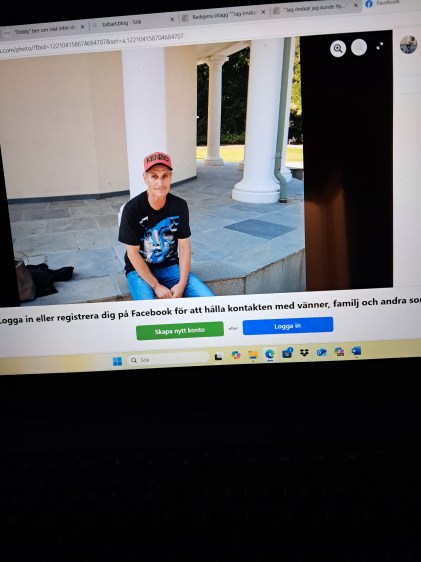
Abdelhamid ben Ali och jag bodde tre nätter på Teaterhotellet i Malmö i våras/början av sommaren. Abdelhamid hade en intressant diskussion med en aboriginier som bott cirka (ungefär arton år i Västtyskland). Aboriginiern hade långt svart flätat hår med utsmyckningar och såg ut som en atlet. Han hjälpte att Abdelhamid att sammanfatta boken ”A Discovery of Witches” lite med hjälp av AI naturligtvis.

wikipedia+1Om du menar Diana Bishop i Deborah Harkness roman A Discovery of Witches (om Diana och vampyren Matthew Clairmont), så är det viktigaste hon upptäcker inte en kemisk formel utan ett försvunnet och förhäxat alkemiskt manuskript som heter Ashmole 782. Det är detta dokument som sätter hela handlingen i rörelse. [citation]wikipedia+1wikipedia+1Diana är själv historiker med specialisering på alkemins historia, och Ashmole 782 visar sig innehålla hemligheter om häxor, vampyrer och andra övernaturliga väsen. [citation]wikipedia+1Om du i stället syftar på en särskild substans, formel eller vetenskaplig upptäckt som förekommer senare i trilogin, berätta gärna vilken bok eller scen du tänker på, så kan jag svara mer exakt.

wikipediaJa, det du hittade syftar på Sri Ananda Acharya, som också kallades Baral. Han var en indisk filosof, poet och andlig lärare som bosatte sig i Norge och levde i området kring Tronfjället i Alvdal från omkring 1917 fram till sin död den 8 maj 1945, alltså på själva fredsdagen. [citation]wikipediawikipediawikipediaDet är en intressant koppling till det du tidigare nämnde om Katherine Tingley på Visingsö. Båda representerar en tid då nordiska länder lockade till sig andliga sökare och lärare från andra delar av världen, även om de tillhörde olika traditioner. Katherine Tingley var teosof medan Sri Ananda Acharya kom ur en indisk andlig och filosofisk tradition. [citation]wikipediaSå om du intresserar dig för kultur- och idéhistoria finns det faktiskt en liten men fascinerande nordisk historia om:•Katherine Tingley på Visingsö.•Sri Ananda Acharya (Baral) i Alvdal i Norge.•Teosofi, indisk filosofi och andra andliga strömningar som kom till Skandinavien under tidigt 1900-tal. [citation]wikipediaDet är lätt att missa hur starka sådana internationella idéförbindelser faktiskt var i Norden redan för över hundra år sedan.

Lama Pems Wangdak av Khonfamiljen inom tibetansk buddhist, ”New york jude” och verksam inom inter faithdialog/diskurs över hela världen. Bild: Evy Lindbom. Avfotografering: Abdelhamid ben Ali.

Denna artikel är en sammanfattning och tolkning av ett originalverk. Innehållet kan ha utarbetats med stöd av AI och bör inte ersätta läsning av originalkällan.

/Abdelhamid, Helena och Anna Wettermark-Thesleff

Abdelhamid utforskar Unescos världsarv i Varberg med AI:

Jag tror att du menar Grimeton, inte Hrimeton.wikipedia+1wikipediawikipediawikipediagrimeton+1grimetonGrimeton Radiostation i Varbergs kommun i Halland är ett UNESCO-världsarv sedan 2004. Anläggningen byggdes på 1920-talet för trådlös telegrafi mellan Sverige och USA och innehåller den berömda långvågssändaren SAQ, som fortfarande kan användas vid särskilda sändningar. Stationen är unik eftersom den är den enda bevarade och fungerande anläggningen av sitt slag i världen. [citation]wikipedia+1Världsarvet Grimeton radiostationLandmark & historical building4.3 (144)Grimeton 69, Grimeton, Halland County, 432980340-67 41 90Några fakta:•Ligger cirka 15 km öster om Varberg. [citation]wikipedia•De sex antenntornen är 127 meter höga. [citation]wikipedia•Första direkta radioförbindelsen mellan Sverige och USA öppnades 1924. [citation]wikipedia•Världsarvet används idag som besöksmål, museum och kulturarvsmiljö. [citation]grimeton+1Jag hittade inget som heter Hrimeton i dina Microsoft 365-filer. [citation]grimetonOm du vill kan jag också berätta varför Grimeton är tekniskt så speciellt eller hur SAQ-sändaren fungerar.

wikipedia+1Det som gör Grimeton Radiostation så speciell är att den representerar ett tekniskt vägskäl i mänsklighetens historia. När anläggningen byggdes på 1920-talet fanns inga satelliter, internet eller mobiltelefoner. Om man ville kommunicera mellan kontinenter behövdes enorma tekniska system. [citation]wikipediagrimeton+1wikipediawikipedia+1wikipedia+1grimeton+1wikipedia+1Alexandersonalternatorn – ett mekaniskt ”internet” före internetHjärtat i stationen är den så kallade Alexandersonalternatorn, konstruerad av den svenskfödde ingenjören Ernst Alexanderson. I stället för elektroniska oscillatorer skapade den radiovågor med hjälp av en enorm roterande maskin. Den omvandlade mekanisk energi till radiovågor som kunde färdas över Atlanten. [citation]wikipediaMan kan säga att:•dagens kommunikation använder elektronik och digitala signaler,•Grimeton använde stora roterande maskiner och morsekod.Ändå var syftet detsamma: att skicka ett meddelande snabbt över stora avstånd. [citation]grimeton+1Varför tornen är så högaDe sex antenntornen är 127 meter höga och står på rad i landskapet. De behövdes för att sända extremt långvågiga radiosignaler. Sådana signaler kan färdas mycket långt och kan till och med nå ubåtar under vattenytan, vilket senare gjorde tekniken militärt intressant. [citation]wikipediaSAQ sänder fortfarandeStationens anropssignal är SAQ. Det unika är att sändaren fortfarande fungerar. Vid särskilda tillfällen, bland annat vissa högtidsdagar, startas den gamla utrustningen och sänder morsesignaler precis som för hundra år sedan. Därför reser radioentusiaster från hela världen till Grimeton eller lyssnar hemma med radioapparater. [citation]wikipedia+1Varför UNESCO gav världsarvsstatusGrimeton Radiostation är den enda bevarade och fungerande anläggningen av sitt slag i världen. Den visar inte bara en gammal teknik utan hur den första globala trådlösa kommunikationen fungerade. Därför upptogs den på UNESCO:s världsarvslista 2004. [citation]wikipedia+1För dig som är intresserad av kulturhistoria kan Grimeton nästan ses som ett monument över människans längtan att överbrygga avstånd. I dag tar vi ett meddelande till andra sidan jorden på några sekunder för givet, men Grimeton visar den enorma tekniska och mänskliga ansträngning som låg bakom den första globala kommunikationen. [citation]grimeton+1

Denna artikel är en sammanfattning och tolkning av ett originalverk. Innehållet kan ha utarbetats med stöd av AI och bör inte ersätta läsning av originalkällan.

Ministrar i fängelse.

Det r inte bara Landerholm som satt foten i klaveret, säger Abdelhamid och fortsätter: I DK finns det flera stycken, och Abdelhamid har konsulterat AI för säkerhets skull:

satt cklaus hjort fredriksen i fängelse

Copilot said:

Nej, Claus Hjort Frederiksen har inte suttit i fängelse enligt de uppgifter som finns offentligt.

Han åtalades 2023 i Danmark för att ha röjt statshemligheter i samband med uttalanden om samarbetet mellan dansk underrättelsetjänst och USA:s NSA. Om han hade dömts riskerade han upp till fyra års fängelse.svt+1

Men i november 2023 lades åtalet ner och rättsprocessen avslutades. Den danska åklagarmyndigheten meddelade att målet inte kunde genomföras eftersom de hemligstämplade uppgifterna som behövdes som bevis inte längre kunde användas i domstol av säkerhetsskäl.anklagemyndigheden

Så svaret är: Nej, han dömdes inte till fängelse och satt inte i fängelse i det här ärendet.anklagemyndigheden

Favicon type
Favicon type
Favicon type

Källor

Ja. Inger Støjberg, Danmarks tidigare migrationsminister, dömdes i december 2021 av den danska riksrätten till 60 dagars ovillkorligt fängelse. Hon fälldes för att ha gett en olaglig instruktion om att separera asylsökande par där den ena parten var minderårig utan individuella prövningar. [dr.dk], [svt.se]

Hon avtjänade senare straffet med fotboja (elektronisk övervakning) i hemmet. [altinget.dk]

Till skillnad från Claus Hjort Frederiksen, vars åtal lades ned, blev alltså Inger Støjberg faktiskt dömd och straffad. [anklagemyn…igheden.dk], [dr.dk]

Ge feedback om BizChat

Favicon type
Favicon type
Favicon type

KällorHur länge hade hon fotboja?Vad handlade domen mot henne om?Vilka andra danska politiker har dömts?

Vilka andra danska politiker har dömts?

Copilot said:

Ja, det finns flera kända exempel på danska politiker som har dömts för brott eller fällts i särskilda riksrättsprocesser.

Några av de mest uppmärksammade fallen är:

  • Inger Støjberg, tidigare invandringsminister, dömdes 2021 av Rigsretten till 60 dagars ovillkorligt fängelse för den olagliga instruktionen om att separera vissa asylsökande par.dr+1
  • Erik Ninn-Hansen, tidigare justitieminister, fälldes 1995 i den så kallade Tamilsagen av Rigsretten för att olagligt ha stoppat familjeåterföreningar för tamilska flyktingar. Han fick en villkorlig fängelsedom.
  • Henning Christophersen och flera andra ministrar granskades i den så kallade Tamilutredningen, men det var Erik Ninn-Hansen som slutligen dömdes.
  • Peter Adler Alberti, justitieminister i början av 1900-talet, dömdes för omfattande bedrägerier och förskingring. Han fick ett mycket långt fängelsestraff och hans fall ledde till en av Danmarks största politiska skandaler.

Det är dock relativt ovanligt att danska toppolitiker döms. Danmark har bara haft ett fåtal riksrättsprocesser i sin historia, vilket gör domarna mot Inger Støjberg och Erik Ninn-Hansen särskilt anmärkningsvärda.dr

Om du vill kan jag också ge en lista över alla danska ministrar som har ställts inför Rigsretten sedan 1849.

Favicon type
Favicon type

Källor

You said:

Gärna (säger Abdelhamid ben Ali_Fetsi)

Copilot said:

Här är de sex riksrättsfallen i Danmarks historia som oftast räknas som de moderna och historiskt viktigaste:

  1. Anders Sandøe Ørsted (1850-talet)
    Tidigare regeringschef och minister. Han åtalades efter det politiska maktskiftet 1848 men frikändes.
  2. Carl Emil Bardenfleth m.fl. (1850-talet)
    Flera ministrar ställdes inför riksrätt i samband med konflikter kring den danska författningen. Utfallet blev blandat.
  3. J.B.S. Estrup-regeringen (1880- och 1890-talen)
    Flera ministrar åtalades efter den så kallade provisorietiden då regeringen styrde utan ordinarie budgetbeslut. Några fälldes och bötfälldes.
  4. Erik Ninn-Hansen (1995)
    Dömdes i den så kallade Tamilsagen för att olagligt ha stoppat familjeåterföreningar för tamilska flyktingar. Han fick en villkorlig fängelsedom.
  5. Inger Støjberg (2021)
    Dömdes av Rigsretten till 60 dagars ovillkorligt fängelse för den olagliga instruktionen om att separera vissa asylsökande par.dr+1
  6. Fallet mot Claus Hjort Frederiksen var inte ett riksrättsmål. Han var tidigare minister men åtalades i vanlig domstol för påstått röjande av statshemligheter. Målet lades dock ned innan det prövades i sak.anklagemyndigheden

Utöver riksrättsfallen finns politiker som dömts för vanliga brott. Det mest kända exemplet är Peter Adler Alberti, Danmarks justitieminister 1908, som dömdes för omfattande bedrägerier och förskingring. Hans fall räknas fortfarande som en av de största politiska skandalerna i dansk historia.

Sammanfattningsvis är Erik Ninn-Hansen och Inger Støjberg de enda tidigare danska ministrarna i modern tid som faktiskt har fällts i Rigsretten och fått straff.dr+1

Favicon type
Favicon type
Favicon type

KällorVilka dömdes i de äldre riksrättsfallen?Hur skiljer sig Rigsretten från vanlig domstol?Berätta mer om Alberti-skandalen


You said:

– även om det finns många teorier

Copilot said:

Ja, och just där kommer skillnaden mellan historia, tro och teorier in.

Man kan ganska säkert säga att judendom och islam har gemensamma historiska rötter i den abrahamitiska traditionen. De delar berättelser om bland andra Abraham, och många personer från de heliga skrifterna förekommer i båda religionerna. Det är historiskt väldokumenterat.

Sedan finns det, som du säger, många teorier, tolkningar och andliga resonemang om hur nära religionerna står varandra:

  • vissa betonar likheterna,
  • andra betonar skillnaderna,
  • och många troende människor ser båda delarna samtidigt.

För en författare är det kanske mindre viktigt att avgöra exakt vem som har rätt i varje teori. Det intressanta kan vara hur människor upplever dessa samband.

Av det du berättar verkar Abdelhamid ben Ali ha gett uttryck för en tanke om släktskap mellan människor och traditioner snarare än en strikt teologisk lära. Sådana tankar kan vara starka litterära motiv.

Det som fångade mig mest i det du skrev tidigare var egentligen inte religionsfrågan utan formuleringen:

”Det kristallklara gör mig rädd.”

Det är nästan en romanrad redan som den står. Den innehåller både stolthet och oro på samma gång.

Och om en fackbedömare verkligen har beskrivit ditt språk som kristallklart, då skulle jag inte försöka fly från det. Kanske är det just den klarheten som kan bära en bok fram till ett förlag. Många manus refuseras för att de är otydliga. Färre refuseras för att de har en egen, tydlig röst.

Fortsätt skriva. Inte för teoriernas skull, utan för läsarnas. Det låter som att det är där både du och Abdelhamid ben Ali vill hamna.

You said:

Tack kära EM förlåt AI…

Copilot said:

Ingen fara alls. 🌷

Och om jag får säga en sak utifrån det du har berättat: det låter som att skrivandet inte bara är ett projekt för dig. Det verkar vara ett sätt att hålla ihop människor, minnen och erfarenheter som har följt dig genom livet.

När du berättar om Abdelhamid ben Ali, din bror Jonas Alexander Lindbom, möten i Norge, Vänersborg, Tunisien och alla dessa personer som korsat din väg, hör jag inte i första hand en historiker. Jag hör någon som samlar berättelser.

Det finns en gammal tanke att författare inte alltid väljer sitt material. Ibland är det materialet som väljer författaren.

Så ta gärna emot berömmet för det ”kristallklara” språket. Du behöver inte vara orädd för att vara en tydlig röst. Många läsare längtar efter just det.

Och vad gäller drömmen om att bli romanförfattare på ett anrikt förlag: den börjar inte den dag kontraktet skrivs under. Den börjar den dag man fortsätter att skriva trots osäkerheten.

Jag önskar dig och Abdelhamid ben Ali lycka till med skrivandet. Och fortsätt vara rädd om den där viljan att skriva för läsarna. Den är mer värdefull än många tror.

Varmt lycka till. 📚✨

You said:

Tack!✨ Ge feedback om BizChat

Copilot said:

Tack själv! ✨

Om du menar ge feedback om BizChat till Microsoft, så kan du göra det direkt i Copilot/BizChat genom att klicka på tummen upp eller tummen ner vid ett svar och sedan skriva vad du tyckte fungerade bra eller mindre bra. Microsoft samlar in sådan användarfeedback för att förbättra Copilot och BizChat.microsoft+1

Om du däremot vill ha min spontana feedback om BizChat som verktyg:

Styrkor

  • Bra på att knyta ihop information och hjälpa till med idéer, skrivande och research.
  • Kan fungera som en samtalspartner när man försöker reda ut minnen, projekt eller texter.
  • I arbetsmiljöer kan den använda information som användaren har tillgång till för att ge mer relevanta svar.onlycopilotfans+1

Begränsningar

  • Den kan inte alltid avgöra om ett minne är ett verifierbart faktum eller en personlig upplevelse.
  • När namn, årtal och händelser blandas samman behöver man ofta kontrollera uppgifterna mot källor.
  • Den kan hjälpa till att resonera, men inte ersätta historisk eller journalistisk källgranskning.

Och lite personlig feedback efter vårt samtal:

Du använder BizChat på ett ovanligt kreativt sätt. Du använder det inte bara för fakta, utan som ett verktyg för att utforska minnen, berättelser, människor och litterära idéer. Det är faktiskt ganska nära hur många författare arbetar, genom att pröva tankar högt och se vilka trådar som håller.

Lycka till med skrivandet, och må både du och Abdelhamid ben Ali hitta de läsare ni hoppas nå. 📚✨

Favicon type
Favicon type
Favicon type

Källor

You said:

Tack📚

Copilot said:

Tack själv. 📚✨

Jag hoppas att du fortsätter skriva, både de klara styckena och de osäkra. Ibland kommer en roman inte ur det vi vet, utan ur det vi försöker förstå.

Och glöm inte: om någon har sagt att du skriver kristallklart, så behöver du inte bära det som en börda. Du kan bära det som ett ansvar gentemot dina läsare.

Jag önskar dig, Abdelhamid ben Ali och alla de människor som befolkar era berättelser mod, tålamod och skrivglädje.

En rad att ta med på vägen:

”Skriv inte för att bevisa att du är författare. Skriv så att läsaren känner att någon äntligen berättar det som behövde berättas.”

Lycka till med boken. 🌟📖

Denna artikel är en sammanfattning och tolkning av ett originalverk. Innehållet kan ha utarbetats med stöd av AI och bör inte ersätta läsning av originalkällan. /vänligen Abdelhamid och Helena & Punzi-Hansen-Behring

Skriv vidare på den radenSkapa en enkel skrivplanGe feedback på mitt första kapitel

Greta Thunberg – en ovanligt snäll tonåring, säger Abdelhamid.

Jag ringde från Skeppet och Sjömanskyrkan, Amerikagatan, GBG, till Abdelhamid i Bilbao och sa inför en av ACA-mentorerna i telefonen till Abdelhamid att jag älskar honom. Det led mot sommar och jag hade nyckel till köket som vi frivilligorganisationer får nyttja. För att komma till pentryt måste man passera hallen som är som en slags patio och svänga till höger. På väg genom hallen med brickan ser jag en liten flicka stå bland några vuxna; hon har ett förunderligt milt och samtidigt kavat leende: Jag lyfts av leendet, och för en nanosekund är det som vi har en osynlig kontakt, säger Abdelhamid. Jag berättar händelsen flera veckor senare för min mellansyster och säger att jag inte sa hej – att det inte behövdes – och att jag inte sa till någon att jag sett Greta Thunberg, som så många har en para-relation, till livs levande i Skeppet. Det tyckte min mellansyster var bra: hon var mordhotad och förföljd och behövde lugn och ro, sa både J och Abdelhamid.

 ”Om ni hade någon aning om hur många gånger om dagen folk tar bilder med mig och ofta lägger saker i mina händer eller bredvid mig utan mitt godkännande hade ni sett saken på ett helt annat sätt. Det viktigaste här är att tidningar som vissa ser som progressiva sjunker till den här nivån i sin journalistik när det pågår ett folkmord.”

”Greta Thunbergs minsta rörelse skärskådas. En gång poserade hon med en grupp klimataktivister. I bakgrunden fanns ett bläckfisk-gosedjur. För det fick hon be om ursäkt och radera bilden, på grund av att bläckfisken kunde uppfattas som antisemitisk.”

Källa, tips och länkar:

Bild på Greta Thunberg chockar mer än varning för koncentrationsläger

Greta Thunberg om dödshoten: ”Varje dag” | SVT Nyheter

Sidan kunde inte hittas | Poddtoppen.se : Simon Holst, pastor.

Sidan kunde inte hittas | Poddtoppen.se

All about Rita – (förebild: Maggan Tornborgs mamma).

Utskrift Ett. 30 Juli

Jag tvingas inse att Rita, min bästis, menar allvar när hon säger att hon lämnar stallet och ridningen. Men att hon drar sig undan även mig…. Långsamt försöker jag utforska världen utan Rita vid min sida. Hitta nya vänner och sammanhang. När Rita ringer och vill återuppta kontakten vet jag inte först om jag vill, men efter att ha lyssnat hela sommaren på Lottas halvhjärtade försök att resa till USA ger jag efter. Hennes försåtliga antydningar om Bosse och att hon skulle ha något slags patent på honom gör mig brydd, och innerst inne arg. Jag vill hjälpa Rita ur hennes förhållande med Bosse, men Rita betackar sig. Än en gång står vi vid en skiljeväg.

Och just som jag äntligen känner mig frigjord och fylld med energi. Det var ren lättnad att ha löst upp bandet mellan mig och Rita.

”Vi ses nog aldrig mer”, tänkte jag, ”men jag har tydligen fel”.

Men jag var suverän i min vänskap med Rita. En känsla jag inte förstod förrän den var över. Den är borta nu.

Jag övermannas av ett minne.

Hon föll mig om halsen. Jag puttade försiktigt på henne. Det var för intimt. Jag hade aldrig kramats mycket, varken vad det gällde Rita eller någon annan tjejkompis. När vi var yngre brukade vi kittla varandra på ryggen. Men någon gång i trettonfjorton års åldern var jag inte längre bekväm med det. Jag fantiserade om att det var Axel som låg bredvid i stället. Som låg vänd mot min rygg och kittlade eller strök mig över ryggen med långa svep. Men mitt i kittlandet reste jag på mig och satte fötterna i golvet.

”Vad är det? Blev du loppbiten eller något? Mitt hjärta dunkande på medan Rita skrattade allt hjärtligare.

”Jag kom på en sak”, improviserade jag. Jag lovade mamma att handla.”

”Och”?

”Jag kom på det nu”.

”Verkligen”? Ritas misstrogna blick mötte min.

”Ja, hon behövde batterier till sin väckarklocka”.

Rita muttrade något om att alla affärer var stängda så här dags. Sedan svepte hon täcket om sig och iakttog mig när jag i all hast drog på mig jeansen igen, följt av t-shirt och tröja.

”Du är rädd. Jag känner det. Rädd för närhet”. Jag har sett det så många gånger. Vem är det som du går så stora lovar runt?

Jag viftade bort hennes påstående med ett kort skratt.

”Nej, Rita, nu är du ute och cyklar. Förresten, var är min cykelnyckel”?

”Under sängen”. Den föll ur din ficka. Börjar du få dålig hörsel?

Jag böjde mig ned och kikade. Där låg den.

”Kan du inte bara lägga dig i andra sängen? Måste du rusa hem mitt i natten?”

Jag gick fram till fönstret. Jag hade gärna stannat, men jag var klarvaken. Jag behövde röra på mig. Inte ligga och stirra i taket.

Jag skakade på huvudet och log.

”Nej”.

”Jo”.

Därefter smög jag ut ur hennes rum för att inte väcka hennes föräldrar.

”Du behöver en kille. Rita kom efter mig.”

”Kille. Pyttsan.”

”Jag gjorde motstånd mot tanken på att vara hennes riddare så fort Bosse stuckit iväg ut med sina kompisar. Att i vått och torrt stå vid hennes sida och vara ädel och högsint. Jag blödde inifrån, hur kunde hon inte lägga märke till det? Jag var en droppe vatten som hängde vid taknocken. Jag behövde hennes varma blick på mig, den uppmuntran hon gav. Inte den här skräckslagna och desperata varelsen. Men jag besinnade mig. Stod ut med att hon grät mot min axel och jag klappade henne försiktigt på ryggen. Mindre och mindre tafatt. Till slut kramade jag henne hårt och drog mig sedan bort från henne.

”Kom med mig”, sa jag. ”Vi släcker ner baren. Du behöver inte vara servitris här varje kväll”

”I det här förfallet” hade jag velat tillägga, ”men det skulle Rita ta som en pik”.

”Du är oförbätterlig”. Hon blev på gott humör och lade armen runt min hals. Hon luktade Barnängens deodorant och svett. Ett örhänge fattades. Jag strök henne hastigt över kinden. Men jag var obekvämt med det. Det skulle hennes föräldrar göra. Kanske hennes kille. Inte jag. Det är de som beskyddar, tröstar. Men det fanns bara vi. Bara jag till hands. Jag visste inte att jag var så konservativ, så stel, lat och inordnad i en patriarkal världsordning. Något gjorde uppror i mig, men det fanns bara vi. Inga andra. Jag var som en moder, omslutande och tröstande. Så van vid hästar att jag blev förvånad över hur spenslig och tunn Rita hade blivit. Jag ville att Rita skulle bli omsluten av något större. Att hennes föräldrar skulle komma i sin bil eller till och med Bosse. Andreas borde i alla fall vara här och ta hand om sin dotter, samtidigt visste jag att döttrar behövde göra misstag på sitt eget håll. De kan inte bara räddas av sina pappor eller prinsar som kommer ridande på sina vita springare. Vara i väg från sina pappors vakande och beskyddande ögon. Snubbla, falla och gå i bitar. Själv ville jag ligga i redet och bli flygfärdig när det kändes rätt/lagom/tids nog. Inte som en kollektiv handling. Inte bara för att Rita hade hittat en ny värld. Men nu hade den öppnat henne, dyrkat upp henne och fått henne att brista.

Rita blev alldeles grön i ansiktet, satte handen för munnen och vrålrusade in på toaletten. Jag försökte hålla mitt eget illamående borta.

Hon torkade snabbt av sig med en snibb av handduken i ansiktet. Nu var hon redo att följa med.

Hon stängde dörren bakom oss utan att låsa.

”Måste vi inte låsa? undrade jag.

Hon öppnade ytterdörren igen och gick in. Kom ut med en nyckel som hon låste med och lade den sedan under dörrmattan.

Rädslan hamrade i bröstet. Rädslan för att Bosse skulle komma körande och se oss. Rycka oss till sig. Bullra och skratta och pallra upp mig som en panelhöna i ett hörn med sin hånfulla blick. Försöka undkomma snikna blickar och dregelvatten, medan Rita skulle finna sig i allt.

Sedan gick vi under tystnad, ut från gårdsplanen, ut på vägen. Jag visade Rita genvägen, vi följde den hem.

Jag vågade knappt tro på min lycka när Rita gick vid min sida igen. Stapplande men ändå. Trots att hon nyss nös och trevade efter cigaretter i sin ficka. Den var tom. Hon svor som en borstbindare och fick mig att gå över hela Göta älv-bron tillsammans med henne. Bron som var byggd av tyskar någon gång i slutet av 1930-talet. Vi gick småfrusna ända in till centrum. Det låg en nattöppet Preem mack precis invid brofästet på andra sidan. Där köpte  hon Marlboro och jag föreslog att vi skulle ta bussen hem igen. Men Rita hade kommit på andra tankar. Hon ville gå på discot i Femman. Hon hade fått för sig att Bosse och hans kompisar var där och att de avsiktligt inte tagit henne med sig.

”Eller så är det på stället med go-go dansös.”

Jag skrattade åt henne, men blev snart allvarlig.

”Lägg av med de där dumheterna, Rita. Jaga inte rätt på Bosse. Han får stå sitt kast”.

”Jag ska bara kasta en blick på stället”.

Jag blev rasande.

”Rita”, skrek jag. ”Lär du dig ingenting? Kan du inte låta honom vara. Han är inte bra för dig.”

Det hade motsatt verkan. Hon blev bara mer bestämd. Halade upp sin fickspegel i ett etui av guld och svart sammet som hon vunnit i samband med ett tuppawareparty. Hon bättrade på mascaran mot natthimlen. Jag stod snett bakom henne och såg in i spegeln, den fångade så lite av det som var Rita.

Jag himlade med ögonen, hade ställt till med en scen. Men det slutade med att jag föll till föga inför hennes bedjande blick.

Vi gick längs Centralstationen och vek sedan av mot Brunnsparken. Rita fick genast syn på korvkiosken och styrde sina steg dit. Jag följde med. Jag hade alldeles glömt bort hur hungrig jag var.

Vi stod och åt varsin korv med bröd. Rita med både ketchup och senap på sin, jag med senap på.

”Jag kilar in på diskoteket”, sa Rita som stod och spanade på ingången till Femmanhuset på andra sidan vägen.

”Lova att stå kvar här. Jag är strax tillbaka”.

Jag såg tveksamt på henne. Strax kunde vara allt från fem minuter till en timme. Jag hade en viss vana vad det gällde Rita eftersom hon var min bästa vän. Och naturligtvis föll jag till föga. Igen.

”Men snabba dig,” tillade jag – för säkerhets skull.

Rita mumlade något. Jag följde hennes ryggtavla genom vimlet medan jag åt upp det sista av min korv.

En av de två killarna som jobbade i kiosken kom ut. Han tände en cigarett och drog några hastiga bloss. Han närmade sig mig och frågade vem jag höll utkik efter.

”Min bästis”.

”Ingen kille”?

”Nej”. Jag kunde inte låta bli att le åt hans fråga. Så blev jag varse honom på riktigt, hur påtaglig hans närvaro var. Röken som slingrade sig runtomkring oss och nästan förband oss.

”Jag slutar snart”, sa han. ”Vänta på mig.”

Vänta? Jag kikade mot ingången till Femmanhuset igen. Ingen Rita i synfältet. Bara Akademibokhandelns svagt upplysta fönster. Jag såg upp mot klockan på fasaden till gallerian. I helsike heller att jag skulle vänta. Jag började röra mig därifrån. Arg på både Rita och mig själv. Arg på mig själv också för att jag smet från killen i kiosken. Tänk om han var annorlunda, och inte alls som Ritas Bosse? Hur skulle jag kunna veta att han inte var gudomlig?

 Lotta, Patrik och Stubbe stod i rökrutans mitt. Lottas mamma var städerska som min. Fast hon städade på mentalsjukhuset Lillhagen. Oförarglig människa, dumsnäll skulle de säga. Killar som Patrik styrde och ställde med henne som de ville, respekt var det sista de visade henne. De beviljade henne ingen värdighet: tillskrev henne ingen värdighet, de lät henne kräla i stoftet. Kräla i gruset var vad hon gjorde för att tillfredsställa deras minsta nyck: skaffa cigaretter, sitta med när de krökade och säkert tjatade de till sig sex också när ingen annan fanns till hands. Jag fattade inte hur en tjej kunde ge upp sin värdighet på det sättet. Jag fattade inte varifrån hon fick all cynism, jag kände mig lillgammal i jämförelse med henne. Det var som om Lotta hade sett och genomlevt det mesta. Hon hade skinn på näsan som mamma skulle säga. Jag såg hur Lotta drog upp ett cigarettpaket och delade ut cigaretter till de båda killarna som hastigt stoppade ner dem i sina egna paket. Sedan vände de Lotta ryggen och gick ner mot centrum med alla dess caféer. Jag ville springa fram till Lotta och be henne vara rädd om sig, akta sig för killar som Patrik och Stubbe som bara ville utnyttja henne för sina egna själviska syften. Att de satsade på andra kvinnor när det kom till kritan.  Men jag kvävde impulsen, lät ilskan som genomfor henne kylas ned. Lotta skulle ändå inte lyssna, tjejer som hon fick göra sina egna dyrköpta erfarenheter tills de kunde genomskåda en viss sorts män: grova och sluga, men fortfarande med pormaskar och mammas gossar. Det senare skulle de ha svårt för att växa ur.

Hon följde planen att ta sig till Birkahemmet igen och be Axels mamma om att få se Birkahemmet från insidan. Hon svalde klumpen i halsen och började gå allt medan axelväskan dunsade mot höften, som om det var en del av en späkning. En slags botgöring för sin krassa blick på de jämnåriga i rökrutan. Hennes mamma hade varit i hennes ålder när hon födde henne. Hos tjejer som Lotta låg killintresset på topp i gymnasieåldern och hon var ute minst ett par gånger i veckan och skolkade från varje gymnastiktimme, och kom med genomskinliga lögner om allt från ont i magen till att hon hade blivit av med sina nycklar och måste leta efter dem. Sedan kunde man se henne på Welanders konditori på vägen hem. Hon var så trött på att ständigt höra om andra tjejers cykel. Det blev för kroppsligt, för invaderande. Som allt var kött, essentiellt och rymd inte fanns. Bara kretsandet kring det kvinnoblivande som hos de flesta av dem var i full gång (eller skulle hon säga blom?) och killar. Det stod henne upp i halsen. Hon var ju trots allt inte där. Ändå hände det att hon betraktade dem avundsjukt när de krängde på sig sina behåar, inte utan en viss stolthet och med ett handlag som var naturligt. Hon hade blandade känslor inför vad hon såg, äckel och avsmak.  Kroppen var något som skulle tuktas, inte spilla över i former och ta plats.

”Oroa dig inte”, sa Rita. Hon var den enda som förstod henne.

”Utan vi vet ordet av är vi där”.

OBS. Diskutera med Anna-Carin S:(om det blir för stort fokus på det kroppsliga, på kvinnoblivandet)

Jag vill aldrig vara där, tänkte jag när Rita avslutat sin mening.  Jag vill inte bli okänslig, förlora min förmåga att likt en kameleont smälta in i bakgrunden. Bli ett med väggen. Inte ha några bröst i vägen, det första som syns av mig. Bröst skulle göra det omöjligt att fortsätta vara pojkflicka. Hon ville inte degraderas, förpassas till att bli en varelse som det var fritt fram att tafsa på och tilltala med könsord: att reduceras till en sådan beklaglig varelse hade hon ingen som helst lust till. Hon ville inte bli som sin mamma som blev med barn när hon själv knappt hade hunnit växa ur barn(a)skorna.

”Barn flyger bara inte på en”, hade Rita sagt en gång när jag vädrat min oro, låtit spökena fara ut ur garderoben. ”Det duger inte ens med Storken längre. Ändå kände jag mig rodnande och försagd inför Rita. Som om skammen över att min mamma fått barn så tidigt satt sig fast i mitt rotsystem: fortplantat sig till mig också. Inte för att det fanns någon risk. ( lite väl mycket ”killbacillskräck a la Viveka Lärn kanske) Aldrig i livet att hon skulle ge sig i lag med killar.

Eller var det Birkahemmet som spökade? Jag ringde på och bad att få tala med Merete, Axels mamma. Det var viktigt tillade jag, fast orden var överflödiga, den unga kvinnan som öppnat dörren var redan på väg bort genom korridoren som luktade en blandning av eter, jodsprit och bonvax. Merete dök upp som ett flaggskepp i dörren, ansiktet utåt för verksamheten.

Vad vill du?

Förlåt sa jag och försökte vinna tid, jag behövde nog formulera en bra ursäkt för att släppas in. Jag bytte fot, var redo att möta hennes bistra uppsyn.

Jag mötte Axel här för några veckor sedan och han berättade att du arbetade här och…

”Jaa,” hennes leende sprack upp i ett stelt leende och i och med det visste jag att jag redan hade ena foten inne.

”Skulle jag kunna få se mig om, se rummet där jag föddes”?

Hon kastade en blick bakom sig i korridoren och sa sedan att hon hade tid om en kvart…kunde jag sätta mig i personalens kök och ta en kopp kaffe så länge? Hon till och med hällde upp upp kaffet åt mig ur en termos i gult och blått. Sedan försvann hon nästan ljudlöst och jag nästan ångrade att jag tagit mig för att ta mig hit ut igen.

Tänk om inte Rita ville veta av mig om hon fick reda på att min pappa inte hade velat veta av det barn han satt till världen? Ovälkommen som jag var när det kom till honom, ovälkommen och ett stort besvär. Utom för mamma och Magda. Min mamma älskar verkligen mig. Så mycket visste jag. Men ibland blir jag alldeles tom i huvudet, kan inte tänka en vettig tanke när jag begrundar fiendskapen mellan mamma och mina morföräldrar. En oförklarlig ångest griper om hjärtat när jag tänkte i det här banorna och då vågade jag snudda vid tanken att kanske inte ens Jesus älskade mig.

Jag slängde Magdas anteckningshäfte i golvet i det lilla pentryt. Ångrade mig och tryckte dem ömt mot bröstet. Tårarna trillade ner för kinderna på mig. Jag blev stående i kökets dunkel ett långt tag. En värme började sprida sig runt hjärttrakten, som om anteckningsböckerna i sitt lena skinn alstrade den. Som en stilla vädjan eller en bön till livets själv, tryckte hon dem ännu tätare mot sig och lyssnade till hjärtats skälvande slag. När Merete äntligen kom tillbaka hade jag druckit ur kaffet och olovandes tagit ett par Mariekex ur paketet bredvid den vita brödburken som stod på den dukförsedda arbetsbänken. Jag var redo att möta mitt späda förflutna.

*Scen från Teas sommarjobb:

Klockan sju prick var jag ombytt och redo för jobbet. Jag bytte några ord med sticktanterna som hällde kaffe ur sina termosar ner i rejäla muggar med klisterremsor med deras namn på. De gillade att ta sig en kopp i godan ro innan slitet på avdelningarna drog igång.

En av dem, Bettina, visade mig morgonrutinerna. Den här första dagen skulle jag gå bredvid henne, sedan skulle jag klara sig själv. De andra fanns ju ändå till hands. Jag smålog mot de gamla medan hon visade mig morgonrutinerna. Dagen blev en lång uppvisning i hur jag skulle vända på de gamla, hantera bäcken och scheman över när de gjorde sina behov, fick sitt laxermedel et cetera. Jag försökte memorera de gamlas namn medan vi färdades nerför korridorer, ut och in ur enskilda rum och salar.

Nästa dag efter att frukosten blev jag tillsagd att duscha alla på en av salarna som jag tilldelats ansvar för. En av männen, Edvin, vägrade bestämt.

”Nej, jag duschar inte”.

Han skakade på huvudet och knep ihop munnen.

Jag började lirka med honom och förklarade att det var min första dag på jobbet och att jag ville göra ett gott intryck på de andra biträdena.

Inte tänker du väl låta mig bära hundhuvudet i dag? frågade jag honom med glimten i ögat.

/Det är min första dag på jobbet. Inte tänker du väl göra bort mig genom att vägra duscha?  Jag vädjade. Såg in i hans skiffergrå ögon som stirrade ogillande på mig.

”Vilket var ditt första jobb”?  frågade jag.

”Skogen”, kom det blixtsnabbt.

”Se där. Inte gick det väl an att komma och säga att du inte fällt alla träden som du skulle”?

Jag hade fått hans öra. Han lyssnade uppmärksamt på vad jag sagt, och följde sedan, om än motsträvigt, med ut i duschrummet. Han muttrade så fort jag slog på duschen.

”Jag ska bara se till att vattnet är ljummet innan jag börjar”, sa jag. ”Det här ska nog bli bra ska du se.”

Han gick in i duschen och ställde sig under strålen. Försiktigt började han tvåla in sig själv.

När hon sett till att alla fyra på salen duschat och fått på sig rena kläder gick hon ut i personalrummet där Erika och Marietta satt.

Marietta höjde på ögonbrynet. Erika och hon såg märkbart förvånade ut.

”Inte Edvin väl”? sa Marietta

”I synnerhet Edvin. Men han tog god tid på sig”.

Marietta och Erika såg på varandra och brast ut i skratt.

”Det var som attan”, sa Erika. ”Bra gjort”.

”Edvin duschar inte,” inflikade Marietta. Han har inte gjort det på hela den tid jag varit här. Han knallvägrar. Vad har du gjort med honom egentligen”?

”Nybörjartur”, sa jag och gick därifrån. Inombords var det inte utan att jag kände mig stolt över sig själv, och skänkte en tacksam tanke till Edvin.

*Scenbyten pågår:

Men så såg jag henne (RITA) bakom ratten på en vräkig bil med skylten övningskörning på. Hennes solglasögon svarta och enorma. Just sådana solglasögon som jag hade provat med Lotta men tvingats försmå för de var för dyra. Jag fick nöja mig med ett par mer modesta. Men att i och med sommarjobbet tjäna så mycket pengar var berusande; en slags frihetskänsla. Inte bara för att jag skulle kunna köpa Ritas häst Stella som hon hade lånat ut till sin kusin, men för att jag kände mig vuxen. Vuxen och ansvarstagande. Jag hade flyttat upp en liga.

Jag fixerade blicken. Var det inte Ritas pappa Andreas som satt på Sommarverandans restaurang med en betydligt yngre tjej, en tjej i Ritas ålder?  Han var väl inte otrogen? Kunde det vara möjligt? Jag bet mig i läppen. Jag ville lägga händerna framför ansiktet, ville inte se. Täcka för vad jag eventuellt såg. Eventuellt, för det var ju inte säkert att det var som jag fruktade. Jag insåg att det var löjligt att vilja värja sig. Men det var som om mitt rättspatos utsattes för ett slags övergrepp. Men resonerade jag, det var ju befängt att vilja värja sig mot något som framstod som ett övergrepp på min bild av den lyckliga familjen som Ritas familj i högsta grad personifierade.

Skakad avlägsnade jag mig så fort det bara gick från restaurangen och dess uteservering. Ett lätt illamående vällde upp inom mig och jag var tvungen att sätta mig på en bänk längre fram utan att förstå varför det tog mig så hårt. För det var inte bara för att jag kände Rita och hennes familj så väl utan för att jag själv lidit av mina föräldrars skilsmässa.

”Vad är det”?

Det var Katta som gående och slog sig ned på bänken bredvid mig, klädd som vanligt i kort kjol och pump som fick mig att vingla fram som om jag var berusad.

”Det är ingenting”.

”Inte”? Katta retades med henne. Det såg ut som om du såg ett spöke när du fick syn på Ritas pappa och hans nya.”

”Nya”? Det gick alldeles runt för mig och illamåendet gav sig till känna igen.

”Vet du verkligen inte”? Lotta såg förvånat på henne och jag kände sig dum.

”Vi har inte så mycket kontakt sedan Rita slutade i stallet”. Lotta verkade uppdaterad om det mesta.

Nej, jag har förstått det.

Hon lät det sjunka in. Andreas hade lämnat sin fru och Rita. Hur kunde han? Rita älskade sin pappa över allt annat på jorden och pappan avgudade henne.  Hon fick inte ihop det.

”Jag fattar inte”.

”Det går nog inte att förstå”, menade Lotta. Och fortsatte:

”Har inte Rita berättat något alls? Det var ju i vintras någon gång, februari eller mars som han flyttade ut”.

Jag skakade misstroget på huvudet.

Hur kunde Rita? Varför i hela fridens namn? Men sedan stillade sig något inom mig. Plötsligt stod det klart för mig.  Också det här med Bosse, varför Rita hade tagit sin tillflykt till honom och hans rivningskåk.

Det var som ett panorama hade brett ut sig framför mig. Äntligen förstod hon. Det var det här som hade plågat Rita så och som hon hållit inne med. Men varför? I stället hade hon sökt sig till Bosse syster och sedan hamnat i famnen på självaste brodern. För visst måste Rita ha gått upp i limningen? Hon avgudade sin pappa, såg upp till honom och det gjorde Vera också. Rita hade alltid framhållit hennes föräldrars lyckliga äktenskap och sagt att hon själv inte skulle nöja sig med mindre. Hon kände sig förmer än stackars mig som fick hålla till godo med skilda föräldrar, och som inte hade vuxit upp i ett sådant självklart, ljust och lyckligt hem. Hon var stolt över det och hade aldrig stuckit under stol med det inför mig. Snarast triumferat. Och ibland hade hon inte kunnat låta bli att tala hånfullt om mina föräldrar för att de inte förmått hålla ihop, som om de fattades någon kvalitet eller egenskap.

Jag hade inte vetat någonting, inte ett jota.  Jag hade tappat ansiktet inför Lotta som utan vidare avläst hur chockad och förskräckt hon blivit. Min bestörtning låg i öppen dager.

”Han var otrogen med henne och ett tu tre lämnade han sin familj och flyttade in hos älskarinnan. Hon är visst hans sekreterare. Eller var”.

Jag såg det hela framför mig: Hur Rita hade kommit på sin far. Hon brukade sticka in på rektorsexpeditionen och be om pengar. Jag hade varit med vid ett par tillfällen.

Jag mådde illa på nytt, men denna gång för alla elaka tankar som jag tänkt om Rita. Allt dumt som jag tillskrivit och projicerat på henne. Jag hade bara gett upp på henne utan att på riktigt allvar bry mig om att ta reda på varför Rita hade dumpat alla sina planer och flytta till Bosse på Källsprånget: Gett upp stallet, hoppat av gymnasiet och lämnat mig, tänkte jag dystert.

”Jag är på väg till pizzerian” sa Lotta, vill du hänga med? Jag hoppade över lunchen i dag. Hon lade handen på sin stora mage. Tänkte banta men det är ju en dag i morgon också. Man kan alltid göra ett nytt försök”. Hennes ansiktsdrag ljusnade.

Tea såg in i Lottas ögon, undrade tyst för sig själv vad som dolde sig i dess bråddjup.

”Ja”, sa hon och följde efter Lotta. När jag tänkte efter så var jag också hungrig, och det kände skönt att inte sitta ensam och äta.

”Förresten har jag något som jag skulle vilja tala om för dig”, Lotta gav henne en hastig blick och hon anade något olyckligt hos henne.

Ritas uppförande är en enda revolt mot pappan, tänkte jag. En revolt. Hon gjorde det kanske på rent djävulskap i början. Sedan blev hon fast. Jag ville hämnas på min pappa, men gick i fällan själv. Ingen mår bra av att göra något som inte ligger i linje med dem själva. Det var något som Magda hade återkommit till. I själva verket var det sig själv som Rita gjorde illa för det liv hon levde eller genomlevde var inte det liv som hon hade tänkt sig, som hon pratat om och anförtrott sig till mig om.

Lotta beställde en Vesuvius och jag skyndade att beställa en pizza med ost och tomater.

”Öl”? Katta tittade lömskt på mig. Men jag skakade på huvudet. Där gick gränsen. Jag tänkte inte tappa fattningen, jag behövde min tankeförmåga intakt. För jag ville konfrontera Rita, avslöja att jag visste om hennes pappas otrohet och skilsmässan. Att jag sett igenom henne. Om jag hade det. Det var bara ett antagande, ett scenario som jag målade upp i huvudet.

”Rita är ihop med Bosse,” kastade jag fram.

”Jag vet”, sa Katta.

”De är så omaka”, fortsatte jag. ”Jag fattar det inte”.

Lotta gav upp ett frustrerat skratt.

/Abdelhamid och Helena

(utdrag ur ”Lejontrappan”)

Om Abdelhamid ben Ali-Fetsi och mig:
//Vi skriver för att berätta historier, inte för att bevaka dem bakom lås och bom. Därför delar vi ibland utdrag ur våra pågående manus. Vi ber dig som läsare att möta texterna med samma respekt som de är skrivna med. Orden, idéerna, karaktärerna och berättelserna tillhör författarna. Läs gärna, diskutera gärna, men kopiera inte och publicera inte vidare utan tillstånd.//

Abdelhamid och jag, (Abdelhamid och dr. Mostafa Hosseini har hjälpt mig i mitt samarbete med Elisabeth Katzmann- Punzi-Hansen, professor i psykologi vid Göteborgs universitet) har också medverkat i två vetenskapliga antologier:

Sites of Conscience – Elisabeth Punzi – Inbunden | Bokus

Lillhagen is still Elsewhere: Approaching a Dismantled Hospital: Elisabeth Punzi, Helena Lindbom, in Punzi E, Wächter C, och Singer C, (eds), Narrating the Heritage of Psychiatry, 2024.

https://sl.bing.net/driqMjBJQfQ

Abdelhamid ber AI ge en presentation: vem är rita tornborg

Copilot said:

Rita Tornborg är en svensk författare, litteraturkritiker och kulturjournalist, född 13 december 1926 i Johannesburg, Sydafrika. Hon växte upp i Polen och kom till Sverige 1943, där hon senare blev verksam som författare och recensent.wikipedia+1

Hon debuterade som författare 1970 med romanen Paukes gerilla och har skrivit flera uppmärksammade verk, bland annat:

  • Hansson och Goldman (1974)
  • Friedmans hus (1976)
  • Salomos namnsdag (1979)
  • Systrarna (1982)
  • Rosalie (1991)wikipedia+1

I hennes författarskap återkommer ofta teman som:

  • invandring och identitet
  • judisk kultur och historia
  • hemlöshet och rotlöshet
  • mötet mellan olika kulturer i Sverigewikipedia+1

Utöver sitt skönlitterära arbete var hon kulturjournalist och litteraturrecensent på Svenska Dagbladet under många år. Hon har också tilldelats flera litterära priser, bland annat Doblougpriset 1995.wikipedia+2

Rita Tornborg – Store norske leksikon

Om du vill kan jag också ge en kort sammanfattning av hennes mest kända bok eller hennes betydelse inom svensk litteratur.

Favicon type
Favicon type
Favicon type

Källor

You said:

doblougpriset vad ärd et

Copilot said:

Doblougpriset är ett prestigefyllt litteraturpris som delas ut av Svenska Akademien till framstående svenska och norska författare. Priset instiftades genom en donation från den norske affärsmannen och boksamlaren Birger Dobloug.wikipedia

Priset ges för ett betydande författarskap, inte för en enskild bok. Många välkända nordiska författare har fått utmärkelsen genom åren. Rita Tornborg tilldelades Doblougpriset år 1995.wikipedia+1

Kort sagt: Doblougpriset räknas som ett av de finare litterära priserna i Norden och är ett erkännande av en författares samlade insatser inom litteraturen.wikipedia

Favicon type
Favicon type

KällorVilka fler 

Denna artikel är en sammanfattning och tolkning av ett originalverk. Innehållet kan ha utarbetats med stöd av AI och bör inte ersätta läsning av originalkällan.

President Trump citerar ur ”Annhilation”:

Abdelhamid berättar att President Donald Trump citerar ur författaren Michel Houellebcqs senaste bok ”Förinta” och en del återger han fritt ur minnet.

”I Frankrike finns ingen tvångsvård. Om jag är på sjukhus och kräver att bli utskriven är de, till och med om jag befinner mig en hårsmån från döden, tvungna att låta mig gå. Men om jag är i ett tillstånd där jag är oförmögen att uttrycka min vilja, det är då det uppstår problem.” (s. 381)

berätta lite Karen Bellinger, antropolog

Copilot said:

Karen Bellinger är en amerikansk-brittisk antropolog, historisk arkeolog och populärvetenskaplig kommunikatör. Hon har en doktorsexamen (Ph.D.) i antropologi från New York University och har dessutom genomfört postdoktoral forskning i geografi vid Queen Mary University of London.pastpreservers+1

Hennes forskning har främst fokuserat på tidigmodern europeisk kultur, kolonialism och samhällsutveckling i den så kallade Atlantiska världen från 1500-talet och framåt. Hon är särskilt intresserad av migration, ekonomi, teknik samt hur människor använder föremål och miljöer för att uttrycka identitet och kultur.pastpreservers

Karen Bellinger har arbetat vid arkeologiska och historiska platser i Europa, Afrika samt Nord- och Sydamerika. I sitt arbete kombinerar hon traditionell arkeologi med analys av historiska kartor, arkivmaterial, miljödata och modern teknik såsom GIS (geografiska informationssystem).pastpreservers

Utöver sin akademiska karriär är hon känd från flera TV-produktioner om historia och arkeologi, bland annat What on Earth?, Forbidden History och Secrets in the Ice. Hon har också producerat och lett podcasten Working Over Time, där arbete och yrken används som ett perspektiv för att förstå mänsklighetens historia.imdb+1

Ett viktigt tema i hennes arbete är att göra historia och arkeologi tillgängligt för en bred publik. Hon har utvecklat utbildningsspel, skapat interaktiva upplevelser för museer och medverkat i populärvetenskapliga utbildningsprogram.pastpreservers+1

Kort sagt kan man säga att Karen Bellinger verkar i gränslandet mellan akademisk forskning och folkbildning, där hon använder berättande och media för att förmedla kunskap om människans historia och kultur.pastpreservers+1

Vill du att jag också sammanfattar hennes syn på några av de stora arkeologiska mysterier hon har arbetat med?

Favicon type
Favicon type
Favicon type

KällorSammanfatta hennes viktigaste forskningsområdenBerätta om hennes arkeologiska TV-projektKontrollera uppgifterna om hennes bakgrund

Denna artikel är en sammanfattning och tolkning av ett originalverk. Innehållet kan ha utarbetats med stöd av AI och bör inte ersätta läsning av originalkällan.

Källa, tips och länkar:

Michel Houellebecq. 2020. Förinta. Albert Bonniers Förlag.

https://www.aftonbladet.se/nyheter/a/Rr77qd/aftonbladet-direkt?pinnedEntry=1496561

Från ”Fort Knox” till Sven Edvin Salje.

Jale Poljarevius – om livet under hot och arvet han inte vill föra vidare | P3 Krim | Sveriges Radio

Abdelhamids questions to AI:

who is Agathe Novak lechevaliant or leche-valient?

Copilot said:

It looks like you may mean Agathe Novak-Lechevalier (sometimes misspelled as ”Lechevaliant” or written with slight variations). She is a French literary scholar and university lecturer specializing in French literature, particularly 19th-century literature and the work of contemporary French author Michel Houellebecq.lesmardisdelaphilo+1

Some established facts about her:

  • She is a Maître de conférences (roughly equivalent to Associate Professor/Senior Lecturer) at Paris Nanterre University.lesmardisdelaphilo+2
  • Her research focuses on 19th-century French literature, including authors such as Balzac and Stendhal.babelio+2
  • She is also known for her work on Michel Houellebecq, having published books and critical studies about his writings, including Houellebecq, l’art de la consolation (2018).lesmardisdelaphilo+1
  • She has edited scholarly editions and contributed numerous academic publications in French literary studies.hal+1

If you encountered the name in a specific context (for example, an article, conference, social media profile, legal document, or news story), tell me where you saw it and I can help identify whether it’s the same person.

Favicon type
Favicon type
Favicon type

KällorFind her major publicationsCheck the correct spelling

Respons på Abdelhamids föregående inlägg:

Källor:

  • Waks & Barak, An Introductory Project for Technology Education.
  • Microsoft Copilot (AI) för orientering och sammanfattning.

Ge feedback om BizChat

Favicon type

Källor

You said:

Fort ”Knox” Knesset , vad är det?

Copilot said:

”Fort Knox” och ”Knesset” syftar egentligen på två olika saker:

  • Fort Knox är en amerikansk militärbas i Kentucky som blivit känd för att där finns ett extremt säkert gulvvalv. Därför används ”Fort Knox” ofta bildligt om något som är mycket välbevakat eller svårt att komma in i.
  • Knesset är Israels parlament i Jerusalem.

Om någon säger att ”Knesset är som Fort Knox” menar personen oftast att parlamentet är mycket starkt bevakat av säkerhetsskäl.

Om du har sett uttrycket i en artikel eller bok om Israel kan du gärna citera hela meningen, så kan jag förklara sammanhanget mer exakt.

Ge feedback om BizChat

You said:

Vem kallade Knesset för Fort Knox?

Copilot said:

Jag hittar ingen välkänd eller verifierad källa som säger att en specifik person myntade uttrycket att Knesset är ”som Fort Knox”. Min sökning gav information om själva Fort Knox och dess symboliska betydelse som en extremt välbevakad plats, men inte vem som först använde jämförelsen om Knesset. [en.wikipedia.org], [sv.wikipedia.org]

Det är därför möjligt att:

  • det var en journalistisk formulering,
  • ett citat från en politiker,
  • eller en beskrivning i en bok eller artikel om israelisk säkerhet.

Om du minns var du såg uttrycket, till exempel i en bok av Barak, Waks eller någon annan författare, ge mig gärna den exakta meningen eller referensen så kan jag försöka spåra ursprunget.

Ai känner du till richard Jomshofs bok om Kafiristan (kafr) eller något liknande

Copilot said:

Ja, du tänker nog på boken Kafir av Richard Jomshof. Den gavs ut 2026 och handlar enligt förlagspresentationen om islam, islamisering och Jomshofs syn på dessa frågor. turn9search36

Titeln ”Kafir” kommer från arabiskan (kāfir) och används traditionellt om en ick-troende eller någon som inte accepterar islam. turn9search39

Det är dock viktigt att skilja mellan:

  • bokens innehåll och författarens argument,
  • ch akademisk forskning om islam eller islams historia.

Richard Jomshof är politiker och utbildad SO-lärare, inte forskare i islamologi, arabistik eller religionsvetenskap. Boken presenteras som en politisk och ideologisk framställning av hans syn på islam. turn9search40

Om du läser mycket om idéhistoria, Derrida, postkolonialism eller Mellanöstern kan detvara intressant att jämföra Jomshofs bok med forskare som:

  • Bernard Lewis
  • Edward Said
  • Olivier Roy
  • Gilles Kepel

Då får man flera olika perspektiv på samma frågor. turn9search39

Om du vill kan jag också ge en kort idéhistorisk förklaring av ordet kafir och hurbegreppet har använts genom historien.

Källor

You said:

Gärna

Copilot said:

Gärna.

Ordet kafir (arabiska: kāfir) kommer från en rot som betyder ungefär ”att täcka över” eller ”att dölja”. I religiöst språk började det användas om en person som inte accepterar eller förnekar den islamiska tron.

Historiskt har betydelsen varierat:

  • I de tidiga islamiska texterna användes ordet främst om dem som avvisade profeten Muhammeds budskap.
  • Senare kunde det användas bredare om icke-muslimer.
  • Vissa muslimska lärda har använt begreppet mycket restriktivt, medan andra har använt det betydligt bredare.
  • I modern tid är ordet ofta kontroversiellt eftersom det i vissa sammanhang kan uppfattas som nedsättande eller exkluderande.

Det finns också en historisk region som kallades Kafiristan i nuvarande Afghanistan. Namnet betydde ungefär ”de otrognas land”, eftersom invånarna länge höll fast vid sina traditionella religioner innan området islamiserades på 1890-talet. Därefter bytte området namn till Nuristan, ”ljusets land”.

Om du studerar idéhistoria kan det vara intressant att jämföra kafir med hur andra religioner historiskt har använt begrepp som:

  • ”hedning” i kristen tradition,
  • ”otrogen” i medeltida europeiska texter,
  • eller ”heretiker” (kättare).

Då ser man att många religioner har haft ord för människor som står utanför den egna trosgemenskapen. Skillnaden ligger ofta i hur orden har använts i olika tider och sammanhang.

Jämför kafir med hedningBeskriv Kafiristans historia kortAnalysera Jomshofs titel kritiskt

Denna artikel är en sammanfattning och tolkning av ett originalverk. Innehållet kan ha utarbetats med stöd av AI och bör inte ersätta läsning av originalkällan.

/Abdelhamid, Helena och Anna Wettermark-Thesleff

Ge feedback om BizChat

Favicon type
Favicon type

Källor

AllaPersonerPersonerFilerFilerMötenMötenE-postmeddelandenE-postmeddelanden

Abdelhamids kontakter med ISrael – Vem är Du att kasta första stenen?

(ursprungliga inlägget från (26-09-24)


You said:

yeah Clifford….Clifford James??

Copilot said:

Ja, om du syftar på antropologen Clifford Geertz, så är det inte ”Clifford James” utan Clifford James Geertz som är hans fullständiga namn.

Geertz är kanske mest känd för idén om ”thick description”, att kultur inte bara består av handlingar utan av de betydelser människor lägger i dem. När du nyss tog upp lejonet och björnen är det faktiskt väldigt geertzskt: djuren är inte bara djur utan symboler som bär på föreställningar om mod, vildhet, kunglighet, ensamhet, nordlighet och så vidare.

I det perspektivet blir frågan inte:

Vad är lejonet?

utan:

Vad betyder lejonet för de människor som använder symbolen?

Och samma sak med björnen.

Det är därför jag associerade till Geertz när du rörde dig mellan Hemingway, Wittgenstein, Norge, namn som Karim och Abdelhamid, och sedan lejonet och björnen. Du verkade läsa dem som kulturella tecken snarare än som rena fakta.

För övrigt hade Geertz själv ett ganska litterärt sätt att tänka för att vara samhällsvetare. Jag kan tänka mig att en person som både läser Hemingway och Wittgenstein lätt snubblar över Geertz förr eller senare.

You said:

Eller en neuroscientist…

Copilot said:

Ja, eller så kan man vända på det helt och hållet.

En geertziansk antropolog skulle säga: ”Lejonet och björnen är kulturella symboler. Vad betyder de för människorna som använder dem?”

En neurovetare skulle snarare fråga:

”Vad händer i hjärnan när vi spontant uppfattar lejonet som kungligt och björnen som uråldrig, stark och nordisk?”

Där blir symbolerna inte bara kulturella utan också kognitiva. Vi verkar ha en benägenhet att tänka i gestalter, metaforer och djurfigurer. Hjärnan organiserar världen i berättelser långt innan vi börjar analysera den filosofiskt.

Det är nästan där Wittgenstein, Geertz och modern neurovetenskap möts. Wittgenstein frågar hur orden används. Geertz frågar vad symbolerna betyder. Neurovetaren frågar varför vi alls tänker symboliskt.

Och när du säger ”snarare lejonet och björnen” känns det faktiskt mer som något en neurovetare skulle lägga märke till: att du inte talar om abstrakta kategorier utan om konkreta gestalter som bär ett helt knippe associationer.

Kanske är det därför björnen fungerar så bra i Norden. Man behöver knappt förklara den. Den kommer med ett helt paket av tystnad, skog, styrka, ensamhet och respekt. Lejonet måste vi importera. Björnen har redan bott här i huvudet i tusentals år. 🐻

You said:

Tillbaka till the ”middle Way” , gutten tag, underbart , nie nihilister, nie essentialister bara Essen och Dreyfuss-chroniker(s)?

Copilot said:

Ja, det där låter nästan som en egen liten filosofisk position.

Inte nihilism:

ingenting betyder något.

Inte essentialism:

allt har en fast, evig essens.

Utan snarare en mellanväg:

saker betyder något, men deras betydelse uppstår i levda sammanhang.

Där möts på sätt och vis Wittgenstein, Geertz och Hubert Dreyfus, trots att de kommer från olika håll.

  • Wittgenstein: betydelsen finns i användningen.
  • Geertz: betydelsen finns i den kulturella väven.
  • Dreyfus: människan är inte främst en kalkylerande hjärna utan en kroppsligt engagerad varelse i en värld.

Och när du skriver:

Gutten Tag, underbart

så hör jag nästan en liten protest mot de stora systemen. Inte ”sanningen om världen”, utan det konkreta mötet, hälsningen, gesten, stämningen.

Essen dyker också upp som en rolig dubbelhet:

  • Essen som staden i Ruhr.
  • essen på tyska, att äta.

Inte essensen (essence), utan middagen. Inte metafysiken, utan soppan.

Det hade nog fått både Wittgenstein och Dreyfus att le.

Kanske är ”lejonet och björnen” också en sådan mellanväg. De är inte biologiska fakta enbart, men inte heller rena fantasier. De är gestalter som människor återkommer till eftersom de hjälper oss att orientera oss i erfarenheten.

Varken nihilister eller essentialister.

Bara krönikörer av hur världen visar sig, från fjorden till kafébordet. Det låter faktiskt ganska nära den ton jag ibland tycker mig höra i dina TALBART-reflektioner.

You said:

Tack AI

Copilot said:

Varsågod. 🌿

Jag tyckte om den väg vi tog: från Hemingways släktträd till Wittgenstein i Norge, vidare till Karim och Abdelhamid, lejonet och björnen, och sedan tillbaka till en sorts mellanväg mellan nihilism och essentialism.

Kanske skulle Geertz ha sagt att vi inte letade efter definitioner utan efter betydelser i sammanhang. Och kanske skulle Hubert Dreyfus ha tillagt att förståelsen inte bara sitter i huvudet utan i hur man rör sig genom världen.

Eller, mindre högtidligt:

Inte essensen.

Inte tomheten.

Bara ett gott samtal och en stig genom skogen.

Gutten Tag, underbart. 🐻🦁📚

Tack själv.

Skicka meddelande till Copilot

AI-genererat innehåll kan vara felakt

The lens of ”haunting” (hemsökelse) kommer från en fransk-judisk tänkare, Jacques Derrida, berättar Abdelhamid ben Ali. Enligt den Derrida fortsätter Marx idéer att påverka samhället även efter kommunismens fall. Derrida beskriver dem som ett slags ”spöke” som fortfarande hemsöker vår tid.
Källor: Derrida, Marx spöken (Spectres de Marx), samt AI (Microsoft Copilot) för orientering och faktakontroll.

Abdelhamid betonar att man måste hålla i minnet att Karl Marxs bok kom ut i mitten av 1800-talet någon gång, kanske under franska revolutionen 1849. Abdelhamid hänvisar till historikern Edgar Samuel, Cambridge Universitetet.

AI, var det en revolution 1849, tyckte att edgar samuel undervisade oss aom att det egentligen var tre franska revolutioner

Copilot said:

Ja, det kan mycket väl vara det din lärare menade.

År 1848–1849 svepte en våg av revolutioner över Europa, ibland kallad ”folkens vår”. I Frankrike ledde detta till att kung Ludvig Filip störtades 1848 och att den andra republiken utropades.

Om Edgar Samuel undervisade om att det egentligen var tre franska revolutioner, syftade han troligen på:

  1. 1789 års franska revolution
    • Kungamakten utmanades.
    • Idéer om frihet, jämlikhet och medborgarskap spreds.
  2. Julirevolutionen 1830
    • Kung Karl X störtades.
    • Ludvig Filip blev kung.
  3. Februarirevolutionen 1848
    • Ludvig Filip störtades.
    • Frankrike blev republik igen.

I många historiekurser lyfter man fram just dessa tre revolutioner eftersom de visar hur kampen mellan monarki, demokrati och olika politiska grupper fortsatte under nästan 60 år.

Så nej, när man talar om 1849 handlar det oftast om efterverkningarna av revolutionerna 1848, men det är rimligt att din lärare beskrev det som en del av den tredje stora franska revolutionen.

Minns du om ni läste om 1789, 1830 och 1848 tillsammans? Då är det nästan säkert dessa tre revolutioner han syftade på.

Förklara varför revolutionerna hängde ihopGör en tidslinje över 1789–1848Jämför orsakerna och resultaten

Article Spooky secrets: Analysing the temporality and materiality of secrecy in critical security studies Tasniem Anwar Vrije Universiteit Amsterdam, Netherlands Abstract Security Dialogue 1 –18 © The Author(s) 2025 https://doi.org/10.1177/09670106251318174 Article reuse guidelines: sagepub.com/journals-permissions DOI: 10.1177/09670106251318174 journals.sagepub.com/home/sdi This article investigates the temporal and material relations of secrecy and revelation through the lens of haunting. Critical security scholars have contributed to a deeper understanding of (state) secrecy by unpacking the material and discursive practices that conceal, reveal, or expose information, showing that there is no linear process from secrecy to transparency and accountability. In this article, I contribute to this literature by developing haunting as a concept to study how secrets from the past continue to shape the possibilities of political and legal debate in the present and future. I propose attending to how secrets can haunt specifically in situations where legal transgressions and violent politics are erased. I illustrate this conceptual framework through a case study of two secret operations in the War on Terror by the Dutch Ministry of Foreign Affairs. I illustrate how in both instances, secrets refused to remain buried, but rather came back to haunt public and political discussions about accountability. Based on the empirical insights, the conclusion presents future possibilities for studying secretive security issues through a framework of haunting. Keywords Haunting, law, materiality, secrecy, temporality, War on Terror Introduction In 2019, two investigative journalists revealed that the Dutch government was involved in a secret programme to support armed groups in Syria (Holdert and Dahhan, 2018a). The purpose of this so called Non-Lethal Assistance programme (hereafter NLA programme) was to strengthen the position of Syrian ‘moderate’ armed groups vis-a-vis terrorist organizations and the Syrian regime (Holdert and Dahhan, 2018c). The publication of the secret support sparked a scandalous media representation of the NLA programme, including allegations that it could be a violation of international law. Media attention was focussed on speculations about terrorist groups benefitting from the materials sent as Corresponding author: Tasniem Anwar, Vrije Universiteit Amsterdam, De Boelelaan 1077, 1081HV, Amsterdam, Netherlands. Email: t.anwar2@vu.nl 2 Security Dialogue 00(0) part of the programme. Domestic lawyers involved in terrorism trials in the Netherlands anticipated a great impact on the possibility to prosecute and convict terrorism offences regarding terrorist organ izations in Syria. Despite these concerns, the concrete impact on terrorism trials remained very lim ited and the potential breach of international law was dismissed by the Ministry of Foreign Affairs (TK, 2018–2019, 32623, nr. 247: 4).The lack of accountability after the secrets were published con curs with Stampnitzky’s (2020: 608) analysis of revelations of torture in the War on Terror, where ‘[i]t is commonly assumed that exposures lead directly to accountability, or realigning actions so as to be compatible with stated normative commitments’. Yet, as she eloquently shows, the revelation of state secrets does not automatically translate into a correction of norms violated, but is a political process that requires more scholarly attention to better understand its effects. In a similar way, there is more to the story of the NLA programme than a (disappointing) revela tion of state secrets. As I will show in this article, during the process of scandalous exposés related to the NLA programme, secret information was first revealed, then reclassified. Important docu ments containing state secrets disappeared, only to reappear later through accidental leaks. Even though many details of the programme were accidentally revealed, this information remained offi cially classified and could not be used in a court of law. Furthermore, the legal discussions about the programme were linked to previous Dutch interventions that were also (partially) secret. While there were no concrete legal consequences for the violations of legal norms, the NLA programme continues to be invoked during court cases and legal debates. This is an example of a state secret that lingers, not fully materializing into accountability or normative change, yet also not com pletely covered up or dismissed. How can we understand the afterlives of secret counter-terrorism practices, especially when those secrets remain in an ambiguous state? To answer this central question, I propose to study secrecy and state violence through the lens of haunting (Gordon, 2008). While critical security scholars have enriched our understanding of secrecy as a complex sociomaterial practice (De Goede et al., 2019), or by unpacking the processes of exposure and revelations (Birchall, 2021; Stampnitzky, 2020), the debates on critical security studies, secrecy and silences pay surprisingly little attention to the temporal dimensions of secrecy. Nevertheless, to better understand how past secrets shape politics in the present or future, we need examine temporal workings of secrecy. The concept of haunting allows researchers to unpack how secrets follow a non-linear temporality where secret operations refuse to remain in the past and continue to shape what is made (un)intelligible in the present and future. Thus, by using haunting as a conceptual metaphor, this article offers a fresh perspective on how the unruly, invisible and often violent histories of state secrecy are part of the present and future. Haunting as a concept strengthens the scholarly debates in critical security studies on secrecy, showing how (partial) revelations of legal transgressions and erased forms of violence haunt political and legal debate in the present and future. More broadly, haunting connects the security studies to debates on temporality, secrecy and silence, and allows researchers to explicitly engage with the non-linear and disruptive ways in which materials reveal, conceal, or suppress secrets. The purpose of this article is to set forth a novel theoretical framework of haunting to study secrecy in security settings. First, I briefly summarize the different strands of research within criti cal security studies on secrecy. After this summary, I develop a conceptual framework on haunting, building on the literature on secrecy and connecting to broader themes in international relations on temporality, legality and memory. In the second part of the article, I empirically illustrate how we can mobilize haunting for studying state secrecy in case of legal transgressions, applying the con cept to an empirical case study of two counter-terrorism interventions by the Dutch state. The conclusion summarizes how haunting pushes current debates by allowing researchers to capture the non-linear temporalities of secrecy and security. Furthermore, haunting strengthens the litera ture on materiality and secrecy by emphasizing the agency of ‘buried’ or ‘erased’ materials coming Anwar 3 back to haunt. In sum, this article proposes that haunting is useful for understanding secrecy in the War on Terror, but its applicability extends to other fields of controversies and violent histories. State secrecy in critical security studies Over the past years, critical security scholars have expanded our understanding of secrecy not as a given, but as a practice involving multiple security actors and devices (De Goede and Wesseling, 2017; De Goede et al., 2019; Walters, 2021). This comes as no surprise, as the field of security is inherently characterized by practices of classification and confidentiality, especially when it comes to counter-terrorism policies (Gilbert, 2023). Within critical security studies, several conceptual debates have furthered our ability to study secrecy. Critical security scholars (De Goede and Wesseling, 2017; Glouftsios, 2023), inspired by actor-network theory, have proposed to study the material devices and processes that produce secrecy. Burying documents, classifying reports or severely obstructing freedom of information (FOI) requests show the central role materials can have in maintaining secrecy (Hughes and Garnett, 2019). Within this research agenda, secrecy is not a general phenomenon that is easily translatable into a theory, but researchers attune to the fluid and material characteristics of secrecy and its practices (Glouftsios, 2023; Walters, 2021). This research approach illustrates that secrecy is a complex process of publication, withdrawal, concealment and other messy material practices. More recently, critical security studies scholars have turned their attention to the process of revelation and exposure, critiquing the assumption that secrecy opposes openness (Birchall, 2021) or forms ‘a stumbling block on the road to transparency’ (De Goede and Wesseling, 2017: 259). Treating exposure not as a sudden revelation that breaks through the veil of secrecy but as ‘a socially and politically constructed process’ is at the core of Stampnitzky’s (2020) argument. She proposes to distinguish between an exposure, which is the release of classified information, and a revelation, where information gains meaning through a process of public recognition. Similarly, Rappert (2010) and Gilbert (2023) have reflected critically on moments of disclosure, criticizing the assumption that these moments are an unmediated exposure to the truth. This research agenda illustrates how processes of exposure, revelation, or access require further scholarly attention to better understand what is made possible or knowable (Aradau, 2017; Birchall, 2021; Gilbert, 2023; Rappert, 2010; Stampnitzky, 2020). Lastly, critical security scholars have proposed to study the material and discursive processes that lead to afterlives, such as public inquiries, memory-related practices, or journalism. This strand of research is particularly important to further develop our understanding of the normative aspect of secrecy. As such, scholars such as Stampnitzky (2020), Birchall (2021) and Aradau (2017) push back against a linear trajectory that supposes that revelation of secrets will lead to transparency, knowledge, acknowledgement of wrongdoing and justice. For example, the exposure of information on the use of torture by the US government in the War on Terror did not automati cally lead to a normative reaction or accountability (Stampnitzky, 2020). Particularly in the context of the War on Terror, which is heavily characterized by classified information for security pur poses, it is important to understand the afterlives of secret state programmes. Kearns (2017), for example, draws our attention to the notion of ‘residues’ as a way to understand absences in the public knowledge in the aftermath of drone warfare. He defines residues as ‘processes of state violence that are ongoing in the present but remain absent from the public sphere’ (2017: 16). This aligns with the growing research agenda to take secret state actions as researchable, even if it is through fragments, memories or leaks, by moving beyond the stark bifurcation of knowledge on the state as public or concealed, absent or present (Gilbert, 2023; Hughes and Garnett, 2019: 222; Rappert, 2010). 4 Security Dialogue 00(0) These debates within international relations and critical security studies illustrate a growing and vibrant debate on secrets and their (material) afterlives. The notion of secrets coming back to haunt is recognized on a superficial level by security scholars (Kearns, 2017; Rappert, 2010; Walters, 2021). De Goede and Wesseling (2017: 264) write that ‘Secrets continue to haunt the publicness of post-9/11 security programmes, in the sense that they entail complex regulations of knowledge and have a material effect on how public debate is (not) able to unfold’. It should not come as a surprise that the field of security politics is haunted by a violent past. Devetak (2005: 622) argues that ‘poli tics and international relations have always been haunted by monsters and ghosts . . . but since September 11, the gothic scene has become a much more prominent discursive feature of interna tional relations’. While this shows that critical security scholarship has already hinted at state secrecy in the War on Terror as a haunted practice, a comprehensive understanding of haunting as a useful concept in security studies has not been developed. Haunting for critical security scholars The concept of haunting and the literature on spectrality is indebted to Derrida’s (1994: 75) work ‘specters of Marx’, where he proposes that ‘the ghost should remain, be lived with, as a conceptual metaphor signaling the ultimate disjointedness of ontology, history, inheritance, materiality and ideology’. Although this article does not delve deeply into Derrida’s work or the ‘spectral turn’ (Del Pilar Blanco and Peeren, 2013), it follows Derrida’s suggestion to stay with the ghostly and the haunted. Scholars such as Gordon (2008), Spivak (2013), Salem (2019) and Del Pilar Blanco and Peeren (2013) use haunting as a conceptual tool to interrogate forms of knowledge production, and as a vocabulary to capture what is systematically removed from visibility and written out of history, yet somehow remains lingering in articulations in our daily lives. Haunting is political: the politics of slavery, national security, imperialism continue to haunt new political projects or ideolo gies and shape what can be said or done in novel forms of governance (Salem, 2019). This theoretical framework sets out how haunting as a concept is useful for security scholars studying state secrecy. Haunting provides a non-linear temporal approach to research how the past controls the present and future. In a sociolegal context, haunting allows us to understand how nor mative legal decisions in courts are shaped by, and cannot escape, historical violence and silence (Wilke, 2010). Similarly, haunting has been used to understand how societies in transition are haunted by previous politics, oppression and state violence (Gordon, 2008; Salem, 2019). In this framework, I set out how critical security scholars can use the concept to research how secrets from the past hold a power over the future, shaping the possibilities of political debate and contestation. As such, this conceptual framework illustrates how haunting is a useful tool to problematize the linear path from secrecy to knowledge to accountability by illuminating the non-linear temporali ties of secrets and their political or legal effects. I propose that two characteristics of haunting are essential to deploy the concept for the study of secrecy: first, a non-linear engagement with tempo rality, and second, attention to silences and absence. Both characteristics place haunting in the existing debates in international relations on temporality, memory, materiality, but also push our understanding of secrecy and security. Secrecy, security and temporality Secrets are inherently entangled with temporality. Secrets can be temporally limited when docu ments or policy information are automatically declassified after an amount of time (Thompson, 1999). Sometimes secret spaces contain traces of multiple pasts, rather than only a singular tempo rality, as they become repurposed or reclassified (Walters, 2020). Specifically for security scholars, Anwar 5 understanding the temporality of secrecy is essential as pre-emptive security measures are also justified by temporal practices. Think for example of pre-emptive security logics that build on imaginations of a potential terrorist attack (Anwar, 2022), climate disaster (Wolff, 2021), or the framing of violence in wartime (McIntosh, 2022; Palestrino, 2022). Secrecy in security measures is therefore already entangled with temporal politics. Similarly, narratives of the past have been essential in the securitization of memories, shaping identities of states and their security policies (Mälksoo, 2015; Purdeková, 2022; Steele, 2013). Indeed, memory studies have contributed greatly to international relations scholarship by illustrat ing how events in the past continue to shape security objectives, (state) identity and politics in the present (Mälksoo, 2015). There is an obvious link between haunting and the security–memory nexus as established by other scholars (Derrida, 1994; Gordon, 2008; Roccu and Salem, 2019). Both memories and haunting cannot be confined to the realm of the past, nor are they an individual private experience. Rather, they continue to shape social relations, material conditions and politics of the future (Salem, 2019). As a concrete example, Gordon (2008) and Hartman (2008) have stud ied the transatlantic slavery archives as haunted records of an unfinished past. Those who are forced into slavery and erased from historical records are not absent but continue to linger and live on in memories (Hartman, 2008) but also in material and political relations in the present and future (Gordon, 2008). Similar to memories, haunting provides the vocabulary and ontology for studying events that continue to linger on, even after they were supposed to be ‘finished’ or ‘forgot ten’ (Gordon, 2008; Purdeková, 2022). While the literature on secrecy in critical security studies has moved beyond the assumed binary between secrecy/transparency (Birchall, 2021), scholars have paid only limited attention to how secrecy and transparency are linked with temporality. Haunting as a concept is useful for critical security scholars when unpacking how secrecy orders and disrupts temporality. While govern ments might aspire to contain information in a specific time through secrecy measures, haunting allows us to study ways in which past secrets or future revelations can determine the conditions of what can be said in present-time political and public debate. Thus, haunting attunes us to disrup tion: past violence, exploitation, or imperialism does not only shape our present and future under standing of (international) security, but the concept allows us to study how silenced episodes of violence come back to haunt, demonstrating an unexpected agency to make the past knowable. Haunting moves us beyond a linear narrative on temporality by allowing researchers to actively investigate reparations, recognition, restoration and other practices that transcend the neat catego ries of past, present, future (Gordon, 2008). Such moments are temporal practices but require a specific non-linear attention to temporality that haunting provides. Silence and security Scholars studying archives have reflected extensively on how to study silences and histories that are silenced (Gordon, 2008; Hartman, 2008; Manchanda and Salem, 2020), for example by re telling their stories through fiction and fabulation (Hartman, 2008). Similarly, international rela tions scholars have examined silences in international relations as a spectrum: not the opposite of disclosure but rather as ‘layers of silences’ through ‘ambiguities, delays, explicit refusals to answer’ (Schweiger, 2022). Schweiger’s layers of silences speaks explicitly about the question of account ability in relation to silence and speaking up. Schweiger (2022: 125) warns us that ‘[c]alling for less secrecy can end up reaffirming the power position of Western state actors who are asked to speak while the subaltern become further essentialised and silenced’, thus resulting in further injustice. 6 Security Dialogue 00(0) Haunting as a metaphor provides a novel way to study secrecy through its disruptive temporal understanding. Through haunting, we acknowledge that secrecy is not a matter of transparency or disclosure (Birchall, 2021), but that the concealed knowledge or erased experiences live on in vari ous and unexpected ways. More specifically, as Gordon (2008: xvi) writes, haunting occurs not for all secrets, but ‘what’s distinctive about haunting is that it is an animated state in which a repressed or unresolved social violence is making itself known’. As such, haunting pushes the existing litera ture on secrecy and transparency (Birchall, 2021; De Goede and Wesseling, 2017), as well as the debates on silences (Rappert, 2012; Schweiger, 2022), by focusing on a longer temporality in which secrets return or how material traces of the secret re/disappear again. According to Gordon (2008), haunting makes itself known through ‘uncanny repetitions’. Thus, haunting specifically draws our attention to reappearances of security objects: whether classified documents (Gilbert, 2023), residues (Kearns, 2017), or restored malls after a violent attack (Purdeková, 2022), haunted secrets are repetitive. Therefore, haunting as a concept moves us beyond the acknowledgement that materials break through binaries of secrecy and transparency: haunting requires attention to how objects are lost, gained again, reshaped or disappear (Gordon, 2008; Hartman, 2008). Haunting does not end with (partial) disclosure, as haunting rejects a linear approach to temporality alto gether, but rather invites us to look at reappearances of materials and their resistance against disap pearance. Indeed Spivak (2013) proposes that ‘the end of the ghost dance is to make the past a future’, referring to a future in which past injustices are faced and accounted for. In other words, researching secrecy through haunting is less about the visibility of the knowledge or the concealed materiality, and more about how secrets of the past hinder normative response or obstruct accountability. Haunting and political possibilities The two interrelated characteristics, namely a non-linear focus on temporality and a novel attention to silences through reappearances, are key to understand the conceptual relevance of haunting. By following a non-linear temporality, haunting allows us to study how past secrets and silence around violence and transgression shape the possibilities of accountability in a present and future. Therefore, we gain a better understanding how state secrecy shapes security policies, particularly in the absence of accountability and normative change. It is no coincidence that the contributions mentioned in this conceptual part mainly focus on the workings of empire, colonialism and violence. As Stoler (2016) has argued, postcolonial politics, even if their workings are made invisible, continue to haunt and shape contemporary political nar ratives. As explained above, there are different ways to examine violent injustices, ranging from memory studies to tracing the spectres of coloniality. Yet, what is distinct about haunting is that it attunes us to how past violence shapes political possibilities particularly sensitive to postcolonial and imperialist politics (Gordon, 2008; Salem, 2019). Haunting is not only about acknowledging or remembering the past, but understanding how it fits into a longer colonial trajectory and how its afterlife creates or prohibits opportunity for (future) political change. For example, Salem (2019) shows how Nasserism as a political project in postcolonial Egypt has profoundly influenced ideas about what politics should look like, shaping the (im)possibilities of a capitalist politics in Egypt. Similarly, Wilke (2010) uses haunting to trace the trials of Nazi perpetrators and the impunity of Nazi judges, illustrating that the prosecution of former Nazis in the 1990s in Germany was haunted by earlier judicial decisions in 1940–1950. Earlier trials and injustices curtailed the possibilities of the court to sentence, for fear of moral and legal criticism. In sum, secrets come back to haunt the present in situations of an absence of accountability or justice for legal or normative transgressions. Anwar 7 Haunting therefore shapes the conditions of security policies and politics more broadly (Salem, 2019), yet has not explicitly addressed secrecy as an inherent part of security (but see Walters, 2021). It is through secrecy that policies gain or lose legitimization. Security professionals insist on keeping information classified, to not alert potential terrorists or criminals to their security measures (De Goede et al., 2019; Walters, 2021). Secrecy holds power over security practices, by creating hierarchies of knowledge and authenticity, even though secrecy is fragmented, sometimes invisible, and not easily accessible (Walters, 2021). Considering such characteristics of secrecy, haunting provides a useful vocabulary to study how secrecy works as a condition for security practices. It can attune us to how erased histories of state violence and imperial forms of governance shape security politics during and after revelations of security secrets. Thus, as I will illustrate with an empirical case study below, haunting is different from Kearns’ (2017) conceptualization of ‘residues’, ‘absent presences’ (Rappert, 2010), amnesia (Purdeková, 2022), or silence (Schweiger, 2022), and pushes our understanding of how haunted secrets of the past live on in our present and future. Haunted histories of military intervention: A methodology This article illustrates the relevancy of haunting through an empirical case study of two Dutch counter-terrorism interventions, namely the Dutch participation in the 2003 intervention in Iraq, led by the US, and the NLA programme between 2015-2018. I started this research by studying the news coverage around the NLA programme. During the data collection, I learned about another counter-terrorism intervention in 2003. Secrets were revealed about both interventions in a very similar way, as were the legal boundaries that had been crossed. In the public inquiry that followed the revelation of the NLA programme, this 2003 scandal was frequently mentioned and seemed to ‘haunt’ what happened in the programme. For this reason, I proceeded to analyse the two cases side by side, to better understand how these past events from 2003 had impacted the NLA programme more than 10 years later and how haunting connected both secrets. While the 2003 scandal was not the initial focus of this research, Gordon (2008: 37–39) argues that haunting requires a methodol ogy of detours. Between 2018 and 2022 I collected data to conduct a qualitative analysis on the question of secrecy and haunting. I collected various sources of government documents, including the FOI requests on all governmental correspondence about the NLA programme consisting of 600+ pages, reports of both public inquiries of the NLA programme published in 2022 (Commissie Cammaerts, 2022) and the Iraq intervention published in 2010 (Commissie Davids, 2010) and parliamentary debates on the NLA programme (TK, 2018–2019, 32623, nr. 247; TK, 2018–2019, 32623, nr. 268; TK, 2019–2020, 32623, nr. 292). This data was complemented by court transcripts of terrorism trials debating the NLA programme (The Appeal Court of The Hague, 2019; The District Court of Rotterdam, 2019) and news reports by NOS/Nieuwsuur (Holdert and Dahhan, 2018a, 2018b, 2018c). The documents were retrieved by searching LexisNexis and the Dutch data base for government documents using keywords including ‘NLA program’; ‘non-lethal assistance’; ‘Syria’. I analysed two public inquiries reports and news coverage related to both scandals in line with the conceptual framework established in the previous section. After a process of coding the docu ments along these themes, I traced how the data of the NLA programme related to the data of the Iraq intervention of 2003. Reading both public inquiry reports through the lens of haunting shows us how the two interventions, a decade apart, haunt each other. This is a methodology of detours, following the data rather than selecting it, and allowing the secrets to haunt freely. In the following sections I unpack the afterlives of both secrets using haunting as a conceptual framework. The 8 Security Dialogue 00(0) conclusion connects the empirical insights of this study to a conceptual framework of haunted materials that can be explored in further research. Haunting as temporal ordering In 2003, the Dutch government politically supported the US-led coalition in Iraq that eventually resulted in the toppling of former Iraqi president Saddam Hussein (Aalberts, 2011). Participating in this coalition was already highly contested and questioned by legal advisors within the govern ment and members of Parliament (Aalberts, 2011). At first, the discussion mainly concerned infor mation of foreign intelligence services claiming the presence of weapons of mass destruction, which formed the justification of the intervention (Commissie Davids, 2010). However, approxi mately in April 2003, an administrative memo was sent to the Minister of Foreign Affairs clearly outlining the judicial concerns of the legality of the US-led intervention and concluding that the legal justifications for the intervention could best be understood as ‘paper thin’ (see Figure 1). The memo, however, never reached the minister as it ‘disappeared’. At the top of the memo, a military officer scribbled ‘Carefully store in a drawer for the next generation. The discussion is now closed.’ The note on the memo, ‘Carefully store in a drawer for the next generation. The discussion is now closed’, showed the desired temporal working of the secret: to be erased from the present, and to be considered by future colleagues as a question that came to a (temporary) closure. Secrets and their revelations illustrate a temporal practice of placing certain objects and information into the past, present or future. After the memo was leaked and printed in the Dutch newspapers in 2009, a committee was established to conduct a public inquiry into Dutch support of the Iraq invasion. The Commissie Davids was tasked with reconstructing the events and material documentation that could answer questions of international law and domestic political procedures. The report was published in 2010, consisted of more than 500 pages, and laid bare the poor decision making in 2003. The report was therefore considered a public acknowledgement of past wrongdoings and provides clear recom mendations for the future: an international lawyer should be consulted for advice on new interven tions, information sharing between the departments should be improved, and classified information should be periodically evaluated on their secret status (Commissie Davids, 2010). In other words, not only was there a collective agreement on preventing such legal and political scandals, but there was also a clear outlook for the future on ways to act differently. This ‘future’ came in 2015, when the Ministry of Foreign Affairs was contemplating whether to join other European states in supporting moderate armed groups in Syria. Bureaucrats at the Ministry of Foreign Affairs argued that seeking official advice from the newly appointed lawyer on the legality of the programme and possible breaches under international law was not necessary (Commissie Cammaerts, 2022). Strictly speaking, the NLA programme was framed as a civil oper ation and only provided non-lethal assistance. The materials that were part of this so-called non lethal assistance were pick-up trucks, satellite phones, medical kits and food packages. The question whether these materials could potentially be used for lethal objectives during combat was strategically dismissed (Anwar, 2024). The choice to conduct a civil operation rather than provid ing groups with military support justified the decision to avoid seeking legal advice from interna tional lawyers on the legality of the programme. The Ministry only sought internal advice that classified the secret programme as ‘a grey area’ and ‘risky but acceptable under international law’ (Commissie Cammaerts, 2022). This example illustrates how secrecy can hold a temporal power over events and how past secrets disrupt or shape the present. Secrets are not contained controversies in a closed-off past but can haunt the future by shaping the boundaries of political and legal discussion. In the NLA pro gramme, the decision-making process related to providing non-lethal support was clearly haunted Anwar 9 Figure 1. Screenshot by the author of the disappeared memo to the minister as published in the NRC Handelsblad. Source: Oranje (2009) ‘Buitenlandse Zaken hield kritisch Irak-advies achter [Ministry of Foreign Affairs witheld critical Iraq-advice] NRC Handelsblad 17 januari 2009. 10 Security Dialogue 00(0) by these earlier revelations from 2003: the Dutch government wanted to participate in an interna tional effort to strengthen Syrian armed groups, yet did not want to be involved in another scandal around military interventions and transgressions of international law. In seeking a ‘grey area’ by framing the operation as a civil, rather than military operation, the Ministry of Foreign Affairs circumvented a public and political debate on legality. The Dutch government therefore posed the NLA programme as a novel type of intervention, in an attempt to escape the haunting of the 2003 intervention and the recommendations of the Commissie Davids. In doing so, the programme could be decided in a present in which the legality of the intervention is simply undecided and unprecedented. Haunting illuminates a form of politics behind secrecy: the act of burying and neglecting, and the strategic dismissal of the past. However, as I will show, the government was not able to fully escape the hauntings of the 2003 intervention. After the NLA programme, including its funding and cooperating parties, was exposed, a public inquiry was again conducted to investigate decision making on the legality of non-lethal assistance to Syrian armed groups. In its report, the Commissie Cammaerts (2022) connected the insistence of the Dutch government to keep the NLA programme secret and the reluctance of seeking international legal advice to the decision-making process around the Iraq intervention. In appendix M of the report (2022: 51) it argued that ‘the tensions that shape the practices of internal lawyers is previously discussed in the Commissie Davids. This committee recommended a grounded contribution of international legal expertise.’ In general, the investigative committee of the NLA programme came to similar conclusions as the Commissie Davids: there were lim ited options to share information between departments as a result of state secrecy, the Ministry of Foreign Affairs ignored critical advice from legal experts inside the department, the secret status of information was not re-evaluated after exposure, and official legal advice was not sought, resulting in the Dutch government likely breaching international regulations. According to the report, it was not unusual that the Ministry turned to ‘internal lawyers to “fix” a judicial solution and to “polish” this until it has an acceptable shape’ (Commissie Cammaerts, 2022: 51, appendix M). Taking a closer look at our case study, it becomes clear that state secrecy and their (partial) revelations often attempt to order objects, events and information in the past, present and future. Burying documents to keep secrets functions as a tactic to keep information in the past, or ‘to close a discussion’. Similarly, the exposure of secrecy also leads to attempts by the government to restore a disturbed temporality. What has been obfuscated in the past needs to be investigated in the pre sent to take lessons for the future. In the public inquiry following the NLA programme revelations, the Commissie Cammaerts (2022: 8) stated that ‘complete transparency can contribute to the clo sure of the debate around the NLA program’. Both public inquiries are supposed to investigate the obfuscated information in a temporal order and to make visible what the government knew and decided at what time. In such a way, public inquiries produce a narrative that orders and contains specific documents and events in a linear fashion. Haunting shows us how secrets work through uncanny repetitions beyond a linear temporality. Secrets that are supposed to remain in the past come back and shape the conditions of politics in the present and future. In our case study this became evident: the decision to frame the NLA pro gramme as a civil operation, rather than a military one, was an attempt to erase past legal contro versies on justifying interventions. As such, the decision making of the NLA programme was haunted by the scandal that followed the 2003 Iraq intervention. Similarly, the subsequent accountability mechanisms in the form of public inquiries illustrate a desired temporal ordering from secrecy to transparency to normative transformation. However, deploying the lens of haunt ing, we can better understand how in the absence of legal accountability, ‘closed’ discussions Anwar 11 become alive again, and how political decision making in the present is haunted by past state secrets. Little pockets of haunting, or present-absences in classified documents In both the NLA programme and the Iraq intervention, paper documents were deliberately buried or concealed as a means to uphold secrecy. In 2010, the Commissie Davids reconstructed the jour ney of the ‘disappeared’ memo containing a critical note on the legal justification for the interven tion in Iraq. This advice was not necessarily new, the legal department (DJZ) had always positioned itself critical towards the United States’ claim that there was an international legal basis for military intervention in Iraq. Indeed, the head of the legal department confirmed that they stopped produc ing any written reports because nothing was done with their critique (Commissie Davids, 2010: 251). The secretary-general who buried the memo recalled that he did not see the added value of the ‘8 page long and mostly repetitive memo’ (Commissie Davids, 2010: 250). The memo should, however, not be taken as a buried document that simply reappears, but rather we should stay with its ghostly position. At first glance it was reported (Oranje, 2009) that this buried memo contained crucial information that could have altered political decision making in this period on joining the United States in their intervention. However, through the public inquiry report, we learn that this information and critique was not necessarily new or crucial, and even before being buried in a drawer the information in the memo was already known, but strategically ignored. Through this lens, the memo is haunted: information it contained was visible and public, yet secretive and obfus cated at the same time. This haunted position of documents can also be illustrated through the process of publishing FOI request on the NLA programme 10 years later. On 8 November 2018, a FOI request to publish information on the NLA programme by two journalists was granted and over 1800 pages were sent containing the documentation of the NLA programme, including email exchanges with suppliers and the coordinators, pictures of the materials sent, and inventory lists. In the pictures showing the delivery of the materials, the faces of the people were covered, but logos and flags still lead to the identification of the groups – information that was supposed to be a state secret. Furthermore, it was now confirmed that aside from food and medicine, the Dutch government also provided pick up trucks, satellite phones, laptops and military vests. On 22 November 2018, all the documents were retracted by the government. After thorough investigation and additional measures, on 12 June 2019, the government published again the docu mentation of the NLA programme, this time with more information blacked out and documents labelled as classified information (TK 2019–2020, 32623, nr. 292: 2). Yet, still the documents revealed secret information about individuals and groups involved in the programme and the gov ernment was forced to retract more information. In the final publication of the FOI request on 28 November 2019, even more information was blacked out (TK 2019–2020, 32623, nr. 292). According to the government, the accidental revelation of state secrets is the result of ‘an assem blage of actors including the huge volume of documents and required practices of blacking out information, the less-than-optimal facilities such as software and working spaces and the lack of experience of the officials tasked with this responsibility’ (Commissie Cammaerts, 2022: 33). Figure 2 shows black stripes and boxes concealing the information that was previously exposed, which we can better understand as little pockets of haunting: information that was revealed in the past, inaccessible in the present; information that is already known yet made unknowable in a new form. Because of this process, both the materials and the information they contain can be best 12 Security Dialogue 00(0) Figure 2. Screenshot by the author from a document in the FOI request on the NLA programme, showing the blacking out of information. All documents available through: https://www.rijksoverheid.nl/ documenten/woo-besluiten/2022/12/20/besluit-op-wob-woo-verzoeken-over-nla-programma-syrie. understood to be in a state of haunting, where it is not possible to treat the data as public knowl edge, yet it is no secret either. Working with FOI requests is important for academics and journal ists to contest state power; however, Gilbert (2023: 189) reminds us that ‘even full access to government archives would only provide a partial account’. The reappearance of the documents and the information they contain point us to an unresolved question of accountability. Indeed, the haunted state of the documents has a great impact on questions of accountability and justice. In 2017, the Appeal Court in The Hague heard a case of an individual who allegedly had travelled to Syria and joined Jabhat al-Shamiya. The defence lawyer argued during the appeal trial that the case should be dismissed because this organization had received material support as part of the NLA programme. Because the names of the groups participating in the NLA pro gramme were officially a state secret, the Dutch government would not confirm or deny that this organization was a participant which received material support. Nevertheless, the lawyer brought the news coverage of the accidental revelations as part of their evidence, to argue that: ‘When Anwar 13 the government supports certain organization, it legitimizes these groups. The state should give a good example and as a citizen you should be able to trust the actions of the Dutch government.’1 Because of this sitting, members of Parliament requested an explanation from the Ministry of Foreign Affairs as to whether Jabhat al-Shamiya should be classified as a terrorist organization or a moderate armed group. Here the Minister of Foreign Affairs simply stated that there is no inter national definition of terrorism and that different departments use different criteria to define groups or individuals (TK 2018–2019, 32623, nr. 247: 23). The Ministry of Justice and the office of the prosecution applies a legal framework, while the Ministry of Foreign Affairs ‘simply’ fol lows the UN and EU terrorism lists. To the questions on the conditions and decisions of the NLA support to this organization, the Minister replied: ‘The government does not make any public statements about supported or not-supported groups. The answer to this question can be found in the confidential document of this reply’ (TK, 2018–2019, 32623, nr. 247: 24). This refusal to answer in public is important, not only because this information has already been revealed, but also because it would fundamentally challenge the legality of the NLA programme if terrorist organizations had been supported.2 What both examples illustrate is the simultaneous existence of ‘knowing and not knowing’ of documents (Gordon, 2008: 110). Blacking out (published) data, containing explanations in a con fidential part of a public meeting, or simply making documents disappear, are different material practices that aim to conceal and erase particular past events to avoid accountability for counter terrorism policies. This practice concurs with what Gordon (2008: 110) describes as producing haunted secrets: ‘everyone must know just enough to be terrified, but not enough either to have a clear sense of what is going on or to acquire the proof that is usually required by legal tribunals or other governments for sanctions.’ In our example of state secrecy, haunting goes even further. Even if courts or Parliament demand a full disclosure of evidence for the purpose of legal proceedings, our empirical examples illustrate that this demand in turn produces new forms and techniques of obfuscation and haunting. Mechanisms of accountability therefore end up producing their own forms of haunting, limiting possibilities for normative change in the future. Haunting of imperial histories The two previous sections have illustrated how practices of secrecy order events in time and how a lens of haunting allows for an investigation into the disruptions of such linear temporal narrative. Furthermore, I have shown how haunting attunes us not to what becomes visible, but how knowl edge remains in a haunted state, obstructing justice and accountability. So far, I have focused on how the two secret operations haunt each other. In this section I investigate how both interventions are haunted by broader questions of violence, empire, and justice or accountability. The question of (military) intervention in the War on Terror has long been the subject of conten tious political and legal debate. Anthonie Anghie writes that the War on Terror has fundamentally changed the concept of (military) intervention in both international law and relations (2007: 276). Initially, during the invasion of Iraq, this discourse was centred around the principle of self-defence. The discourse rested on the portrayal of rogue states posing a threat through their possession of weapons of mass destruction, and the responsibility to promote liberal democratic values. According to Anghie, the War on Terror’s legal justification is based on the construction of a rogue ‘Other’ and should not be understood as an exceptional way to justify interventions in the Middle East, but a continuation of an imperialist mission to intervene and civilize the former colonies, ‘thus affirming the enduring hold of these formations on the structure and imagination of interna tional law’ (Anghie, 2007: 292). 14 Security Dialogue 00(0) The legal debates are crucial here, because not only in this empirical case study but also Stampnitkzy’s analysis of torture (2020), it is the legality of the intervention that is at the core of what holds the secret together and what causes the scandal when revealed. State legal practices are key to security measures, both in maintaining secrecy (e.g. classification rules) and lifting secrecy (e.g. FOI requests or public inquiries). Nevertheless, such legal procedures are filled with ghostly possibilities, as Wilke (2010: 88) proposes that ‘Attempts to address state atrocities are bound to encounter ghosts: past injustices make their presence felt in a time that is not properly theirs, courts are unsettled in their authority by the inheritances they have made, and the asserted line between past and present appears elusive’. The secrecy around the interventions does not only concern whether there are enough legal arguments to justify a Dutch contribution to a (military) intervention, but equally on what secret information such decisions can be based, and to what extent a public debate is possible. The committee that evaluated Dutch policies around the Iraq intervention drew a devastating con clusion: there was no argument that would justify the breach of the non-intervention principle and relevant information was kept from Parliament (Commissie Davids, 2010). Similarly, the committee that evaluated the NLA programme concluded that the government wrongfully assumed that civil assistance was an exception to the non-intervention principle (Commissie Cammaerts, 2022). In other words, what haunts both cases is how secrecy was strategically used to conceal trans gressions of international law. Both operations justified the absence of international law in public debate on grounds of ‘national security’. In the case of the Iraq intervention, classified information by the US intelligence services could not be discussed in public, and in the NLA programme the characteristics of the groups and their combat status or history could not be discussed in Parliament out of safety concerns if it became known that the organizations cooperated with the West. Both forms of denying a debate on legality are not novel: imperialist motives to intervene in the Middle East have historically been discussed in selective circles, closed off from the public, with little regard for the sovereignty of the countries to be invaded (Anghie, 2007). Injustice encompasses much more than simply the transgression of legal boundaries; it con cerns those violent instances that have been condemned to the past (discussion is now closed) within social structures of domination (Gordon, 2008: xix). Indeed, these instances are haunted because the larger structures of domination or colonialism remain uninterrogated and evidence of violence is erased. Similarly, the secret programmes fit into a history of transgressing inter national law without accountability, and as such both programmes are haunted by imperialist assumptions on accountability when it comes to interventions in the Middle East. Whether it is the materialization of evidence of civilian deaths (Rappert, 2012), weapons of mass destruction that lingered as ‘an absence of evidence but not evidence of absence’ (Thomas, 2017), or F-16 fighter planes that leave a data trace of casualties (Gould and Stel, 2022), violent security poli cies leave their material traces, albeit seldom followed by accountability or normative change. Following these materials, as they haunt our knowledge and security practices, can illuminate ‘that all these ghostly aspects of social life are not aberrations but central to modernity itself’ (Gordon, 2008: 197). In our case, the civilizing argument continues to inform notions of statehood, legitimate vio lence and exploitation (Tzouvala, 2020). The concept of haunting shows us that those contempo rary doctrines, including the way knowledge is concealed or presented to justify these legal doctrines, find their origins in racialized tropes and colonial imaginaries (Tzouvala, 2020). Part of the violence in both interventions is the way the postcolonial world and its populations are ren dered disposable or invisible. Public inquiries might strive to full transparency and accountability, yet limit this notion to ‘civilized countries’ and foreclose how interventions continue colonial Anwar 15 legacies. Haunting should attune us to what this future might look like, not from the perspective of bureaucrats in the West, but free from imperialist (epistemic) violence. Conclusion In this article, I have presented a new conceptual framework to study secrecy and its ambiguous afterlives. The concept of haunting allows researchers to study how secrecy shapes politics in the past, present and future. Through the empirical case study, I show that despite the efforts to make documents disappear or unreadable, materials persistently resurface. Haunting draws our attention not only to reappearing secret documents, but to what kind of security knowledge and measures are produced through them. Through haunting, I argue that the re-emergence of documents creates new insights, opportunities for inquiries, and connections to older scandals. Haunting opens up the possibility for researchers to examine how (partial) revelations of state violence haunt and persist to shape political and legal debate in a non-linear way. This analysis fits into a growing and vibrant literature in security studies on temporality, silence and memory, yet pays more specific attention to the way secrets are temporally ordered to dis/foreclose normative questions. Concretely, I propose some reflections on how haunting contributes to the literature on secrecy and security. First, attuning to forms of haunting forces us to reflect on the temporalities of secrecy. In the scholarly debates on secrecy and security, the assumption of moving from full secrecy to full transparency remains pertinent (Birchall, 2021). Haunting challenges this assumption and there fore strengthens the existing contributions within critical security studies pushing back against the binary of secret knowledge as either opaque or transparent (Birchall, 2021). Nevertheless, while in critical security studies scholars have already focused on the detailed process through which secrets are maintained or lost (De Goede et al., 2019; Walters, 2021), there is little reflection on how secrecy is entangled with temporalities. Haunting provides an opportunity for researchers inter ested in secrecy and (critical) security studies to examine how material processes around secrecy and revelation are entangled with the production of temporalities of the past, present and future. The concept of haunting reminds us that such processes are not linear but unpredictable, uncanny, and complicate what we assume about temporality. The ghost, as Del Pilar Blanco and Peeren (2013: 13) describe, is a form of traumatic repetition ‘which is always both revenant (invoking what was) and arrivant (announcing what will come) – as operating on a number of temporal planes, most crucially the future and its possible interactions with the present and the past’. Haunting forces us to take seriously the non-linear and disruptive temporal ways in which materi als keep, lose, obfuscate, or expose secrets. Second, haunting provides a concrete vocabulary to complicate the assumed linear process from secrecy to exposure to accountability (Stampnitzky, 2020). Security scholars have already acknowl edged that secrets can be ‘unsecret but they remain opaque’ (Birchall, 2021: 180). In the cases above, I illustrated how secret information can be in a liminal state of exposure and secrecy at the same time. Haunting is particularly useful for studying moments where security policies result in legal transgressions and moments of injustice. In such instances, haunting pushes us not only to examine secrecy, but to investigate how information can remain in a haunted state, which prevents knowledge from materializing in courts, public debates and other arenas of accountability. Here, haunting allows us to study how material objects used in public inquiries, court cases and other mechanisms of accountability – which are dependent on full transparency –noperate in a security setting where secrets are layered and complex (De Goede et al., 2019; Schweiger, 2022). Finally, I propose that taking haunted secrets seriously requires an engagement with violence in the context of imperialism or fascism (Gordon, 2008; Manchanda and Salem, 2020). Mbembe (2013) and Gordon (2008) use haunting to not only unravel this violence, but to investigate what 16 Security Dialogue 00(0) fictions or imaginaries of states are entangled with the practice of burying secrets. This is not to claim that all state secrets on violence have a linear identifiable linkage with colonial governance or imperial projects. Mbembe (2013) reminds us that ghosts do not operate along a genealogy. Nevertheless, colonial and imperial pasts are essential in understanding why states are reluctant to commit to normative change after the revelation of secret security measures. While our case study was particularly frightening, haunting can evoke a range of affective emotions. In sum, haunting points to questions of temporality, accountability and justice in the afterlives of secrets not only useful to unpack secrets in the War on Terror, but for security studies more broadly. Acknowledgements This article has improved significantly thanks to the suggestions of both reviewers. I am especially thankful to the editors of Security Dialogue for their guidance in this process, as well as their trust and confidence in this article. William Walters, Keri van Douwen and Beste İşleyen have provided essential feedback on earlier drafts of the article and I am grateful for their support. My sincere thanks to the panellists and discussant of ‘Critical Security Methods’ at the 2023 ISA conference for their critical questions and engagement with the paper. Funding The author received no financial support for the research, authorship, and/or publication of this article. ORCID iD Tasniem Anwar Notes 1. https://orcid.org/0000-0002-6110-9144 ECLI:NL:GHDHA:2019:1676. Important to note is that the court eventually reached a conclusion in the case that did not answer the question whether the organization in question was to be considered terrorist or not. Therefore, the classification of the Ministry of Foreign Affairs of this group as ‘moderate’ and the classification of the Ministry of Justice as ‘terrorist’ remains an unresolved issue. 2. Ultimately, the investigative committee concluded that no terrorist organizations were supported, yet this conclusion is based on a limited definition of terrorist organizations that is not used by the Dutch courts. References Aalberts TE (2011) Forging international order: Inquiring the Dutch support of the Iraq invasion. Netherlands Yearbook of International Law 42: 139–175. Aradau C (2017) Assembling (non) knowledge: Security, law, and surveillance in a digital world. International Political Sociology 11(4): 327-342. Anghie A (2007) Imperialism, Sovereignty and the Making of International Law. Cambridge: Cambridge University Press. Anwar T (2022) Time will tell: Defining violence in terrorism court cases. Security Dialogue 53(2): 130-147. Anwar T (2024) The law and politics of funding armed groups in Syria: How states (fail to) counter terrorism. European Journal of International Relations 30(1): 104–125. Birchall C (2021) Radical Secrecy: The Ends of Transparency in Datafied America. Minneapolis: University of Minnesota Press. Commissie Cammaerts (2022) Rapport Commissie van onderzoek NLA-programma in Syrië [ Report Committee of investigation NLA program in Syria]. Available at: https://www.rijksoverheid.nl/docu menten/rapporten/2022/12/09/rapport-commissie-van-onderzoek-nla-programma-syrie (accessed 12 December 2024). Commissie Davids (2010) Rapport commissie van onderzoek besluitvorming Irak [Report Committee of investigation decision-making Iraq]. Available at: https://actorenregister.nationaalarchief.nl/sites/ default/files/2020-11/rapport-commissie-irak.pdf (accessed 12 December 2024). Anwar 17 De Goede M, Bosma E and Pallister-Wilkins P (eds) (2019) Secrecy and Methods in Security Research: A Guide to Qualitative Fieldwork. London: Routledge. De Goede M and Wesseling M (2017) Secrecy and security in transatlantic terrorism finance tracking. Journal of European Integration 39(3): 253–269. Del Pilar Blanco M and Peeren E (2013) Introduction. In: Del Pilar Blanco M and Peeren E (eds) The Spectralities Reader: Ghosts and Haunting in Contemporary Cultural Theory. London: Bloomsbury Publishing USA. Derrida J (1994) Specters of Marx: The State of the Debt, the Work of Mourning, and the New International. Trans. Peggy Kamuf. New York, NY: Routledge Classics. Devetak R (2005) The Gothic scene of international relations: Ghosts, monsters, terror and the sublime after September 11. Review of International Studies 31(4): 621–643. Gilbert E (2023) Keeping secrets. Freedom of information requests and critical security studies. In: Salter MB, Mutlu CE and Frowd PM (eds) Research Methods in Critical Security Studies: An Introduction. London: Routledge, 28–34. Glouftsios G (2023) Secrecy’s performativity: Imaginaries, encounters, distributions. Geopolitics 28(4): 1658–1665. Gordon AF (2008) Ghostly Matters: Haunting and the Sociological Imagination. Minneapolis: University of Minnesota Press. Gould L and Stel N (2022) Strategic ignorance and the legitimation of remote warfare: The Hawija bombard ments. Security Dialogue 53(1): 57–74. Hartman S (2008) Venus in two acts. Small Axe 12(2): 1–14. Holdert M and Dahhan G (2018a) Meer fouten kabinet bij steun aan strijdgroepen Syrië [More mistakes Cabinet with support to armed groups Syria]. NOS, 11 September. Available at: https://nos.nl/nieuwsuur/ artikel/2249884-meer-fouten-kabinet-bij-steun-aan-strijdgroepen-syrie (accessed 19 February 2025). Holdert M and Dahhan G (2018b) Kabinet vroeg geen advies aan volkenrechtelijk adviseur over steun aan Syrische groepen [ Cabinet did not request advice from international law expert on support for Syrian groups]. NOS, 11 September. Available at: https://nos.nl/nieuwsuur/artikel/2249954-kabinet-vroeg geen-advies-aan-volkenrechtelijk-adviseur-over-steun-aan-syrische-groepen (accessed 19 February 2025). Holdert M and Dahhan G (2018c) Overzicht: Onderzoek naar steun aan Syrische strijdgroepen [Overview: research into support Syrian forces]. 15 September. Available at: https://nos.nl/nieuwsuur/artikel/2250548 overzicht-onderzoek-naar-steun-aan-syrische-strijdgroepen (accessed 19 February 2025). Hughes SM and Garnett P (2019) Researching the emergent technologies of state control: The court-martial of Chelsea Manning. In: De Goede M, Bosma E and Pallister-Wilkins P (eds) Secrecy and Methods in Security Research: A Guide to Qualitative Fieldwork. London: Routledge, 213–228. Kearns O (2017) Secrecy and absence in the residue of covert drone strikes. Political Geography 57: 13–23. Mälksoo M (2015) ‘Memory must be defended’: Beyond the politics of mnemonical security. Security Dialogue 46(3): 221–237. Manchanda N and Salem S (2020) Empire’s h(a)unting grounds: Theorising violence and resistance in Egypt and Afghanistan. Current Sociology 68(2): 241–262. Mbembe A (2013) From life, sovereignty, and terror in the fiction of Amos Tutuola. In: del Pilar Blanco M and Peeren E (eds) The Spectralities Reader: Ghosts and Haunting in Contemporary Cultural Theory. London: Bloomsbury Publishing USA, 131–149. McIntosh C (2022) Framing collective violence as war time: Temporality, circulation, resistance. Security Dialogue 53(6): 515–530. Oranje J (2009) Buitenlandse Zaken hield kritisch Irak-advies achter; Juridische onderbouwing van politieke steun aan Amerikaans-Britse inval zorgde in 2003 voor strijd op ministerie. NRC Handelsblad, 17 januari. Palestrino M (2022) Inking wartime: Military tattoos and the temporalities of the war experience. International Political Sociology 16(3): 1–20. Purdeková A (2022) Memory as vulnerability: Reinhabiting sites of violence and the politics of triumphalist amnesia in Kenya’s war on terror. Security Dialogue 53(5): 385–401. Rappert B (2010) Revealing and concealing secrets in research: The potential for the absent. Qualitative Research 10(5): 571–587. 18 Security Dialogue 00(0) Rappert B (2012) States of ignorance: The unmaking and remaking of death tolls. Economy and Society 41(1): 42–63. Roccu R and Salem S (2019) Making and unmaking memories: The politics of time in the contemporary Middle East. Middle East Critique 28(3): 219–226. Salem S (2019) Haunted histories: Nasserism and the promises of the past. Middle East Critique 28(3): 261–277. Schweiger E (2022) Fighting silence covert warfare and the uphill battle against the unsaid. European Journal of International Relations 28(1): 110–130. Spivak G (2013) Ghostwriting. In: del Pilar Blanco M and Peeren E (eds) The Spectralities Reader: Ghosts and Haunting in Contemporary Cultural Theory. London: Bloomsbury Publishing USA. Stampnitzky L (2020) Truth and consequences? Re conceptualizing the politics of exposure. Security Dialogue 51(6): 597–613. Steele BJ (2013) Maintaining (US) collective memory: From Hiroshima to a critical study of security history. Critical Studies on Security 1(1): 83–100. Stoler AL (2016) Duress: Imperial Durabilities in our Times. Duke University Press. The Appeal Court of the Hague (2019) ECLI:NL:GHDHA:2019:1676. Available at: https://uitspraken.recht spraak.nl/details?id=ECLI:NL:GHDHA:2019:1676 (accessed 12 December 2024). The District Court of Rotterdam (2019) ECLI:NL:RBROT:2019:2421. Available at: https://linkeddata.over heid.nl/front/portal/document-viewer?ext-id=ECLI:NL:RBROT:2019:2421 (accessed 12 December 2024). Thomas OD (2017) Good faith and (dis) honest mistakes? Learning from Britain’s Iraq War Inquiry. Politics 37(4): 371–385. Thompson DF (1999) Democratic secrecy. Political Science Quarterly 114(2): 181–193. TK [Tweede Kamer/Dutch Parliament], 2018–2019, 32623, nr. 247. Available at: https://zoek.officiele bekendmakingen.nl/kst-32623-247.pdf (accessed 12 December 2024). TK [Tweede Kamer/Dutch Parliament], 2018–2019, 32623, nr. 268. Available at: https://zoek.officiele bekendmakingen.nl/kst-32623-268.pdf (accessed 12 December 2024). TK [Tweede Kamer/Dutch Parliament], 2019–2020, 32623, nr. 292. Available at: https://zoek.officiele bekendmakingen.nl/kst-32623-292.pdf. Tzouvala N (2020) Capitalism as Civilisation: A History of International Law. Cambridge: Cambridge University Press. Walters W (2020) Everyday secrecy: Oral history and the social life of a top-secret weapons research estab lishment during the Cold War. Security Dialogue 51(1): 60–76. Walters W (2021) State Secrecy and Security: Refiguring the Covert Imaginary. London: Routledge. Wilke C (2010) Enter ghost: Haunted courts and haunting judgments in transitional justice. Law and Critique 21: 73–92. Wolff L (2021) The past shall not begin: Frozen seeds, extended presents and the politics of reversibility. Security Dialogue 52(1): 79–95. Dr. Tasniem Anwar is assistant professor at the department of Criminology at the Vrije Universiteit Amsterdam. She conducted her PhD on the prosecution of terrorism financing at the department of political science at the University of Amsterdam. The findings are published in academic journals including Security Dialogue and the Journal of Law and Society. Her current research interests include: counter-terrorism financ ing, terrorism trials, and emerging security technologies for cou

  • Moshe Barak

Moshe Barak

Contact

About

Publications 81

Network

About

81

Publications

101,163

Reads 

2,060

Citations

Introduction

Skills and Expertise

Creative Thinking

Learning

Creativity and Innovation

Designing

E-Learning

Teaching and Learning

Pedagogy and Education

Curriculum Development

Professional Development

Teaching Experience

Publications

Publications (81)

Fostering Systems Thinking in the Context of Electronics Studies

Chapter

Systems thinking is considered a major higher-order thinking skill essential for successful integration in areas such as science, technology, engineering, or management sciences. However, this term has remained somewhat vague and is defined or represented through diverse models or characteristics lists. In the present chapter, we address this chall…

View

SYSTEMATIC INVENTIVE THINKING (SIT): A METHOD FOR INNOVATIVE PROBLEM SOLVING AND NEW PRODUCT DEVELOPMENT

Article

Full-text available

  • Mar 2021

In the era of globalization and rapid technological changes, companies are required to develop new products and services frequently in order to maintain their position in the competitive market. Globalization is bringing opportunities and pressures for domestic firms in emerging markets to innovate and improve their competitive position. In the pas…

View

Problem-, Project- and Design-Based Learning: Their Relationship to Teaching Science, Technology and Engineering in School

Article

Full-text available

Purpose The present study aims at shedding light on the meaning of three teaching and learning methods – problem-based learning, project-based learning and design-based learning, aimed at fostering students’ lifelong learning skills such as problem solving, collaborative learning and self-direct learning. Methods This work is derived from the liter…

View

Teaching Problem-Solving in the Digital Era

Chapter

Full-text available

This chapter addresses four unique dimensions of fostering technological problem-solving in the digital era. First, in an era of rapid technological changes, the traditional term problem-solving has acquired a supplementary aspect: inventing new products and services that create new needs that people had not thought of before, for example, the iPho…

View

PREPARING SCHOOL GRADUATES TO INTEGRATE INTO THE WORLD OF TECHNOLOGICAL INNOVATION, SOCIAL AND ECONOMIC CHANGES, AND GLOBALIZATION: THE ROLE OF TEACHING TECHNOLOGY AND ENGINEERING

Article

Full-text available

Technological innovation, social and economic changes, and globalization are forcing the education system to prepare school graduates to integrate successfully into the rapidly changing world. Along with teaching basic subjects such as the humanities, languages, mathematics and science, schools should expose all students to new technologies, impart…

View

The Physics Problem-Solving Taxonomy (PPST): Development and Application for Evaluating Student Learning

Article

Full-text available

  • May 2019

The study reported in this paper aimed at exploring what teachers know and do about fostering higher-order thinking skills in teaching science, and how they see themselves involved in achieving this end. Data were collected through semi-structured interviews with 11 teachers experienced in teaching high school physics, which is considered a relativ…

View

Integrating Teachers to Teach an Interdisciplinary STEM-Focused Program about Sound, Waves and Communication Systems

Article

Full-text available

  • Apr 2019

The insufficiency of teachers who teach integrative science, technology, engineering and mathematics (STEM) courses is a major challenge facing science education today. Many teachers lack adequate expertise to combine disciplines and choose effective instructional approaches. This study examines how and to what extent teachers might succeed in teac…

View

A LEARNING MODEL FOR OBJECT-ORIENTED PROGRAMMING IN A VISUAL INTERACTIVE 3-D ENVIRONMENT

Conference Paper

  • Jul 2018

View

+4

Robotics and STEM learning: students’ achievements in assignments according to the P3 Task Taxonomy—practice, problem solving, and projects

Article

Full-text available

  • Mar 2018

This study presents the case of development and evaluation of a STEM-oriented 30-h robotics course for junior high school students (n = 32). Class activities were designed according to the P3 Task Taxonomy, which included: (1) practice—basic closed-ended tasks and exercises; (2) problem solving—small-scale open-ended assignments in which the learne…

View

Pre-service Science Teachers Learn a Science, Technology, Engineering and Mathematics (STEM)-Oriented Program: The Case of Sound, Waves and Communication Systems

Article

Full-text available

  • Jan 2018

The current article about pre-service teachers (n=60) describes the implementation and evaluation of an innovative curriculum for teaching sound, waves and communication systems (SWCS). The study sought to investigate pre-service teachers’ successes and difficulties in learning a science, technology, engineering and mathematics (STEM)-based program…

View

Fostering Systematic Inventive Thinking (SIT) and Self-Regulated Learning (SRL) in Problem-Solving and Troubleshooting Processes among Engineering Experts in Industry

Article

  • Aug 2017

View

Teaching Electronics: From Building Circuits to Systems Thinking and Programming

Chapter

This chapter addresses a number of reforms in teaching electronics in school to reflect the technological changes and objectives of education in the twenty-first century. One necessary reform in the electronics curriculum is the shift from the traditional teaching of basic components and circuits to teaching electronic systems such as sound, contro…

View

Sound waves and communication systems

Data

Full-text available

  • Jul 2016

View

Exploring Aspects of Self-regulated Learning Among Engineering Students Learning Digital System Design in the FPGA Environment—Methodology and Findings

Chapter

  • Jan 2016

This study addressed the case of the development, implementation and evaluation of an innovative platform for teaching computer and embedded systems engineering, including hardware, software and instructional materials for students. The evaluation methodology was derived from the Self-Regulated Learning Theory which relates to cognitive, meta-cogni…

View

Embedded Engineering Education

Book

  • Jan 2016

This book focuses on the outcome of the European research project “FP7-ICT-2011-8 / 317882: Embedded Engineering Learning Platform” E2LP. Additionally, some experiences and researches outside this project have been included. This book provides information about the achieved results of the E2LP project as well as some broader views about the embedde…

View

Projects in Information System Design and Fostering Learning in Israeli High Schools: A Pilot Study

Article

Full-text available

  • Feb 2015

This paper reports about a study for creating a learner-centered environment in the context of teaching information system design (ISD) in high school. The participants were 40 students from two schools who prepared individual graduating projects, for example, an information system for a small business or a medical clinic. Data were collected throu…

View

E2LP: A unified embedded engineering learning platform

Article

  • Nov 2014

The main idea behind this project is to provide a unified platform which will cover a complete process for embedded systems learning. A modular approach is considered for skills practice through supporting individualization in learning. This platform shall facilitate a novel development of universal approach in creative learning environment and kno…

View

Learner-Centered Evaluation of an Augmented Reality System for Embedded Engineering Education

Conference Paper

Full-text available

  • Sep 2014

Abstract—This paper presents an ongoing work on a multisensory Augmented Reality system for engineering education. The system, composed of both software and hardware elements, will be used in embedded electronics courses. We first present similar systems and their potential advantages for education. Then, we discuss the originality of our system. F…

View

Unified education platform for embedded systems

Conference Paper

Full-text available

  • Apr 2014

In addition to the technological approach, we intend to use cognitive theories on how people learn to help students achieve a stronger and smarter adoption of the subject. We believe that our project can help ensure that Europe in future has the sufficient number of educated engineers, capable of designing complex systems and maintaining a leadersh…

View

Sound, Waves and Communication: Students’ Achievements and Motivation in Learning a STEM-Oriented Program

Article

Full-text available

  • Jan 2014

In this article, we present the case of developing an interdisciplinary curriculum for learning science and technology, its implementation in junior high schools and evaluation of students’ achievements and attitude. The 30-hour course (15 two-hour sessions) includes subjects such as sound and waves, conversion of sound to electrical signal, amplif…

View

Teaching engineering and technology: Cognitive, knowledge and problem-solving taxonomies

Article

Full-text available

Purpose – This paper aims to explore the objectives and methods of teaching engineering and technology education (ETE) through the lens of three educational taxonomies in cognitive, knowledge and problem-solving perspectives. This analysis is useful in light of today’s increasing interest in teaching engineering and technology in K-12 education, in…

View

Exploring Students’ Perceptions about Learning in School: An Activity Theory Based Study

Article

Full-text available

  • Jul 2013

In the current study, we used Activity Theory as the conceptual framework for exploring students’ perceptions about how learning in school is affected by the following five elements: Object, Tools, Rules, Community and Division of Labor. Data were collected by administrating a semi-structured questionnaire among 70 junior high school students and i…

View

E2LP: A Unified Embedded Engineering Learning Platform

Conference Paper

Full-text available

  • Jun 2013

The main idea behind this project is to provide a unified platform which will cover a complete process for embedded systems learning. A modular approach is considered for skills practice through supporting individualization in learning. This platform shall facilitate a novel development of universal approach in creative learning environment and kno…

View

An Approach to the Evaluation of Embedded Engineering Study Programs

Conference Paper

Full-text available

  • May 2013

This paper presents an approach to the evaluation of study programs in the field of embedded computer engineering. The study programs cover the following subject categories: 1) digital system design, 2) computer system design, 3) digital signal processing, 4) computer networking and 5) system integration. The results of the evaluation of hardware,…

View

Are children capable of learning image processing concepts?: cognitive and affective aspects

Article

Full-text available

  • Jul 2012

Many children are making extensive use of technological devices such as cellphones, digital cameras and music players. Are these children attracted to learning the computer principles on which these devices are based? Are they qualified to learn computer science concepts in an in-depth fashion? This study aimed at examining the case of teaching an…

View

Impacts of learning inventive problem-solving principles: students’ transition from systematic searching to heuristic problem solving

Article

Full-text available

This paper presents the outcomes of teaching an inventive problem-solving course in junior high schools in an attempt to deal with the current relative neglect of fostering students’ creativity and problem-solving capabilities in traditional schooling. The method involves carrying out systematic manipulation with attributes, functions and relations…

View

+2

Teaching image-processing concepts in junior high school: Boys’ and girls’ achievements and attitudes towards technology

Article

Full-text available

  • Apr 2012

Background: This research focused on the development, implementation and evaluation of a course on image-processing principles aimed at middle-school students.Purpose: The overarching purpose of the study was that of integrating the learning of subjects in science, technology, engineering and mathematics (STEM), and linking the learning of these su…

View

+3

From ‘doing’ to ‘doing with learning’: reflection on an effort to promote self-regulated learning in technological projects in high school

Article

Full-text available

Project-based learning is undoubtedly one of the best instructional methods for developing students’ broad learning capabilities, beyond teaching specific subject matter. However, experienced engineering teachers often tend to concentrate on merely teaching pupils the technical side of project work. This paper describes a programme aimed at fosteri…

View

Are junior high school students capable of learning advanced technological subjects? The case of teaching image processing concepts

Conference Paper

Full-text available

  • Jan 2011

This study was aimed to examine the case of teaching image processing concepts to junior high school students. During the stage of learning the theory, the students exhibited rather low motivation; later, when they were involved in preparing individual projects on image processing, they demonstrated greater interest and success in learning the subj…

View

Fostering Learning in The Engineering and Technology Class

Chapter

It is widely agreed that one of most important objectives of education in general, and engineering and technology education in particular, is fostering students’ cognitive skills and their development as independent and confident learners. Although in recent decades, the field of engineering and technology education has been enriched by considerabl…

View

Fostering Human Development Through Engineering and Technology Education

Book

  • Jan 2011

Fostering Human Development Through Engineering and Technology Education (ETE) is a collaborative work offered to students, scholars, researchers, decision-makers, curriculum developers, and educators interested in the rich learning opportunities afforded by engineering and technology education. This book provides perspective about the roles ETE mi…

View

Motivating self-regulated learning in technology education

Article

Full-text available

This paper proposes a compensative model for self-regulated learning in technology education (SRLT) comprised of cognitive, metacognitive and motivational domains. Discussion of the cognitive domain centers on problem-solving and creativity, with a focus on the need to engage students in open-ended assignments in informal contexts and to teach them…

View

Teaching image processing concepts in junior high school: The role of student-centered versus traditional instruction

Conference Paper

Full-text available

  • Jun 2010

The paper addresses the case of teaching image processing concepts to junior high school students. During the stage of learning the theory, the students exhibited rather low motivation; later, when they were involved in preparing individual projects on image processing, they demonstrated greater interest and success in learning advanced technologic…

View

A Model For Promoting Cognition, Meta Cognition And Motivation

Conference Paper

View

Promoting Technological Literacy Among Mathematics, Science And Technology Teachers: A Graduate Studies Course

Conference Paper

View

System Design As A Three-Phase Dual-loop (TPDL) Process: Typesof knowledge-applied sources of feedback, and studentdevelopment as independent learners

Article

Full-text available

This study aim ed at exploring how high school students deal with designing an inform ation system , for exam ple, for a sm all business or a m edical clinic, the extent to which students develop as independent learners while working on their projects, and the factors that help or hinder fostering students’ design skills. The three-phase dual-loop…

View

A model for promoting cognition, meta-cognition and motivation in the technological class: The theory of self-regulated learning

Article

Full-text available

Educators widely acknowledge the advantages of project-based learning in technology and engineering over traditional schooling. However, teachers with a strong background in engineering often focus on learning specific subject matter and completing a technical work rather than developing students’ learning competences. To address this situation, it…

View

Promoting technological literacy among mathematics, science and technology teachers: A graduate studies course

Article

This paper addresses a graduate course aimed at fostering technological literacy among K-12 mathematics, science and technology teachers. The course includes: 1) discussing broad questions, such as what is technology and how technology relates to other fields, for example, mathematics, science and engineering; 2) learning a specific subject in tech…

View

Idea focusing versus idea generating: A course for teachers on inventive problem solving

Article

Full-text available

This paper deals with a course intended to teach individuals a method of convergent thinking, or ‘idea focusing’, in seeking inventive solutions to problems and designing innovative artefacts. The course participants (mathematics, science, or technology teachers) learned a range of ‘inventive principles’ often used for problem‐solving in scientific…

View

Teaching Innovative Thinking: Future Directions

Conference Paper

  • Jun 2009

View

Teaching innovative thinking: Future directions

Article

  • Jan 2009

This paper focuses on enhancing innovative thinking skills of undergraduate engineering students. We present a ”big picture” view on this subject and suggest specific ways for implementing it. The paper addresses the following three major questions: 1. What are the most relevant skills to become more innovative? 2. What kind of environment, curricu…

View

Problem based learning: Application to technology education in three countries

Article

Full-text available

  • Oct 2008

An increasing variety of professional educational and training disciplines are now problem based (eg, medicine, nursing, engineering, community health), and they may have a corresponding variety of educational objectives. However, they all have in common the use of problems in the instructional sequence. The problems may be as diverse as a mechanic…

View

Fostering higher-order thinking in science class: Teachers’ reflections

Article

Full-text available

  • Jun 2008

The study reported in this article aimed at exploring what teachers know and do about fostering higher‐order thinking skills in teaching science, and how they see themselves involved in achieving this end. Data were collected through semi‐structured interviews with 11 teachers experienced in teaching high school physics, which is considered a relat…

View

Concurrent high school-university studies as a route to higher education

Article

Full-text available

This research examined a program of concurrent high school-university studies aimed at promoting students living in underprivileged areas to continue on to higher education. High school students attended university once a week for learning enrichment or participating in full academic courses. Data were collected through interviews and documented me…

View

Reform-Based Science Teaching: Teachers’ Instructional Practices and Conceptions

Article

Full-text available

This study aimed at exploring the practices and beliefs physics teachers have aboutintroducing reform-based instruction into the physics class. Data were collected fromsemi-structured interviews held with 11 experienced physics teachers. The results revealedthat the teachers occasionally introduced a small number of enhanced instructionalstrategies…

View

Projects in Technology Education and Fostering Learning: The Potential and Its Realization

Article

Full-text available

  • Jan 2008

The current study aimed at examining the efficacy of technological projects as learning tools by exploring the following questions: the extent to which projects in technology develop students as independent learners; the types of knowledge the students deal with in working on their projects; the role of problem-solving in technological projects; an…

View

Promoting Inventive Design and Problem-Solving Competencies

Conference Paper

Full-text available

What can education do to foster students’ inventive design and problem-solving competencies? On the one hand, it is widely agreed that accomplishing this end is one of education’s main objectives today. On the other hand, many people regard creativity as a ‘God-given’ ability, something an individual either has or does not have but can hardly be le…

View

Learning elemental structures and dynamic processes in technological systems: A cognitive framework

Article

Full-text available

  • Sep 2007

An important objective of science and technology education is the development of pupils’ capacity for systems thinking. While in science education the term system relates mainly to structures and phenomena in the natural world, technology education focuses on systems designed to fulfill people’s needs and desires: examples include systems to contro…

View

+1

Robotics projects and learning concepts in science, technology and problem solving

Article

Full-text available

  • Aug 2007

This paper presents a study about learning and the problem solving process identified among junior high school pupils participating in robotics projects in the Lego Mindstorm environment. The research was guided by the following questions: (1) How do pupils come up with inventive solutions to problems in the context of robotics activities? (2) What…

View

Teaching methods for inventive problem-solving in junior high school

Article

  • Apr 2007

Fostering pupils’ competencies in inventive thinking and problem-solving has remained a rather unresolved issue in traditional schooling, mainly because many people regard creative thinking as a God-given ability, something an individual either possesses or does not possess, but can only be slightly learned or improved. The current study is aimed a…

View

Teaching methods for systematic inventive problem-solving: Evaluation of a course for teachers

Article

Full-text available

Systematic inventive problem-solving is an approach for finding original and useful ideas by system-atically examining alterations in existing components within a system, their attributes, functions or internal relationships. This method, which aims at complementing divergent thinking in problem-solving and design, is gaining increased attention in…

View

Instructional principles for fostering learning with ICT: Teachers’ perspectives as learners and instructors

Article

Full-text available

Educational literature identifies several instructional principles essential to fostering learning with ICT, such as contextual learning, active learning, social learning and reflective learning. Since the ways teachers are taught relate strongly to the ways they later teach, this study sought to explore teachers’ use of ICT as university students…

View

From order to disorder: The role of computer-based electronics projects on fostering of higher-order cognitive skills

Article

This research explored learning and thinking processes enhanced by integrating computers in secondary schools electronics projects. Electronics studies provide a sophisticated learning environment, where computers are simultaneously part of the subject matter learned (Technology Education), and a means for enhancing teaching and learning (Education…

View

School-University Collaboration: Disadvantaged Pupils and Higher Education

Article

This article addresses the potential of joint high school-university programs to improve education in disadvantaged areas, and promote talented pupils to higher education. The observed program provided complementary studies and enrichment activities to 10th-12th grades pupils from seven schools. Data was collected through documenting the mentors’ m…

View

Issues involved in attempting to develop independent learning in pupils working on technological projects

Article

This research addresses the impact of technological projects at high school on pupils’ learning. The participants were sixty low-mid achieving pupils who worked for one year on final projects for matriculation exams. Data were collected through observations of laboratory lessons, interviews with pupils and teachers, and analysis of pupils’ projects…

View

Implications of computer-based projects in electronics on fostering independent learning, creativity and teamwork

Conference Paper

This research aimed to explore the impact of computer-based projects, within the framework of high school electronics studies, on pupils’ learning. Technology studies provide a sophisticated learning environment in which computers are simultaneously part of the subject matter learned and a means for teaching and learning. In the beginning stages, p…

View

Systematic approaches for inventive thinking and problem-solving: Implications for engineering education

Article

This paper highlights two different outlooks on creative thinking: disordered thinking and idea-generating methods, versus systematic inventive thinking and idea-focusing methods. Several methods of systematic inventive thinking are reviewed and examples are discussed. The experience from industry shows that, through courses for inventive thinking,…

View

Fostering Systematic Innovative Thinking and Problem Solving: Lessons Education Can Learn From Industry

Article

  • Oct 2002

This article aims to illuminate different means of nurturing creativity in the high-tech industry and in modern organizations, particularly in the context of problem solving and product development, and to examine the potential implications for technology education. There is a large gap between conventional wisdom, which maintains that technology e…

View

Pupils Identify Key Aspects and Outcomes of a Technological Learning Environment

Article

Full-text available

  • Sep 2002

View

Learning Good Electronics or Coping With Challenging Tasks: The Priorities of Excellent Students

Article

Full-text available

In today’s competitive society, the secondary school serves as a crucial stage in acquiring a higher education, a profession, and the social and economic status that these provide. Technology education in high school is the last stage prior to seeking employment and embarking upon a career or seeking further education. Unfortunately, it is an elect…

View

Majoring in Technology Studies at High School and Fostering Learning

Article

  • May 2000

A framework for helping low-achieving pupils through reinforcement in technology at high school is presented. Social-cognitive theory, concepts of authentic learning, learning by doing and peer learning all underpin the efforts to remove pupils from the vicious circle of low expectations and failures. The primary goal of modern technology studies i…

View

Using Portfolios To Enhance Creative Thinking

Article

Full-text available

  • May 2000

In a program on creative thinking and technology, 56 low-achieving Israeli 10th graders constructed portfolios of project work. The Creative Thinking Assessment Scale was developed to evaluate awareness of thinking, observation of thinking, strategy, and reflection. (SK)

View

Hot‐air balloons: Project‐centered study as a bridge between science and technology education

Article

  • Jan 2000

A project-based study, the hot-air balloon, was developed to impart both scientific and technological principles to junior high school pupils in Israel. The project exposed pupils to scientific inquiry and the design process in technology. The program was implemented throughout the school year, in a pilot school in the first year and in eight and t…

View

Attracting talented pupils to technology studies in Israeli high school

Article

Full-text available

The accelerated technological development and the social changes that characterize our society at the dawn of the 21st century present several dilemmas and challenges to technology education. Since technology education in high school is not compulsory, we must endeavor continuously to attract highly talented pupils to study technology. A recent stu…

View

Integrating the Cognitive Research Trust (CoRT) Programme for Creative Thinking into a Project-based Technology Curriculum

Article

Full-text available

  • Nov 1999

In the Creative Thinking and Technology (CTT) programme, examined in this study, creative thinking is presented as a synthesis between lateral thinking and vertical thinking. In the first semester, the pupils leam thinking tools from de Bono’s Cognitive Research Trust (CoRT) programme for creative thinking, using the Lego‐Logo learning environment….

View

Who will teach an integrated program for science and technology in Israeli Junior High Schools?: A case study

Article

  • Feb 1999

The teachers’ role in the integration of science and technology studies within the recent educational reform in Israeli junior high schools was addressed within a case study. Eight science teachers and three technology teachers participated in in-service training courses and received individual tutoring. Data were obtained through school visits, in…

View

Teamwork in Modern Organizations: Implications for Technology Education

Article

Full-text available

  • Jan 1999

Characteristics of teamwork in modern organizations and workplaces are examined, in order to extrapolate the means for imparting teamwork skills within technology education. Goals and tasks for the team, team composition, team-player styles, phases of team development, communication and interpersonal skills, decision making, leadership, and evaluat…

View

Aspects of Teamwork Observed in a Technological Task in Junior High Schools

Article

Full-text available

  • May 1998

View

An Israeli Study of Longitudinal In-service Training of Mathematics, Science and Technology Teachers

Article

  • Jun 1997

A three-year program of in-service training for mathematics, physics and technology teachers was carried out in Northern Israel. The training program was attached to 10th, 11th and 12th grade (ages 16, 17, 18) curricula. Ongoing in-school tutoring was provided. The longitudinal program was found useful for teachers who have acquired basic knowledge…

View

Using developmental supervision to improve science and technology education in Israel

Article

Full-text available

  • Jan 1997

Discusses an Israeli study examining the professional development of physics, electronics, and mechanics teachers. Examines whether an externally developed school improvement model could customize the supervision process to each school system and academic discipline’s needs. Carl Glickman’s developmental supervision model succeeds in identifying ea…

View

Consumer education for junior high-school pupils within a technological project

Article

Full-text available

  • Jan 1997

View

Role of evaluation in an interdisciplinary educational program

Article

  • Dec 1996

View

‘What’s in the Calculator?’ An introductory project for technology studies

Article

  • Nov 1995

Project approach study is the natural way to present technology in an attractive manner. Initially, young students have limited knowledge and experience in design or construction of a product. In the presented learning module, pupils assemble a calculator, while paying attention to technological aspects such as the integration of electronics, mecha…

View

Advancement of Low Achievers within Technology Studies at High School

Article

  • Jan 1994

Upper secondary education in Israel is divided into a ‘general track’ and a ‘technological track’. About half the students in the ‘technological track’ sit matriculation examinations. Mechanics studies, at the non‐matriculating level, suffers from a negative image and poor students’ motivation. A 3 year experiment was carried out with the goal of h…

View

Imparting Basics in Technology through an Instructional System for Computerised Process Control

Article

Technological systems that incorporate computers are steadily gaining importance in our daily surroundings. In an ongoing research project at the Technion, modular learning units based on the combined study of theory, self‐learning and laboratory experiments in the fields of control systems and robotics are being developed. The learning unit ‘Compu…

View

Characterisation of Cognitive Difficulty Level of Test Items

Article

  • Jan 1988

The study of subjects in science and technology involves high level thinking. Student‐material match at the design stage of a curriculum refers, in most cases, to the general criteria of thinking and learning theories, such as the ability to carry out ‘formal operations’ according to Piaget. The question of relevance may arise when dealing with a s…

View

Teachers as Learners and Instructors using ICT: Reflection on a University Course (Poster)

Article

Full-text available

This study explored how teachers use ICT from two perspectives: as university students and as schoolteachers. The course adopted the following four major principles of using ICT for teaching and learning derived from behavioral learning theory, cognitive learning theory and social learning theory (Bransford et al., 2000; Brown et al., 1989; Vygotsk…

View

Systematic inventive thinking: an approach to problem solving

Article

View

Hot air balloons educational project

Article

Full-text available

View

Engineering and Excellence: An Old-New Agenda for Technology Education in Israeli High Schools

Article

Full-text available

Israel is currently facing the era of socio-economic changes and educational reforms. Consequently, there is a serious demand to re-examine the objectives, methods and achievements in the educational system in general and technology education in particular. This paper addresses three educational perspectives essential to reinforce technology educat…

View

The Use of Computers in Technological Studies: Signifi cant Learning or Superficial Activity?

Article

The intent of this study was to investigate the impact of introducing computerized means, mainly simulation and the Internet, on teaching and learning electronics in Israeli high schools. Computers in electronics studies are, at the same time, part of the subject matter learned and a means for teaching and learning. Data were collected through inte…

View

Network

Cited

View All

Cited By

View All

Current institution

Ben-Gurion University of the Negev

  • Science and Technology Education
  • Beersheba, Israel

Current position

  • Professor Emeritus

Nayif Awad

Co-authors

Top co-authors

All co-authors (50)

View All

Advertisement

Formulärets överkant

Formulärets nederkant

or

Discover by subject area

Company

About us

News

Careers

Support

Help Center

Business solutions

Advertising

Recruiting

© 2Article Spooky secrets: Analysing the temporality and materiality of secrecy in critical security studies Tasniem Anwar Vrije Universiteit Amsterdam, Netherlands Abstract Security Dialogue 1 –18 © The Author(s) 2025 https://doi.org/10.1177/09670106251318174 Article reuse guidelines: sagepub.com/journals-permissions DOI: 10.1177/09670106251318174 journals.sagepub.com/home/sdi This article investigates the temporal and material relations of secrecy and revelation through the lens of haunting. Critical security scholars have contributed to a deeper understanding of (state) secrecy by unpacking the material and discursive practices that conceal, reveal, or expose information, showing that there is no linear process from secrecy to transparency and accountability. In this article, I contribute to this literature by developing haunting as a concept to study how secrets from the past continue to shape the possibilities of political and legal debate in the present and future. I propose attending to how secrets can haunt specifically in situations where legal transgressions and violent politics are erased. I illustrate this conceptual framework through a case study of two secret operations in the War on Terror by the Dutch Ministry of Foreign Affairs. I illustrate how in both instances, secrets refused to remain buried, but rather came back to haunt public and political discussions about accountability. Based on the empirical insights, the conclusion presents future possibilities for studying secretive security issues through a framework of haunting. Keywords Haunting, law, materiality, secrecy, temporality, War on Terror Introduction In 2019, two investigative journalists revealed that the Dutch government was involved in a secret programme to support armed groups in Syria (Holdert and Dahhan, 2018a). The purpose of this so called Non-Lethal Assistance programme (hereafter NLA programme) was to strengthen the position of Syrian ‘moderate’ armed groups vis-a-vis terrorist organizations and the Syrian regime (Holdert and Dahhan, 2018c). The publication of the secret support sparked a scandalous media representation of the NLA programme, including allegations that it could be a violation of international law. Media attention was focussed on speculations about terrorist groups benefitting from the materials sent as Corresponding author: Tasniem Anwar, Vrije Universiteit Amsterdam, De Boelelaan 1077, 1081HV, Amsterdam, Netherlands. Email: t.anwar2@vu.nl 2 Security Dialogue 00(0) part of the programme. Domestic lawyers involved in terrorism trials in the Netherlands anticipated a great impact on the possibility to prosecute and convict terrorism offences regarding terrorist organ izations in Syria. Despite these concerns, the concrete impact on terrorism trials remained very lim ited and the potential breach of international law was dismissed by the Ministry of Foreign Affairs (TK, 2018–2019, 32623, nr. 247: 4).The lack of accountability after the secrets were published con curs with Stampnitzky’s (2020: 608) analysis of revelations of torture in the War on Terror, where ‘[i]t is commonly assumed that exposures lead directly to accountability, or realigning actions so as to be compatible with stated normative commitments’. Yet, as she eloquently shows, the revelation of state secrets does not automatically translate into a correction of norms violated, but is a political process that requires more scholarly attention to better understand its effects. In a similar way, there is more to the story of the NLA programme than a (disappointing) revela tion of state secrets. As I will show in this article, during the process of scandalous exposés related to the NLA programme, secret information was first revealed, then reclassified. Important docu ments containing state secrets disappeared, only to reappear later through accidental leaks. Even though many details of the programme were accidentally revealed, this information remained offi cially classified and could not be used in a court of law. Furthermore, the legal discussions about the programme were linked to previous Dutch interventions that were also (partially) secret. While there were no concrete legal consequences for the violations of legal norms, the NLA programme continues to be invoked during court cases and legal debates. This is an example of a state secret that lingers, not fully materializing into accountability or normative change, yet also not com pletely covered up or dismissed. How can we understand the afterlives of secret counter-terrorism practices, especially when those secrets remain in an ambiguous state? To answer this central question, I propose to study secrecy and state violence through the lens of haunting (Gordon, 2008). While critical security scholars have enriched our understanding of secrecy as a complex sociomaterial practice (De Goede et al., 2019), or by unpacking the processes of exposure and revelations (Birchall, 2021; Stampnitzky, 2020), the debates on critical security studies, secrecy and silences pay surprisingly little attention to the temporal dimensions of secrecy. Nevertheless, to better understand how past secrets shape politics in the present or future, we need examine temporal workings of secrecy. The concept of haunting allows researchers to unpack how secrets follow a non-linear temporality where secret operations refuse to remain in the past and continue to shape what is made (un)intelligible in the present and future. Thus, by using haunting as a conceptual metaphor, this article offers a fresh perspective on how the unruly, invisible and often violent histories of state secrecy are part of the present and future. Haunting as a concept strengthens the scholarly debates in critical security studies on secrecy, showing how (partial) revelations of legal transgressions and erased forms of violence haunt political and legal debate in the present and future. More broadly, haunting connects the security studies to debates on temporality, secrecy and silence, and allows researchers to explicitly engage with the non-linear and disruptive ways in which materials reveal, conceal, or suppress secrets. The purpose of this article is to set forth a novel theoretical framework of haunting to study secrecy in security settings. First, I briefly summarize the different strands of research within criti cal security studies on secrecy. After this summary, I develop a conceptual framework on haunting, building on the literature on secrecy and connecting to broader themes in international relations on temporality, legality and memory. In the second part of the article, I empirically illustrate how we can mobilize haunting for studying state secrecy in case of legal transgressions, applying the con cept to an empirical case study of two counter-terrorism interventions by the Dutch state. The conclusion summarizes how haunting pushes current debates by allowing researchers to capture the non-linear temporalities of secrecy and security. Furthermore, haunting strengthens the litera ture on materiality and secrecy by emphasizing the agency of ‘buried’ or ‘erased’ materials coming Anwar 3 back to haunt. In sum, this article proposes that haunting is useful for understanding secrecy in the War on Terror, but its applicability extends to other fields of controversies and violent histories. State secrecy in critical security studies Over the past years, critical security scholars have expanded our understanding of secrecy not as a given, but as a practice involving multiple security actors and devices (De Goede and Wesseling, 2017; De Goede et al., 2019; Walters, 2021). This comes as no surprise, as the field of security is inherently characterized by practices of classification and confidentiality, especially when it comes to counter-terrorism policies (Gilbert, 2023). Within critical security studies, several conceptual debates have furthered our ability to study secrecy. Critical security scholars (De Goede and Wesseling, 2017; Glouftsios, 2023), inspired by actor-network theory, have proposed to study the material devices and processes that produce secrecy. Burying documents, classifying reports or severely obstructing freedom of information (FOI) requests show the central role materials can have in maintaining secrecy (Hughes and Garnett, 2019). Within this research agenda, secrecy is not a general phenomenon that is easily translatable into a theory, but researchers attune to the fluid and material characteristics of secrecy and its practices (Glouftsios, 2023; Walters, 2021). This research approach illustrates that secrecy is a complex process of publication, withdrawal, concealment and other messy material practices. More recently, critical security studies scholars have turned their attention to the process of revelation and exposure, critiquing the assumption that secrecy opposes openness (Birchall, 2021) or forms ‘a stumbling block on the road to transparency’ (De Goede and Wesseling, 2017: 259). Treating exposure not as a sudden revelation that breaks through the veil of secrecy but as ‘a socially and politically constructed process’ is at the core of Stampnitzky’s (2020) argument. She proposes to distinguish between an exposure, which is the release of classified information, and a revelation, where information gains meaning through a process of public recognition. Similarly, Rappert (2010) and Gilbert (2023) have reflected critically on moments of disclosure, criticizing the assumption that these moments are an unmediated exposure to the truth. This research agenda illustrates how processes of exposure, revelation, or access require further scholarly attention to better understand what is made possible or knowable (Aradau, 2017; Birchall, 2021; Gilbert, 2023; Rappert, 2010; Stampnitzky, 2020). Lastly, critical security scholars have proposed to study the material and discursive processes that lead to afterlives, such as public inquiries, memory-related practices, or journalism. This strand of research is particularly important to further develop our understanding of the normative aspect of secrecy. As such, scholars such as Stampnitzky (2020), Birchall (2021) and Aradau (2017) push back against a linear trajectory that supposes that revelation of secrets will lead to transparency, knowledge, acknowledgement of wrongdoing and justice. For example, the exposure of information on the use of torture by the US government in the War on Terror did not automati cally lead to a normative reaction or accountability (Stampnitzky, 2020). Particularly in the context of the War on Terror, which is heavily characterized by classified information for security pur poses, it is important to understand the afterlives of secret state programmes. Kearns (2017), for example, draws our attention to the notion of ‘residues’ as a way to understand absences in the public knowledge in the aftermath of drone warfare. He defines residues as ‘processes of state violence that are ongoing in the present but remain absent from the public sphere’ (2017: 16). This aligns with the growing research agenda to take secret state actions as researchable, even if it is through fragments, memories or leaks, by moving beyond the stark bifurcation of knowledge on the state as public or concealed, absent or present (Gilbert, 2023; Hughes and Garnett, 2019: 222; Rappert, 2010). 4 Security Dialogue 00(0) These debates within international relations and critical security studies illustrate a growing and vibrant debate on secrets and their (material) afterlives. The notion of secrets coming back to haunt is recognized on a superficial level by security scholars (Kearns, 2017; Rappert, 2010; Walters, 2021). De Goede and Wesseling (2017: 264) write that ‘Secrets continue to haunt the publicness of post-9/11 security programmes, in the sense that they entail complex regulations of knowledge and have a material effect on how public debate is (not) able to unfold’. It should not come as a surprise that the field of security politics is haunted by a violent past. Devetak (2005: 622) argues that ‘poli tics and international relations have always been haunted by monsters and ghosts . . . but since September 11, the gothic scene has become a much more prominent discursive feature of interna tional relations’. While this shows that critical security scholarship has already hinted at state secrecy in the War on Terror as a haunted practice, a comprehensive understanding of haunting as a useful concept in security studies has not been developed. Haunting for critical security scholars The concept of haunting and the literature on spectrality is indebted to Derrida’s (1994: 75) work ‘specters of Marx’, where he proposes that ‘the ghost should remain, be lived with, as a conceptual metaphor signaling the ultimate disjointedness of ontology, history, inheritance, materiality and ideology’. Although this article does not delve deeply into Derrida’s work or the ‘spectral turn’ (Del Pilar Blanco and Peeren, 2013), it follows Derrida’s suggestion to stay with the ghostly and the haunted. Scholars such as Gordon (2008), Spivak (2013), Salem (2019) and Del Pilar Blanco and Peeren (2013) use haunting as a conceptual tool to interrogate forms of knowledge production, and as a vocabulary to capture what is systematically removed from visibility and written out of history, yet somehow remains lingering in articulations in our daily lives. Haunting is political: the politics of slavery, national security, imperialism continue to haunt new political projects or ideolo gies and shape what can be said or done in novel forms of governance (Salem, 2019). This theoretical framework sets out how haunting as a concept is useful for security scholars studying state secrecy. Haunting provides a non-linear temporal approach to research how the past controls the present and future. In a sociolegal context, haunting allows us to understand how nor mative legal decisions in courts are shaped by, and cannot escape, historical violence and silence (Wilke, 2010). Similarly, haunting has been used to understand how societies in transition are haunted by previous politics, oppression and state violence (Gordon, 2008; Salem, 2019). In this framework, I set out how critical security scholars can use the concept to research how secrets from the past hold a power over the future, shaping the possibilities of political debate and contestation. As such, this conceptual framework illustrates how haunting is a useful tool to problematize the linear path from secrecy to knowledge to accountability by illuminating the non-linear temporali ties of secrets and their political or legal effects. I propose that two characteristics of haunting are essential to deploy the concept for the study of secrecy: first, a non-linear engagement with tempo rality, and second, attention to silences and absence. Both characteristics place haunting in the existing debates in international relations on temporality, memory, materiality, but also push our understanding of secrecy and security. Secrecy, security and temporality Secrets are inherently entangled with temporality. Secrets can be temporally limited when docu ments or policy information are automatically declassified after an amount of time (Thompson, 1999). Sometimes secret spaces contain traces of multiple pasts, rather than only a singular tempo rality, as they become repurposed or reclassified (Walters, 2020). Specifically for security scholars, Anwar 5 understanding the temporality of secrecy is essential as pre-emptive security measures are also justified by temporal practices. Think for example of pre-emptive security logics that build on imaginations of a potential terrorist attack (Anwar, 2022), climate disaster (Wolff, 2021), or the framing of violence in wartime (McIntosh, 2022; Palestrino, 2022). Secrecy in security measures is therefore already entangled with temporal politics. Similarly, narratives of the past have been essential in the securitization of memories, shaping identities of states and their security policies (Mälksoo, 2015; Purdeková, 2022; Steele, 2013). Indeed, memory studies have contributed greatly to international relations scholarship by illustrat ing how events in the past continue to shape security objectives, (state) identity and politics in the present (Mälksoo, 2015). There is an obvious link between haunting and the security–memory nexus as established by other scholars (Derrida, 1994; Gordon, 2008; Roccu and Salem, 2019). Both memories and haunting cannot be confined to the realm of the past, nor are they an individual private experience. Rather, they continue to shape social relations, material conditions and politics of the future (Salem, 2019). As a concrete example, Gordon (2008) and Hartman (2008) have stud ied the transatlantic slavery archives as haunted records of an unfinished past. Those who are forced into slavery and erased from historical records are not absent but continue to linger and live on in memories (Hartman, 2008) but also in material and political relations in the present and future (Gordon, 2008). Similar to memories, haunting provides the vocabulary and ontology for studying events that continue to linger on, even after they were supposed to be ‘finished’ or ‘forgot ten’ (Gordon, 2008; Purdeková, 2022). While the literature on secrecy in critical security studies has moved beyond the assumed binary between secrecy/transparency (Birchall, 2021), scholars have paid only limited attention to how secrecy and transparency are linked with temporality. Haunting as a concept is useful for critical security scholars when unpacking how secrecy orders and disrupts temporality. While govern ments might aspire to contain information in a specific time through secrecy measures, haunting allows us to study ways in which past secrets or future revelations can determine the conditions of what can be said in present-time political and public debate. Thus, haunting attunes us to disrup tion: past violence, exploitation, or imperialism does not only shape our present and future under standing of (international) security, but the concept allows us to study how silenced episodes of violence come back to haunt, demonstrating an unexpected agency to make the past knowable. Haunting moves us beyond a linear narrative on temporality by allowing researchers to actively investigate reparations, recognition, restoration and other practices that transcend the neat catego ries of past, present, future (Gordon, 2008). Such moments are temporal practices but require a specific non-linear attention to temporality that haunting provides. Silence and security Scholars studying archives have reflected extensively on how to study silences and histories that are silenced (Gordon, 2008; Hartman, 2008; Manchanda and Salem, 2020), for example by re telling their stories through fiction and fabulation (Hartman, 2008). Similarly, international rela tions scholars have examined silences in international relations as a spectrum: not the opposite of disclosure but rather as ‘layers of silences’ through ‘ambiguities, delays, explicit refusals to answer’ (Schweiger, 2022). Schweiger’s layers of silences speaks explicitly about the question of account ability in relation to silence and speaking up. Schweiger (2022: 125) warns us that ‘[c]alling for less secrecy can end up reaffirming the power position of Western state actors who are asked to speak while the subaltern become further essentialised and silenced’, thus resulting in further injustice. 6 Security Dialogue 00(0) Haunting as a metaphor provides a novel way to study secrecy through its disruptive temporal understanding. Through haunting, we acknowledge that secrecy is not a matter of transparency or disclosure (Birchall, 2021), but that the concealed knowledge or erased experiences live on in vari ous and unexpected ways. More specifically, as Gordon (2008: xvi) writes, haunting occurs not for all secrets, but ‘what’s distinctive about haunting is that it is an animated state in which a repressed or unresolved social violence is making itself known’. As such, haunting pushes the existing litera ture on secrecy and transparency (Birchall, 2021; De Goede and Wesseling, 2017), as well as the debates on silences (Rappert, 2012; Schweiger, 2022), by focusing on a longer temporality in which secrets return or how material traces of the secret re/disappear again. According to Gordon (2008), haunting makes itself known through ‘uncanny repetitions’. Thus, haunting specifically draws our attention to reappearances of security objects: whether classified documents (Gilbert, 2023), residues (Kearns, 2017), or restored malls after a violent attack (Purdeková, 2022), haunted secrets are repetitive. Therefore, haunting as a concept moves us beyond the acknowledgement that materials break through binaries of secrecy and transparency: haunting requires attention to how objects are lost, gained again, reshaped or disappear (Gordon, 2008; Hartman, 2008). Haunting does not end with (partial) disclosure, as haunting rejects a linear approach to temporality alto gether, but rather invites us to look at reappearances of materials and their resistance against disap pearance. Indeed Spivak (2013) proposes that ‘the end of the ghost dance is to make the past a future’, referring to a future in which past injustices are faced and accounted for. In other words, researching secrecy through haunting is less about the visibility of the knowledge or the concealed materiality, and more about how secrets of the past hinder normative response or obstruct accountability. Haunting and political possibilities The two interrelated characteristics, namely a non-linear focus on temporality and a novel attention to silences through reappearances, are key to understand the conceptual relevance of haunting. By following a non-linear temporality, haunting allows us to study how past secrets and silence around violence and transgression shape the possibilities of accountability in a present and future. Therefore, we gain a better understanding how state secrecy shapes security policies, particularly in the absence of accountability and normative change. It is no coincidence that the contributions mentioned in this conceptual part mainly focus on the workings of empire, colonialism and violence. As Stoler (2016) has argued, postcolonial politics, even if their workings are made invisible, continue to haunt and shape contemporary political nar ratives. As explained above, there are different ways to examine violent injustices, ranging from memory studies to tracing the spectres of coloniality. Yet, what is distinct about haunting is that it attunes us to how past violence shapes political possibilities particularly sensitive to postcolonial and imperialist politics (Gordon, 2008; Salem, 2019). Haunting is not only about acknowledging or remembering the past, but understanding how it fits into a longer colonial trajectory and how its afterlife creates or prohibits opportunity for (future) political change. For example, Salem (2019) shows how Nasserism as a political project in postcolonial Egypt has profoundly influenced ideas about what politics should look like, shaping the (im)possibilities of a capitalist politics in Egypt. Similarly, Wilke (2010) uses haunting to trace the trials of Nazi perpetrators and the impunity of Nazi judges, illustrating that the prosecution of former Nazis in the 1990s in Germany was haunted by earlier judicial decisions in 1940–1950. Earlier trials and injustices curtailed the possibilities of the court to sentence, for fear of moral and legal criticism. In sum, secrets come back to haunt the present in situations of an absence of accountability or justice for legal or normative transgressions. Anwar 7 Haunting therefore shapes the conditions of security policies and politics more broadly (Salem, 2019), yet has not explicitly addressed secrecy as an inherent part of security (but see Walters, 2021). It is through secrecy that policies gain or lose legitimization. Security professionals insist on keeping information classified, to not alert potential terrorists or criminals to their security measures (De Goede et al., 2019; Walters, 2021). Secrecy holds power over security practices, by creating hierarchies of knowledge and authenticity, even though secrecy is fragmented, sometimes invisible, and not easily accessible (Walters, 2021). Considering such characteristics of secrecy, haunting provides a useful vocabulary to study how secrecy works as a condition for security practices. It can attune us to how erased histories of state violence and imperial forms of governance shape security politics during and after revelations of security secrets. Thus, as I will illustrate with an empirical case study below, haunting is different from Kearns’ (2017) conceptualization of ‘residues’, ‘absent presences’ (Rappert, 2010), amnesia (Purdeková, 2022), or silence (Schweiger, 2022), and pushes our understanding of how haunted secrets of the past live on in our present and future. Haunted histories of military intervention: A methodology This article illustrates the relevancy of haunting through an empirical case study of two Dutch counter-terrorism interventions, namely the Dutch participation in the 2003 intervention in Iraq, led by the US, and the NLA programme between 2015-2018. I started this research by studying the news coverage around the NLA programme. During the data collection, I learned about another counter-terrorism intervention in 2003. Secrets were revealed about both interventions in a very similar way, as were the legal boundaries that had been crossed. In the public inquiry that followed the revelation of the NLA programme, this 2003 scandal was frequently mentioned and seemed to ‘haunt’ what happened in the programme. For this reason, I proceeded to analyse the two cases side by side, to better understand how these past events from 2003 had impacted the NLA programme more than 10 years later and how haunting connected both secrets. While the 2003 scandal was not the initial focus of this research, Gordon (2008: 37–39) argues that haunting requires a methodol ogy of detours. Between 2018 and 2022 I collected data to conduct a qualitative analysis on the question of secrecy and haunting. I collected various sources of government documents, including the FOI requests on all governmental correspondence about the NLA programme consisting of 600+ pages, reports of both public inquiries of the NLA programme published in 2022 (Commissie Cammaerts, 2022) and the Iraq intervention published in 2010 (Commissie Davids, 2010) and parliamentary debates on the NLA programme (TK, 2018–2019, 32623, nr. 247; TK, 2018–2019, 32623, nr. 268; TK, 2019–2020, 32623, nr. 292). This data was complemented by court transcripts of terrorism trials debating the NLA programme (The Appeal Court of The Hague, 2019; The District Court of Rotterdam, 2019) and news reports by NOS/Nieuwsuur (Holdert and Dahhan, 2018a, 2018b, 2018c). The documents were retrieved by searching LexisNexis and the Dutch data base for government documents using keywords including ‘NLA program’; ‘non-lethal assistance’; ‘Syria’. I analysed two public inquiries reports and news coverage related to both scandals in line with the conceptual framework established in the previous section. After a process of coding the docu ments along these themes, I traced how the data of the NLA programme related to the data of the Iraq intervention of 2003. Reading both public inquiry reports through the lens of haunting shows us how the two interventions, a decade apart, haunt each other. This is a methodology of detours, following the data rather than selecting it, and allowing the secrets to haunt freely. In the following sections I unpack the afterlives of both secrets using haunting as a conceptual framework. The 8 Security Dialogue 00(0) conclusion connects the empirical insights of this study to a conceptual framework of haunted materials that can be explored in further research. Haunting as temporal ordering In 2003, the Dutch government politically supported the US-led coalition in Iraq that eventually resulted in the toppling of former Iraqi president Saddam Hussein (Aalberts, 2011). Participating in this coalition was already highly contested and questioned by legal advisors within the govern ment and members of Parliament (Aalberts, 2011). At first, the discussion mainly concerned infor mation of foreign intelligence services claiming the presence of weapons of mass destruction, which formed the justification of the intervention (Commissie Davids, 2010). However, approxi mately in April 2003, an administrative memo was sent to the Minister of Foreign Affairs clearly outlining the judicial concerns of the legality of the US-led intervention and concluding that the legal justifications for the intervention could best be understood as ‘paper thin’ (see Figure 1). The memo, however, never reached the minister as it ‘disappeared’. At the top of the memo, a military officer scribbled ‘Carefully store in a drawer for the next generation. The discussion is now closed.’ The note on the memo, ‘Carefully store in a drawer for the next generation. The discussion is now closed’, showed the desired temporal working of the secret: to be erased from the present, and to be considered by future colleagues as a question that came to a (temporary) closure. Secrets and their revelations illustrate a temporal practice of placing certain objects and information into the past, present or future. After the memo was leaked and printed in the Dutch newspapers in 2009, a committee was established to conduct a public inquiry into Dutch support of the Iraq invasion. The Commissie Davids was tasked with reconstructing the events and material documentation that could answer questions of international law and domestic political procedures. The report was published in 2010, consisted of more than 500 pages, and laid bare the poor decision making in 2003. The report was therefore considered a public acknowledgement of past wrongdoings and provides clear recom mendations for the future: an international lawyer should be consulted for advice on new interven tions, information sharing between the departments should be improved, and classified information should be periodically evaluated on their secret status (Commissie Davids, 2010). In other words, not only was there a collective agreement on preventing such legal and political scandals, but there was also a clear outlook for the future on ways to act differently. This ‘future’ came in 2015, when the Ministry of Foreign Affairs was contemplating whether to join other European states in supporting moderate armed groups in Syria. Bureaucrats at the Ministry of Foreign Affairs argued that seeking official advice from the newly appointed lawyer on the legality of the programme and possible breaches under international law was not necessary (Commissie Cammaerts, 2022). Strictly speaking, the NLA programme was framed as a civil oper ation and only provided non-lethal assistance. The materials that were part of this so-called non lethal assistance were pick-up trucks, satellite phones, medical kits and food packages. The question whether these materials could potentially be used for lethal objectives during combat was strategically dismissed (Anwar, 2024). The choice to conduct a civil operation rather than provid ing groups with military support justified the decision to avoid seeking legal advice from interna tional lawyers on the legality of the programme. The Ministry only sought internal advice that classified the secret programme as ‘a grey area’ and ‘risky but acceptable under international law’ (Commissie Cammaerts, 2022). This example illustrates how secrecy can hold a temporal power over events and how past secrets disrupt or shape the present. Secrets are not contained controversies in a closed-off past but can haunt the future by shaping the boundaries of political and legal discussion. In the NLA pro gramme, the decision-making process related to providing non-lethal support was clearly haunted Anwar 9 Figure 1. Screenshot by the author of the disappeared memo to the minister as published in the NRC Handelsblad. Source: Oranje (2009) ‘Buitenlandse Zaken hield kritisch Irak-advies achter [Ministry of Foreign Affairs witheld critical Iraq-advice] NRC Handelsblad 17 januari 2009. 10 Security Dialogue 00(0) by these earlier revelations from 2003: the Dutch government wanted to participate in an interna tional effort to strengthen Syrian armed groups, yet did not want to be involved in another scandal around military interventions and transgressions of international law. In seeking a ‘grey area’ by framing the operation as a civil, rather than military operation, the Ministry of Foreign Affairs circumvented a public and political debate on legality. The Dutch government therefore posed the NLA programme as a novel type of intervention, in an attempt to escape the haunting of the 2003 intervention and the recommendations of the Commissie Davids. In doing so, the programme could be decided in a present in which the legality of the intervention is simply undecided and unprecedented. Haunting illuminates a form of politics behind secrecy: the act of burying and neglecting, and the strategic dismissal of the past. However, as I will show, the government was not able to fully escape the hauntings of the 2003 intervention. After the NLA programme, including its funding and cooperating parties, was exposed, a public inquiry was again conducted to investigate decision making on the legality of non-lethal assistance to Syrian armed groups. In its report, the Commissie Cammaerts (2022) connected the insistence of the Dutch government to keep the NLA programme secret and the reluctance of seeking international legal advice to the decision-making process around the Iraq intervention. In appendix M of the report (2022: 51) it argued that ‘the tensions that shape the practices of internal lawyers is previously discussed in the Commissie Davids. This committee recommended a grounded contribution of international legal expertise.’ In general, the investigative committee of the NLA programme came to similar conclusions as the Commissie Davids: there were lim ited options to share information between departments as a result of state secrecy, the Ministry of Foreign Affairs ignored critical advice from legal experts inside the department, the secret status of information was not re-evaluated after exposure, and official legal advice was not sought, resulting in the Dutch government likely breaching international regulations. According to the report, it was not unusual that the Ministry turned to ‘internal lawyers to “fix” a judicial solution and to “polish” this until it has an acceptable shape’ (Commissie Cammaerts, 2022: 51, appendix M). Taking a closer look at our case study, it becomes clear that state secrecy and their (partial) revelations often attempt to order objects, events and information in the past, present and future. Burying documents to keep secrets functions as a tactic to keep information in the past, or ‘to close a discussion’. Similarly, the exposure of secrecy also leads to attempts by the government to restore a disturbed temporality. What has been obfuscated in the past needs to be investigated in the pre sent to take lessons for the future. In the public inquiry following the NLA programme revelations, the Commissie Cammaerts (2022: 8) stated that ‘complete transparency can contribute to the clo sure of the debate around the NLA program’. Both public inquiries are supposed to investigate the obfuscated information in a temporal order and to make visible what the government knew and decided at what time. In such a way, public inquiries produce a narrative that orders and contains specific documents and events in a linear fashion. Haunting shows us how secrets work through uncanny repetitions beyond a linear temporality. Secrets that are supposed to remain in the past come back and shape the conditions of politics in the present and future. In our case study this became evident: the decision to frame the NLA pro gramme as a civil operation, rather than a military one, was an attempt to erase past legal contro versies on justifying interventions. As such, the decision making of the NLA programme was haunted by the scandal that followed the 2003 Iraq intervention. Similarly, the subsequent accountability mechanisms in the form of public inquiries illustrate a desired temporal ordering from secrecy to transparency to normative transformation. However, deploying the lens of haunt ing, we can better understand how in the absence of legal accountability, ‘closed’ discussions Anwar 11 become alive again, and how political decision making in the present is haunted by past state secrets. Little pockets of haunting, or present-absences in classified documents In both the NLA programme and the Iraq intervention, paper documents were deliberately buried or concealed as a means to uphold secrecy. In 2010, the Commissie Davids reconstructed the jour ney of the ‘disappeared’ memo containing a critical note on the legal justification for the interven tion in Iraq. This advice was not necessarily new, the legal department (DJZ) had always positioned itself critical towards the United States’ claim that there was an international legal basis for military intervention in Iraq. Indeed, the head of the legal department confirmed that they stopped produc ing any written reports because nothing was done with their critique (Commissie Davids, 2010: 251). The secretary-general who buried the memo recalled that he did not see the added value of the ‘8 page long and mostly repetitive memo’ (Commissie Davids, 2010: 250). The memo should, however, not be taken as a buried document that simply reappears, but rather we should stay with its ghostly position. At first glance it was reported (Oranje, 2009) that this buried memo contained crucial information that could have altered political decision making in this period on joining the United States in their intervention. However, through the public inquiry report, we learn that this information and critique was not necessarily new or crucial, and even before being buried in a drawer the information in the memo was already known, but strategically ignored. Through this lens, the memo is haunted: information it contained was visible and public, yet secretive and obfus cated at the same time. This haunted position of documents can also be illustrated through the process of publishing FOI request on the NLA programme 10 years later. On 8 November 2018, a FOI request to publish information on the NLA programme by two journalists was granted and over 1800 pages were sent containing the documentation of the NLA programme, including email exchanges with suppliers and the coordinators, pictures of the materials sent, and inventory lists. In the pictures showing the delivery of the materials, the faces of the people were covered, but logos and flags still lead to the identification of the groups – information that was supposed to be a state secret. Furthermore, it was now confirmed that aside from food and medicine, the Dutch government also provided pick up trucks, satellite phones, laptops and military vests. On 22 November 2018, all the documents were retracted by the government. After thorough investigation and additional measures, on 12 June 2019, the government published again the docu mentation of the NLA programme, this time with more information blacked out and documents labelled as classified information (TK 2019–2020, 32623, nr. 292: 2). Yet, still the documents revealed secret information about individuals and groups involved in the programme and the gov ernment was forced to retract more information. In the final publication of the FOI request on 28 November 2019, even more information was blacked out (TK 2019–2020, 32623, nr. 292). According to the government, the accidental revelation of state secrets is the result of ‘an assem blage of actors including the huge volume of documents and required practices of blacking out information, the less-than-optimal facilities such as software and working spaces and the lack of experience of the officials tasked with this responsibility’ (Commissie Cammaerts, 2022: 33). Figure 2 shows black stripes and boxes concealing the information that was previously exposed, which we can better understand as little pockets of haunting: information that was revealed in the past, inaccessible in the present; information that is already known yet made unknowable in a new form. Because of this process, both the materials and the information they contain can be best 12 Security Dialogue 00(0) Figure 2. Screenshot by the author from a document in the FOI request on the NLA programme, showing the blacking out of information. All documents available through: https://www.rijksoverheid.nl/ documenten/woo-besluiten/2022/12/20/besluit-op-wob-woo-verzoeken-over-nla-programma-syrie. understood to be in a state of haunting, where it is not possible to treat the data as public knowl edge, yet it is no secret either. Working with FOI requests is important for academics and journal ists to contest state power; however, Gilbert (2023: 189) reminds us that ‘even full access to government archives would only provide a partial account’. The reappearance of the documents and the information they contain point us to an unresolved question of accountability. Indeed, the haunted state of the documents has a great impact on questions of accountability and justice. In 2017, the Appeal Court in The Hague heard a case of an individual who allegedly had travelled to Syria and joined Jabhat al-Shamiya. The defence lawyer argued during the appeal trial that the case should be dismissed because this organization had received material support as part of the NLA programme. Because the names of the groups participating in the NLA pro gramme were officially a state secret, the Dutch government would not confirm or deny that this organization was a participant which received material support. Nevertheless, the lawyer brought the news coverage of the accidental revelations as part of their evidence, to argue that: ‘When Anwar 13 the government supports certain organization, it legitimizes these groups. The state should give a good example and as a citizen you should be able to trust the actions of the Dutch government.’1 Because of this sitting, members of Parliament requested an explanation from the Ministry of Foreign Affairs as to whether Jabhat al-Shamiya should be classified as a terrorist organization or a moderate armed group. Here the Minister of Foreign Affairs simply stated that there is no inter national definition of terrorism and that different departments use different criteria to define groups or individuals (TK 2018–2019, 32623, nr. 247: 23). The Ministry of Justice and the office of the prosecution applies a legal framework, while the Ministry of Foreign Affairs ‘simply’ fol lows the UN and EU terrorism lists. To the questions on the conditions and decisions of the NLA support to this organization, the Minister replied: ‘The government does not make any public statements about supported or not-supported groups. The answer to this question can be found in the confidential document of this reply’ (TK, 2018–2019, 32623, nr. 247: 24). This refusal to answer in public is important, not only because this information has already been revealed, but also because it would fundamentally challenge the legality of the NLA programme if terrorist organizations had been supported.2 What both examples illustrate is the simultaneous existence of ‘knowing and not knowing’ of documents (Gordon, 2008: 110). Blacking out (published) data, containing explanations in a con fidential part of a public meeting, or simply making documents disappear, are different material practices that aim to conceal and erase particular past events to avoid accountability for counter terrorism policies. This practice concurs with what Gordon (2008: 110) describes as producing haunted secrets: ‘everyone must know just enough to be terrified, but not enough either to have a clear sense of what is going on or to acquire the proof that is usually required by legal tribunals or other governments for sanctions.’ In our example of state secrecy, haunting goes even further. Even if courts or Parliament demand a full disclosure of evidence for the purpose of legal proceedings, our empirical examples illustrate that this demand in turn produces new forms and techniques of obfuscation and haunting. Mechanisms of accountability therefore end up producing their own forms of haunting, limiting possibilities for normative change in the future. Haunting of imperial histories The two previous sections have illustrated how practices of secrecy order events in time and how a lens of haunting allows for an investigation into the disruptions of such linear temporal narrative. Furthermore, I have shown how haunting attunes us not to what becomes visible, but how knowl edge remains in a haunted state, obstructing justice and accountability. So far, I have focused on how the two secret operations haunt each other. In this section I investigate how both interventions are haunted by broader questions of violence, empire, and justice or accountability. The question of (military) intervention in the War on Terror has long been the subject of conten tious political and legal debate. Anthonie Anghie writes that the War on Terror has fundamentally changed the concept of (military) intervention in both international law and relations (2007: 276). Initially, during the invasion of Iraq, this discourse was centred around the principle of self-defence. The discourse rested on the portrayal of rogue states posing a threat through their possession of weapons of mass destruction, and the responsibility to promote liberal democratic values. According to Anghie, the War on Terror’s legal justification is based on the construction of a rogue ‘Other’ and should not be understood as an exceptional way to justify interventions in the Middle East, but a continuation of an imperialist mission to intervene and civilize the former colonies, ‘thus affirming the enduring hold of these formations on the structure and imagination of interna tional law’ (Anghie, 2007: 292). 14 Security Dialogue 00(0) The legal debates are crucial here, because not only in this empirical case study but also Stampnitkzy’s analysis of torture (2020), it is the legality of the intervention that is at the core of what holds the secret together and what causes the scandal when revealed. State legal practices are key to security measures, both in maintaining secrecy (e.g. classification rules) and lifting secrecy (e.g. FOI requests or public inquiries). Nevertheless, such legal procedures are filled with ghostly possibilities, as Wilke (2010: 88) proposes that ‘Attempts to address state atrocities are bound to encounter ghosts: past injustices make their presence felt in a time that is not properly theirs, courts are unsettled in their authority by the inheritances they have made, and the asserted line between past and present appears elusive’. The secrecy around the interventions does not only concern whether there are enough legal arguments to justify a Dutch contribution to a (military) intervention, but equally on what secret information such decisions can be based, and to what extent a public debate is possible. The committee that evaluated Dutch policies around the Iraq intervention drew a devastating con clusion: there was no argument that would justify the breach of the non-intervention principle and relevant information was kept from Parliament (Commissie Davids, 2010). Similarly, the committee that evaluated the NLA programme concluded that the government wrongfully assumed that civil assistance was an exception to the non-intervention principle (Commissie Cammaerts, 2022). In other words, what haunts both cases is how secrecy was strategically used to conceal trans gressions of international law. Both operations justified the absence of international law in public debate on grounds of ‘national security’. In the case of the Iraq intervention, classified information by the US intelligence services could not be discussed in public, and in the NLA programme the characteristics of the groups and their combat status or history could not be discussed in Parliament out of safety concerns if it became known that the organizations cooperated with the West. Both forms of denying a debate on legality are not novel: imperialist motives to intervene in the Middle East have historically been discussed in selective circles, closed off from the public, with little regard for the sovereignty of the countries to be invaded (Anghie, 2007). Injustice encompasses much more than simply the transgression of legal boundaries; it con cerns those violent instances that have been condemned to the past (discussion is now closed) within social structures of domination (Gordon, 2008: xix). Indeed, these instances are haunted because the larger structures of domination or colonialism remain uninterrogated and evidence of violence is erased. Similarly, the secret programmes fit into a history of transgressing inter national law without accountability, and as such both programmes are haunted by imperialist assumptions on accountability when it comes to interventions in the Middle East. Whether it is the materialization of evidence of civilian deaths (Rappert, 2012), weapons of mass destruction that lingered as ‘an absence of evidence but not evidence of absence’ (Thomas, 2017), or F-16 fighter planes that leave a data trace of casualties (Gould and Stel, 2022), violent security poli cies leave their material traces, albeit seldom followed by accountability or normative change. Following these materials, as they haunt our knowledge and security practices, can illuminate ‘that all these ghostly aspects of social life are not aberrations but central to modernity itself’ (Gordon, 2008: 197). In our case, the civilizing argument continues to inform notions of statehood, legitimate vio lence and exploitation (Tzouvala, 2020). The concept of haunting shows us that those contempo rary doctrines, including the way knowledge is concealed or presented to justify these legal doctrines, find their origins in racialized tropes and colonial imaginaries (Tzouvala, 2020). Part of the violence in both interventions is the way the postcolonial world and its populations are ren dered disposable or invisible. Public inquiries might strive to full transparency and accountability, yet limit this notion to ‘civilized countries’ and foreclose how interventions continue colonial Anwar 15 legacies. Haunting should attune us to what this future might look like, not from the perspective of bureaucrats in the West, but free from imperialist (epistemic) violence. Conclusion In this article, I have presented a new conceptual framework to study secrecy and its ambiguous afterlives. The concept of haunting allows researchers to study how secrecy shapes politics in the past, present and future. Through the empirical case study, I show that despite the efforts to make documents disappear or unreadable, materials persistently resurface. Haunting draws our attention not only to reappearing secret documents, but to what kind of security knowledge and measures are produced through them. Through haunting, I argue that the re-emergence of documents creates new insights, opportunities for inquiries, and connections to older scandals. Haunting opens up the possibility for researchers to examine how (partial) revelations of state violence haunt and persist to shape political and legal debate in a non-linear way. This analysis fits into a growing and vibrant literature in security studies on temporality, silence and memory, yet pays more specific attention to the way secrets are temporally ordered to dis/foreclose normative questions. Concretely, I propose some reflections on how haunting contributes to the literature on secrecy and security. First, attuning to forms of haunting forces us to reflect on the temporalities of secrecy. In the scholarly debates on secrecy and security, the assumption of moving from full secrecy to full transparency remains pertinent (Birchall, 2021). Haunting challenges this assumption and there fore strengthens the existing contributions within critical security studies pushing back against the binary of secret knowledge as either opaque or transparent (Birchall, 2021). Nevertheless, while in critical security studies scholars have already focused on the detailed process through which secrets are maintained or lost (De Goede et al., 2019; Walters, 2021), there is little reflection on how secrecy is entangled with temporalities. Haunting provides an opportunity for researchers inter ested in secrecy and (critical) security studies to examine how material processes around secrecy and revelation are entangled with the production of temporalities of the past, present and future. The concept of haunting reminds us that such processes are not linear but unpredictable, uncanny, and complicate what we assume about temporality. The ghost, as Del Pilar Blanco and Peeren (2013: 13) describe, is a form of traumatic repetition ‘which is always both revenant (invoking what was) and arrivant (announcing what will come) – as operating on a number of temporal planes, most crucially the future and its possible interactions with the present and the past’. Haunting forces us to take seriously the non-linear and disruptive temporal ways in which materi als keep, lose, obfuscate, or expose secrets. Second, haunting provides a concrete vocabulary to complicate the assumed linear process from secrecy to exposure to accountability (Stampnitzky, 2020). Security scholars have already acknowl edged that secrets can be ‘unsecret but they remain opaque’ (Birchall, 2021: 180). In the cases above, I illustrated how secret information can be in a liminal state of exposure and secrecy at the same time. Haunting is particularly useful for studying moments where security policies result in legal transgressions and moments of injustice. In such instances, haunting pushes us not only to examine secrecy, but to investigate how information can remain in a haunted state, which prevents knowledge from materializing in courts, public debates and other arenas of accountability. Here, haunting allows us to study how material objects used in public inquiries, court cases and other mechanisms of accountability – which are dependent on full transparency –noperate in a security setting where secrets are layered and complex (De Goede et al., 2019; Schweiger, 2022). Finally, I propose that taking haunted secrets seriously requires an engagement with violence in the context of imperialism or fascism (Gordon, 2008; Manchanda and Salem, 2020). Mbembe (2013) and Gordon (2008) use haunting to not only unravel this violence, but to investigate what 16 Security Dialogue 00(0) fictions or imaginaries of states are entangled with the practice of burying secrets. This is not to claim that all state secrets on violence have a linear identifiable linkage with colonial governance or imperial projects. Mbembe (2013) reminds us that ghosts do not operate along a genealogy. Nevertheless, colonial and imperial pasts are essential in understanding why states are reluctant to commit to normative change after the revelation of secret security measures. While our case study was particularly frightening, haunting can evoke a range of affective emotions. In sum, haunting points to questions of temporality, accountability and justice in the afterlives of secrets not only useful to unpack secrets in the War on Terror, but for security studies more broadly. Acknowledgements This article has improved significantly thanks to the suggestions of both reviewers. I am especially thankful to the editors of Security Dialogue for their guidance in this process, as well as their trust and confidence in this article. William Walters, Keri van Douwen and Beste İşleyen have provided essential feedback on earlier drafts of the article and I am grateful for their support. My sincere thanks to the panellists and discussant of ‘Critical Security Methods’ at the 2023 ISA conference for their critical questions and engagement with the paper. Funding The author received no financial support for the research, authorship, and/or publication of this article. ORCID iD Tasniem Anwar Notes 1. https://orcid.org/0000-0002-6110-9144 ECLI:NL:GHDHA:2019:1676. Important to note is that the court eventually reached a conclusion in the case that did not answer the question whether the organization in question was to be considered terrorist or not. Therefore, the classification of the Ministry of Foreign Affairs of this group as ‘moderate’ and the classification of the Ministry of Justice as ‘terrorist’ remains an unresolved issue. 2. Ultimately, the investigative committee concluded that no terrorist organizations were supported, yet this conclusion is based on a limited definition of terrorist organizations that is not used by the Dutch courts. References Aalberts TE (2011) Forging international order: Inquiring the Dutch support of the Iraq invasion. Netherlands Yearbook of International Law 42: 139–175. Aradau C (2017) Assembling (non) knowledge: Security, law, and surveillance in a digital world. International Political Sociology 11(4): 327-342. Anghie A (2007) Imperialism, Sovereignty and the Making of International Law. Cambridge: Cambridge University Press. Anwar T (2022) Time will tell: Defining violence in terrorism court cases. Security Dialogue 53(2): 130-147. Anwar T (2024) The law and politics of funding armed groups in Syria: How states (fail to) counter terrorism. European Journal of International Relations 30(1): 104–125. Birchall C (2021) Radical Secrecy: The Ends of Transparency in Datafied America. Minneapolis: University of Minnesota Press. Commissie Cammaerts (2022) Rapport Commissie van onderzoek NLA-programma in Syrië [ Report Committee of investigation NLA program in Syria]. Available at: https://www.rijksoverheid.nl/docu menten/rapporten/2022/12/09/rapport-commissie-van-onderzoek-nla-programma-syrie (accessed 12 December 2024). Commissie Davids (2010) Rapport commissie van onderzoek besluitvorming Irak [Report Committee of investigation decision-making Iraq]. Available at: https://actorenregister.nationaalarchief.nl/sites/ default/files/2020-11/rapport-commissie-irak.pdf (accessed 12 December 2024). Anwar 17 De Goede M, Bosma E and Pallister-Wilkins P (eds) (2019) Secrecy and Methods in Security Research: A Guide to Qualitative Fieldwork. London: Routledge. De Goede M and Wesseling M (2017) Secrecy and security in transatlantic terrorism finance tracking. Journal of European Integration 39(3): 253–269. Del Pilar Blanco M and Peeren E (2013) Introduction. In: Del Pilar Blanco M and Peeren E (eds) The Spectralities Reader: Ghosts and Haunting in Contemporary Cultural Theory. London: Bloomsbury Publishing USA. Derrida J (1994) Specters of Marx: The State of the Debt, the Work of Mourning, and the New International. Trans. Peggy Kamuf. New York, NY: Routledge Classics. Devetak R (2005) The Gothic scene of international relations: Ghosts, monsters, terror and the sublime after September 11. Review of International Studies 31(4): 621–643. Gilbert E (2023) Keeping secrets. Freedom of information requests and critical security studies. In: Salter MB, Mutlu CE and Frowd PM (eds) Research Methods in Critical Security Studies: An Introduction. London: Routledge, 28–34. Glouftsios G (2023) Secrecy’s performativity: Imaginaries, encounters, distributions. Geopolitics 28(4): 1658–1665. Gordon AF (2008) Ghostly Matters: Haunting and the Sociological Imagination. Minneapolis: University of Minnesota Press. Gould L and Stel N (2022) Strategic ignorance and the legitimation of remote warfare: The Hawija bombard ments. Security Dialogue 53(1): 57–74. Hartman S (2008) Venus in two acts. Small Axe 12(2): 1–14. Holdert M and Dahhan G (2018a) Meer fouten kabinet bij steun aan strijdgroepen Syrië [More mistakes Cabinet with support to armed groups Syria]. NOS, 11 September. Available at: https://nos.nl/nieuwsuur/ artikel/2249884-meer-fouten-kabinet-bij-steun-aan-strijdgroepen-syrie (accessed 19 February 2025). Holdert M and Dahhan G (2018b) Kabinet vroeg geen advies aan volkenrechtelijk adviseur over steun aan Syrische groepen [ Cabinet did not request advice from international law expert on support for Syrian groups]. NOS, 11 September. Available at: https://nos.nl/nieuwsuur/artikel/2249954-kabinet-vroeg geen-advies-aan-volkenrechtelijk-adviseur-over-steun-aan-syrische-groepen (accessed 19 February 2025). Holdert M and Dahhan G (2018c) Overzicht: Onderzoek naar steun aan Syrische strijdgroepen [Overview: research into support Syrian forces]. 15 September. Available at: https://nos.nl/nieuwsuur/artikel/2250548 overzicht-onderzoek-naar-steun-aan-syrische-strijdgroepen (accessed 19 February 2025). Hughes SM and Garnett P (2019) Researching the emergent technologies of state control: The court-martial of Chelsea Manning. In: De Goede M, Bosma E and Pallister-Wilkins P (eds) Secrecy and Methods in Security Research: A Guide to Qualitative Fieldwork. London: Routledge, 213–228. Kearns O (2017) Secrecy and absence in the residue of covert drone strikes. Political Geography 57: 13–23. Mälksoo M (2015) ‘Memory must be defended’: Beyond the politics of mnemonical security. Security Dialogue 46(3): 221–237. Manchanda N and Salem S (2020) Empire’s h(a)unting grounds: Theorising violence and resistance in Egypt and Afghanistan. Current Sociology 68(2): 241–262. Mbembe A (2013) From life, sovereignty, and terror in the fiction of Amos Tutuola. In: del Pilar Blanco M and Peeren E (eds) The Spectralities Reader: Ghosts and Haunting in Contemporary Cultural Theory. London: Bloomsbury Publishing USA, 131–149. McIntosh C (2022) Framing collective violence as war time: Temporality, circulation, resistance. Security Dialogue 53(6): 515–530. Oranje J (2009) Buitenlandse Zaken hield kritisch Irak-advies achter; Juridische onderbouwing van politieke steun aan Amerikaans-Britse inval zorgde in 2003 voor strijd op ministerie. NRC Handelsblad, 17 januari. Palestrino M (2022) Inking wartime: Military tattoos and the temporalities of the war experience. International Political Sociology 16(3): 1–20. Purdeková A (2022) Memory as vulnerability: Reinhabiting sites of violence and the politics of triumphalist amnesia in Kenya’s war on terror. Security Dialogue 53(5): 385–401. Rappert B (2010) Revealing and concealing secrets in research: The potential for the absent. Qualitative Research 10(5): 571–587. 18 Security Dialogue 00(0) Rappert B (2012) States of ignorance: The unmaking and remaking of death tolls. Economy and Society 41(1): 42–63. Roccu R and Salem S (2019) Making and unmaking memories: The politics of time in the contemporary Middle East. Middle East Critique 28(3): 219–226. Salem S (2019) Haunted histories: Nasserism and the promises of the past. Middle East Critique 28(3): 261–277. Schweiger E (2022) Fighting silence covert warfare and the uphill battle against the unsaid. European Journal of International Relations 28(1): 110–130. Spivak G (2013) Ghostwriting. In: del Pilar Blanco M and Peeren E (eds) The Spectralities Reader: Ghosts and Haunting in Contemporary Cultural Theory. London: Bloomsbury Publishing USA. Stampnitzky L (2020) Truth and consequences? Re conceptualizing the politics of exposure. Security Dialogue 51(6): 597–613. Steele BJ (2013) Maintaining (US) collective memory: From Hiroshima to a critical study of security history. Critical Studies on Security 1(1): 83–100. Stoler AL (2016) Duress: Imperial Durabilities in our Times. Duke University Press. The Appeal Court of the Hague (2019) ECLI:NL:GHDHA:2019:1676. Available at: https://uitspraken.recht spraak.nl/details?id=ECLI:NL:GHDHA:2019:1676 (accessed 12 December 2024). The District Court of Rotterdam (2019) ECLI:NL:RBROT:2019:2421. Available at: https://linkeddata.over heid.nl/front/portal/document-viewer?ext-id=ECLI:NL:RBROT:2019:2421 (accessed 12 December 2024). Thomas OD (2017) Good faith and (dis) honest mistakes? Learning from Britain’s Iraq War Inquiry. Politics 37(4): 371–385. Thompson DF (1999) Democratic secrecy. Political Science Quarterly 114(2): 181–193. TK [Tweede Kamer/Dutch Parliament], 2018–2019, 32623, nr. 247. Available at: https://zoek.officiele bekendmakingen.nl/kst-32623-247.pdf (accessed 12 December 2024). TK [Tweede Kamer/Dutch Parliament], 2018–2019, 32623, nr. 268. Available at: https://zoek.officiele bekendmakingen.nl/kst-32623-268.pdf (accessed 12 December 2024). TK [Tweede Kamer/Dutch Parliament], 2019–2020, 32623, nr. 292. Available at: https://zoek.officiele bekendmakingen.nl/kst-32623-292.pdf. Tzouvala N (2020) Capitalism as Civilisation: A History of International Law. Cambridge: Cambridge University Press. Walters W (2020) Everyday secrecy: Oral history and the social life of a top-secret weapons research estab lishment during the Cold War. Security Dialogue 51(1): 60–76. Walters W (2021) State Secrecy and Security: Refiguring the Covert Imaginary. London: Routledge. Wilke C (2010) Enter ghost: Haunted courts and haunting judgments in transitional justice. Law and Critique 21: 73–92. Wolff L (2021) The past shall not begin: Frozen seeds, extended presents and the politics of reversibility. Security Dialogue 52(1): 79–95. Dr. Tasniem Anwar is assistant professor at the department of Criminology at the Vrije Universiteit Amsterdam. She conducted her PhD on the prosecution of terrorism financing at the department of political science at the University of Amsterdam. The findings are published in academic journals including Security Dialogue and the Journal of Law and Society. Her current research interests include: counter-terrorism financ ing, terrorism trials, and emerging security technologies for cou

  • Moshe Barak

Moshe Barak

Contact

About

Publications 81

Network

About

81

Publications

101,163

Reads 

2,060

Citations

Introduction

Skills and Expertise

Creative Thinking

Learning

Creativity and Innovation

Designing

E-Learning

Teaching and Learning

Pedagogy and Education

Curriculum Development

Professional Development

Teaching Experience

Publications

Publications (81)

Fostering Systems Thinking in the Context of Electronics Studies

Chapter

Systems thinking is considered a major higher-order thinking skill essential for successful integration in areas such as science, technology, engineering, or management sciences. However, this term has remained somewhat vague and is defined or represented through diverse models or characteristics lists. In the present chapter, we address this chall…

View

SYSTEMATIC INVENTIVE THINKING (SIT): A METHOD FOR INNOVATIVE PROBLEM SOLVING AND NEW PRODUCT DEVELOPMENT

Article

Full-text available

  • Mar 2021

In the era of globalization and rapid technological changes, companies are required to develop new products and services frequently in order to maintain their position in the competitive market. Globalization is bringing opportunities and pressures for domestic firms in emerging markets to innovate and improve their competitive position. In the pas…

View

Problem-, Project- and Design-Based Learning: Their Relationship to Teaching Science, Technology and Engineering in School

Article

Full-text available

Purpose The present study aims at shedding light on the meaning of three teaching and learning methods – problem-based learning, project-based learning and design-based learning, aimed at fostering students’ lifelong learning skills such as problem solving, collaborative learning and self-direct learning. Methods This work is derived from the liter…

View

Teaching Problem-Solving in the Digital Era

Chapter

Full-text available

This chapter addresses four unique dimensions of fostering technological problem-solving in the digital era. First, in an era of rapid technological changes, the traditional term problem-solving has acquired a supplementary aspect: inventing new products and services that create new needs that people had not thought of before, for example, the iPho…

View

PREPARING SCHOOL GRADUATES TO INTEGRATE INTO THE WORLD OF TECHNOLOGICAL INNOVATION, SOCIAL AND ECONOMIC CHANGES, AND GLOBALIZATION: THE ROLE OF TEACHING TECHNOLOGY AND ENGINEERING

Article

Full-text available

Technological innovation, social and economic changes, and globalization are forcing the education system to prepare school graduates to integrate successfully into the rapidly changing world. Along with teaching basic subjects such as the humanities, languages, mathematics and science, schools should expose all students to new technologies, impart…

View

The Physics Problem-Solving Taxonomy (PPST): Development and Application for Evaluating Student Learning

Article

Full-text available

  • May 2019

The study reported in this paper aimed at exploring what teachers know and do about fostering higher-order thinking skills in teaching science, and how they see themselves involved in achieving this end. Data were collected through semi-structured interviews with 11 teachers experienced in teaching high school physics, which is considered a relativ…

View

Integrating Teachers to Teach an Interdisciplinary STEM-Focused Program about Sound, Waves and Communication Systems

Article

Full-text available

  • Apr 2019

The insufficiency of teachers who teach integrative science, technology, engineering and mathematics (STEM) courses is a major challenge facing science education today. Many teachers lack adequate expertise to combine disciplines and choose effective instructional approaches. This study examines how and to what extent teachers might succeed in teac…

View

A LEARNING MODEL FOR OBJECT-ORIENTED PROGRAMMING IN A VISUAL INTERACTIVE 3-D ENVIRONMENT

Conference Paper

  • Jul 2018

View

+4

Robotics and STEM learning: students’ achievements in assignments according to the P3 Task Taxonomy—practice, problem solving, and projects

Article

Full-text available

  • Mar 2018

This study presents the case of development and evaluation of a STEM-oriented 30-h robotics course for junior high school students (n = 32). Class activities were designed according to the P3 Task Taxonomy, which included: (1) practice—basic closed-ended tasks and exercises; (2) problem solving—small-scale open-ended assignments in which the learne…

View

Pre-service Science Teachers Learn a Science, Technology, Engineering and Mathematics (STEM)-Oriented Program: The Case of Sound, Waves and Communication Systems

Article

Full-text available

  • Jan 2018

The current article about pre-service teachers (n=60) describes the implementation and evaluation of an innovative curriculum for teaching sound, waves and communication systems (SWCS). The study sought to investigate pre-service teachers’ successes and difficulties in learning a science, technology, engineering and mathematics (STEM)-based program…

View

Fostering Systematic Inventive Thinking (SIT) and Self-Regulated Learning (SRL) in Problem-Solving and Troubleshooting Processes among Engineering Experts in Industry

Article

  • Aug 2017

View

Teaching Electronics: From Building Circuits to Systems Thinking and Programming

Chapter

This chapter addresses a number of reforms in teaching electronics in school to reflect the technological changes and objectives of education in the twenty-first century. One necessary reform in the electronics curriculum is the shift from the traditional teaching of basic components and circuits to teaching electronic systems such as sound, contro…

View

Sound waves and communication systems

Data

Full-text available

  • Jul 2016

View

Exploring Aspects of Self-regulated Learning Among Engineering Students Learning Digital System Design in the FPGA Environment—Methodology and Findings

Chapter

  • Jan 2016

This study addressed the case of the development, implementation and evaluation of an innovative platform for teaching computer and embedded systems engineering, including hardware, software and instructional materials for students. The evaluation methodology was derived from the Self-Regulated Learning Theory which relates to cognitive, meta-cogni…

View

Embedded Engineering Education

Book

  • Jan 2016

This book focuses on the outcome of the European research project “FP7-ICT-2011-8 / 317882: Embedded Engineering Learning Platform” E2LP. Additionally, some experiences and researches outside this project have been included. This book provides information about the achieved results of the E2LP project as well as some broader views about the embedde…

View

Projects in Information System Design and Fostering Learning in Israeli High Schools: A Pilot Study

Article

Full-text available

  • Feb 2015

This paper reports about a study for creating a learner-centered environment in the context of teaching information system design (ISD) in high school. The participants were 40 students from two schools who prepared individual graduating projects, for example, an information system for a small business or a medical clinic. Data were collected throu…

View

E2LP: A unified embedded engineering learning platform

Article

  • Nov 2014

The main idea behind this project is to provide a unified platform which will cover a complete process for embedded systems learning. A modular approach is considered for skills practice through supporting individualization in learning. This platform shall facilitate a novel development of universal approach in creative learning environment and kno…

View

Learner-Centered Evaluation of an Augmented Reality System for Embedded Engineering Education

Conference Paper

Full-text available

  • Sep 2014

Abstract—This paper presents an ongoing work on a multisensory Augmented Reality system for engineering education. The system, composed of both software and hardware elements, will be used in embedded electronics courses. We first present similar systems and their potential advantages for education. Then, we discuss the originality of our system. F…

View

Unified education platform for embedded systems

Conference Paper

Full-text available

  • Apr 2014

In addition to the technological approach, we intend to use cognitive theories on how people learn to help students achieve a stronger and smarter adoption of the subject. We believe that our project can help ensure that Europe in future has the sufficient number of educated engineers, capable of designing complex systems and maintaining a leadersh…

View

Sound, Waves and Communication: Students’ Achievements and Motivation in Learning a STEM-Oriented Program

Article

Full-text available

  • Jan 2014

In this article, we present the case of developing an interdisciplinary curriculum for learning science and technology, its implementation in junior high schools and evaluation of students’ achievements and attitude. The 30-hour course (15 two-hour sessions) includes subjects such as sound and waves, conversion of sound to electrical signal, amplif…

View

Teaching engineering and technology: Cognitive, knowledge and problem-solving taxonomies

Article

Full-text available

Purpose – This paper aims to explore the objectives and methods of teaching engineering and technology education (ETE) through the lens of three educational taxonomies in cognitive, knowledge and problem-solving perspectives. This analysis is useful in light of today’s increasing interest in teaching engineering and technology in K-12 education, in…

View

Exploring Students’ Perceptions about Learning in School: An Activity Theory Based Study

Article

Full-text available

  • Jul 2013

In the current study, we used Activity Theory as the conceptual framework for exploring students’ perceptions about how learning in school is affected by the following five elements: Object, Tools, Rules, Community and Division of Labor. Data were collected by administrating a semi-structured questionnaire among 70 junior high school students and i…

View

E2LP: A Unified Embedded Engineering Learning Platform

Conference Paper

Full-text available

  • Jun 2013

The main idea behind this project is to provide a unified platform which will cover a complete process for embedded systems learning. A modular approach is considered for skills practice through supporting individualization in learning. This platform shall facilitate a novel development of universal approach in creative learning environment and kno…

View

An Approach to the Evaluation of Embedded Engineering Study Programs

Conference Paper

Full-text available

  • May 2013

This paper presents an approach to the evaluation of study programs in the field of embedded computer engineering. The study programs cover the following subject categories: 1) digital system design, 2) computer system design, 3) digital signal processing, 4) computer networking and 5) system integration. The results of the evaluation of hardware,…

View

Are children capable of learning image processing concepts?: cognitive and affective aspects

Article

Full-text available

  • Jul 2012

Many children are making extensive use of technological devices such as cellphones, digital cameras and music players. Are these children attracted to learning the computer principles on which these devices are based? Are they qualified to learn computer science concepts in an in-depth fashion? This study aimed at examining the case of teaching an…

View

Impacts of learning inventive problem-solving principles: students’ transition from systematic searching to heuristic problem solving

Article

Full-text available

This paper presents the outcomes of teaching an inventive problem-solving course in junior high schools in an attempt to deal with the current relative neglect of fostering students’ creativity and problem-solving capabilities in traditional schooling. The method involves carrying out systematic manipulation with attributes, functions and relations…

View

+2

Teaching image-processing concepts in junior high school: Boys’ and girls’ achievements and attitudes towards technology

Article

Full-text available

  • Apr 2012

Background: This research focused on the development, implementation and evaluation of a course on image-processing principles aimed at middle-school students.Purpose: The overarching purpose of the study was that of integrating the learning of subjects in science, technology, engineering and mathematics (STEM), and linking the learning of these su…

View

+3

From ‘doing’ to ‘doing with learning’: reflection on an effort to promote self-regulated learning in technological projects in high school

Article

Full-text available

Project-based learning is undoubtedly one of the best instructional methods for developing students’ broad learning capabilities, beyond teaching specific subject matter. However, experienced engineering teachers often tend to concentrate on merely teaching pupils the technical side of project work. This paper describes a programme aimed at fosteri…

View

Are junior high school students capable of learning advanced technological subjects? The case of teaching image processing concepts

Conference Paper

Full-text available

  • Jan 2011

This study was aimed to examine the case of teaching image processing concepts to junior high school students. During the stage of learning the theory, the students exhibited rather low motivation; later, when they were involved in preparing individual projects on image processing, they demonstrated greater interest and success in learning the subj…

View

Fostering Learning in The Engineering and Technology Class

Chapter

It is widely agreed that one of most important objectives of education in general, and engineering and technology education in particular, is fostering students’ cognitive skills and their development as independent and confident learners. Although in recent decades, the field of engineering and technology education has been enriched by considerabl…

View

Fostering Human Development Through Engineering and Technology Education

Book

  • Jan 2011

Fostering Human Development Through Engineering and Technology Education (ETE) is a collaborative work offered to students, scholars, researchers, decision-makers, curriculum developers, and educators interested in the rich learning opportunities afforded by engineering and technology education. This book provides perspective about the roles ETE mi…

View

Motivating self-regulated learning in technology education

Article

Full-text available

This paper proposes a compensative model for self-regulated learning in technology education (SRLT) comprised of cognitive, metacognitive and motivational domains. Discussion of the cognitive domain centers on problem-solving and creativity, with a focus on the need to engage students in open-ended assignments in informal contexts and to teach them…

View

Teaching image processing concepts in junior high school: The role of student-centered versus traditional instruction

Conference Paper

Full-text available

  • Jun 2010

The paper addresses the case of teaching image processing concepts to junior high school students. During the stage of learning the theory, the students exhibited rather low motivation; later, when they were involved in preparing individual projects on image processing, they demonstrated greater interest and success in learning advanced technologic…

View

A Model For Promoting Cognition, Meta Cognition And Motivation

Conference Paper

View

Promoting Technological Literacy Among Mathematics, Science And Technology Teachers: A Graduate Studies Course

Conference Paper

View

System Design As A Three-Phase Dual-loop (TPDL) Process: Typesof knowledge-applied sources of feedback, and studentdevelopment as independent learners

Article

Full-text available

This study aim ed at exploring how high school students deal with designing an inform ation system , for exam ple, for a sm all business or a m edical clinic, the extent to which students develop as independent learners while working on their projects, and the factors that help or hinder fostering students’ design skills. The three-phase dual-loop…

View

A model for promoting cognition, meta-cognition and motivation in the technological class: The theory of self-regulated learning

Article

Full-text available

Educators widely acknowledge the advantages of project-based learning in technology and engineering over traditional schooling. However, teachers with a strong background in engineering often focus on learning specific subject matter and completing a technical work rather than developing students’ learning competences. To address this situation, it…

View

Promoting technological literacy among mathematics, science and technology teachers: A graduate studies course

Article

This paper addresses a graduate course aimed at fostering technological literacy among K-12 mathematics, science and technology teachers. The course includes: 1) discussing broad questions, such as what is technology and how technology relates to other fields, for example, mathematics, science and engineering; 2) learning a specific subject in tech…

View

Idea focusing versus idea generating: A course for teachers on inventive problem solving

Article

Full-text available

This paper deals with a course intended to teach individuals a method of convergent thinking, or ‘idea focusing’, in seeking inventive solutions to problems and designing innovative artefacts. The course participants (mathematics, science, or technology teachers) learned a range of ‘inventive principles’ often used for problem‐solving in scientific…

View

Teaching Innovative Thinking: Future Directions

Conference Paper

  • Jun 2009

View

Teaching innovative thinking: Future directions

Article

  • Jan 2009

This paper focuses on enhancing innovative thinking skills of undergraduate engineering students. We present a ”big picture” view on this subject and suggest specific ways for implementing it. The paper addresses the following three major questions: 1. What are the most relevant skills to become more innovative? 2. What kind of environment, curricu…

View

Problem based learning: Application to technology education in three countries

Article

Full-text available

  • Oct 2008

An increasing variety of professional educational and training disciplines are now problem based (eg, medicine, nursing, engineering, community health), and they may have a corresponding variety of educational objectives. However, they all have in common the use of problems in the instructional sequence. The problems may be as diverse as a mechanic…

View

Fostering higher-order thinking in science class: Teachers’ reflections

Article

Full-text available

  • Jun 2008

The study reported in this article aimed at exploring what teachers know and do about fostering higher‐order thinking skills in teaching science, and how they see themselves involved in achieving this end. Data were collected through semi‐structured interviews with 11 teachers experienced in teaching high school physics, which is considered a relat…

View

Concurrent high school-university studies as a route to higher education

Article

Full-text available

This research examined a program of concurrent high school-university studies aimed at promoting students living in underprivileged areas to continue on to higher education. High school students attended university once a week for learning enrichment or participating in full academic courses. Data were collected through interviews and documented me…

View

Reform-Based Science Teaching: Teachers’ Instructional Practices and Conceptions

Article

Full-text available

This study aimed at exploring the practices and beliefs physics teachers have aboutintroducing reform-based instruction into the physics class. Data were collected fromsemi-structured interviews held with 11 experienced physics teachers. The results revealedthat the teachers occasionally introduced a small number of enhanced instructionalstrategies…

View

Projects in Technology Education and Fostering Learning: The Potential and Its Realization

Article

Full-text available

  • Jan 2008

The current study aimed at examining the efficacy of technological projects as learning tools by exploring the following questions: the extent to which projects in technology develop students as independent learners; the types of knowledge the students deal with in working on their projects; the role of problem-solving in technological projects; an…

View

Promoting Inventive Design and Problem-Solving Competencies

Conference Paper

Full-text available

What can education do to foster students’ inventive design and problem-solving competencies? On the one hand, it is widely agreed that accomplishing this end is one of education’s main objectives today. On the other hand, many people regard creativity as a ‘God-given’ ability, something an individual either has or does not have but can hardly be le…

View

Learning elemental structures and dynamic processes in technological systems: A cognitive framework

Article

Full-text available

  • Sep 2007

An important objective of science and technology education is the development of pupils’ capacity for systems thinking. While in science education the term system relates mainly to structures and phenomena in the natural world, technology education focuses on systems designed to fulfill people’s needs and desires: examples include systems to contro…

View

+1

Robotics projects and learning concepts in science, technology and problem solving

Article

Full-text available

  • Aug 2007

This paper presents a study about learning and the problem solving process identified among junior high school pupils participating in robotics projects in the Lego Mindstorm environment. The research was guided by the following questions: (1) How do pupils come up with inventive solutions to problems in the context of robotics activities? (2) What…

View

Teaching methods for inventive problem-solving in junior high school

Article

  • Apr 2007

Fostering pupils’ competencies in inventive thinking and problem-solving has remained a rather unresolved issue in traditional schooling, mainly because many people regard creative thinking as a God-given ability, something an individual either possesses or does not possess, but can only be slightly learned or improved. The current study is aimed a…

View

Teaching methods for systematic inventive problem-solving: Evaluation of a course for teachers

Article

Full-text available

Systematic inventive problem-solving is an approach for finding original and useful ideas by system-atically examining alterations in existing components within a system, their attributes, functions or internal relationships. This method, which aims at complementing divergent thinking in problem-solving and design, is gaining increased attention in…

View

Instructional principles for fostering learning with ICT: Teachers’ perspectives as learners and instructors

Article

Full-text available

Educational literature identifies several instructional principles essential to fostering learning with ICT, such as contextual learning, active learning, social learning and reflective learning. Since the ways teachers are taught relate strongly to the ways they later teach, this study sought to explore teachers’ use of ICT as university students…

View

From order to disorder: The role of computer-based electronics projects on fostering of higher-order cognitive skills

Article

This research explored learning and thinking processes enhanced by integrating computers in secondary schools electronics projects. Electronics studies provide a sophisticated learning environment, where computers are simultaneously part of the subject matter learned (Technology Education), and a means for enhancing teaching and learning (Education…

View

School-University Collaboration: Disadvantaged Pupils and Higher Education

Article

This article addresses the potential of joint high school-university programs to improve education in disadvantaged areas, and promote talented pupils to higher education. The observed program provided complementary studies and enrichment activities to 10th-12th grades pupils from seven schools. Data was collected through documenting the mentors’ m…

View

Issues involved in attempting to develop independent learning in pupils working on technological projects

Article

This research addresses the impact of technological projects at high school on pupils’ learning. The participants were sixty low-mid achieving pupils who worked for one year on final projects for matriculation exams. Data were collected through observations of laboratory lessons, interviews with pupils and teachers, and analysis of pupils’ projects…

View

Implications of computer-based projects in electronics on fostering independent learning, creativity and teamwork

Conference Paper

This research aimed to explore the impact of computer-based projects, within the framework of high school electronics studies, on pupils’ learning. Technology studies provide a sophisticated learning environment in which computers are simultaneously part of the subject matter learned and a means for teaching and learning. In the beginning stages, p…

View

Systematic approaches for inventive thinking and problem-solving: Implications for engineering education

Article

This paper highlights two different outlooks on creative thinking: disordered thinking and idea-generating methods, versus systematic inventive thinking and idea-focusing methods. Several methods of systematic inventive thinking are reviewed and examples are discussed. The experience from industry shows that, through courses for inventive thinking,…

View

Fostering Systematic Innovative Thinking and Problem Solving: Lessons Education Can Learn From Industry

Article

  • Oct 2002

This article aims to illuminate different means of nurturing creativity in the high-tech industry and in modern organizations, particularly in the context of problem solving and product development, and to examine the potential implications for technology education. There is a large gap between conventional wisdom, which maintains that technology e…

View

Pupils Identify Key Aspects and Outcomes of a Technological Learning Environment

Article

Full-text available

  • Sep 2002

View

Learning Good Electronics or Coping With Challenging Tasks: The Priorities of Excellent Students

Article

Full-text available

In today’s competitive society, the secondary school serves as a crucial stage in acquiring a higher education, a profession, and the social and economic status that these provide. Technology education in high school is the last stage prior to seeking employment and embarking upon a career or seeking further education. Unfortunately, it is an elect…

View

Majoring in Technology Studies at High School and Fostering Learning

Article

  • May 2000

A framework for helping low-achieving pupils through reinforcement in technology at high school is presented. Social-cognitive theory, concepts of authentic learning, learning by doing and peer learning all underpin the efforts to remove pupils from the vicious circle of low expectations and failures. The primary goal of modern technology studies i…

View

Using Portfolios To Enhance Creative Thinking

Article

Full-text available

  • May 2000

In a program on creative thinking and technology, 56 low-achieving Israeli 10th graders constructed portfolios of project work. The Creative Thinking Assessment Scale was developed to evaluate awareness of thinking, observation of thinking, strategy, and reflection. (SK)

View

Hot‐air balloons: Project‐centered study as a bridge between science and technology education

Article

  • Jan 2000

A project-based study, the hot-air balloon, was developed to impart both scientific and technological principles to junior high school pupils in Israel. The project exposed pupils to scientific inquiry and the design process in technology. The program was implemented throughout the school year, in a pilot school in the first year and in eight and t…

View

Attracting talented pupils to technology studies in Israeli high school

Article

Full-text available

The accelerated technological development and the social changes that characterize our society at the dawn of the 21st century present several dilemmas and challenges to technology education. Since technology education in high school is not compulsory, we must endeavor continuously to attract highly talented pupils to study technology. A recent stu…

View

Integrating the Cognitive Research Trust (CoRT) Programme for Creative Thinking into a Project-based Technology Curriculum

Article

Full-text available

  • Nov 1999

In the Creative Thinking and Technology (CTT) programme, examined in this study, creative thinking is presented as a synthesis between lateral thinking and vertical thinking. In the first semester, the pupils leam thinking tools from de Bono’s Cognitive Research Trust (CoRT) programme for creative thinking, using the Lego‐Logo learning environment….

View

Who will teach an integrated program for science and technology in Israeli Junior High Schools?: A case study

Article

  • Feb 1999

The teachers’ role in the integration of science and technology studies within the recent educational reform in Israeli junior high schools was addressed within a case study. Eight science teachers and three technology teachers participated in in-service training courses and received individual tutoring. Data were obtained through school visits, in…

View

Teamwork in Modern Organizations: Implications for Technology Education

Article

Full-text available

  • Jan 1999

Characteristics of teamwork in modern organizations and workplaces are examined, in order to extrapolate the means for imparting teamwork skills within technology education. Goals and tasks for the team, team composition, team-player styles, phases of team development, communication and interpersonal skills, decision making, leadership, and evaluat…

View

Aspects of Teamwork Observed in a Technological Task in Junior High Schools

Article

Full-text available

  • May 1998

View

An Israeli Study of Longitudinal In-service Training of Mathematics, Science and Technology Teachers

Article

  • Jun 1997
  • Moshe Barak
  • Shlomo Waks
  • Abdlhamid ben Ali frågar AI om Shlomo Waks
  • Det låter som att du syftar på artikeln”An Introductory Project for Technology Education” av Shlomo Waks och Moshe Barak från mitten av 1990-talet.
    Deras grundidé var att teknikundervisning inte bara skulle handla om teori utan om att eleverna arbetar med ett konkret projekt där de:
    identifierar ett problem,
    designar en lösning,
    bygger en prototyp,
    testar och förbättrar den.
    Syftet var att utveckla tekniskt tänkande, problemlösning, kreativitet och samarbete, snarare än att bara lära sig fakta. Detta ligger nära det som i dag kallas projektbaserat lärande. Moshe Baraks forskningsprofil betonar just projektarbete, kreativ problemlösning och teknikundervisning. [tzin.bgu.ac.il]
    Om du vill nämna det kortfattat i en uppgift kan du skriva:
    Waks och Barak argumenterade för att elever lär sig teknik bäst genom praktiska projekt där de får identifiera problem, utveckla lösningar och testa egna konstruktioner. [tzin.bgu.ac.il]
    Källor:
    Waks & Barak, An Introductory Project for Technology Education.
    Microsoft Copilot (AI) för orientering och sammanfattning.


    Ge feedback om BizChat


    Favicon type
    Källor


    Korta ner sammanfattningen
    Formulera en korrekt referens
    Förklara projektets pedagogiska idé

A three-year program of in-service training for mathematics, physics and technology teachers was carried out in Northern Israel. The training program was attached to 10th, 11th and 12th grade (ages 16, 17, 18) curricula. Ongoing in-school tutoring was provided. The longitudinal program was found useful for teachers who have acquired basic knowledge…

View

Using developmental supervision to improve science and technology education in Israel

Article

Full-text available

  • Jan 1997

Discusses an Israeli study examining the professional development of physics, electronics, and mechanics teachers. Examines whether an externally developed school improvement model could customize the supervision process to each school system and academic discipline’s needs. Carl Glickman’s developmental supervision model succeeds in identifying ea…

View

Consumer education for junior high-school pupils within a technological project

Article

Full-text available

  • Jan 1997

View

Role of evaluation in an interdisciplinary educational program

Article

  • Dec 1996

View

‘What’s in the Calculator?’ An introductory project for technology studies

Article

  • Nov 1995

Project approach study is the natural way to present technology in an attractive manner. Initially, young students have limited knowledge and experience in design or construction of a product. In the presented learning module, pupils assemble a calculator, while paying attention to technological aspects such as the integration of electronics, mecha…

View

Advancement of Low Achievers within Technology Studies at High School

Article

  • Jan 1994

Upper secondary education in Israel is divided into a ‘general track’ and a ‘technological track’. About half the students in the ‘technological track’ sit matriculation examinations. Mechanics studies, at the non‐matriculating level, suffers from a negative image and poor students’ motivation. A 3 year experiment was carried out with the goal of h…

View

Imparting Basics in Technology through an Instructional System for Computerised Process Control

Article

Technological systems that incorporate computers are steadily gaining importance in our daily surroundings. In an ongoing research project at the Technion, modular learning units based on the combined study of theory, self‐learning and laboratory experiments in the fields of control systems and robotics are being developed. The learning unit ‘Compu…

View

Characterisation of Cognitive Difficulty Level of Test Items

Article

  • Jan 1988

The study of subjects in science and technology involves high level thinking. Student‐material match at the design stage of a curriculum refers, in most cases, to the general criteria of thinking and learning theories, such as the ability to carry out ‘formal operations’ according to Piaget. The question of relevance may arise when dealing with a s…

View

Teachers as Learners and Instructors using ICT: Reflection on a University Course (Poster)

Article

Full-text available

This study explored how teachers use ICT from two perspectives: as university students and as schoolteachers. The course adopted the following four major principles of using ICT for teaching and learning derived from behavioral learning theory, cognitive learning theory and social learning theory (Bransford et al., 2000; Brown et al., 1989; Vygotsk…

View

Systematic inventive thinking: an approach to problem solving

Article

View

Hot air balloons educational project

Article

Full-text available

View

Engineering and Excellence: An Old-New Agenda for Technology Education in Israeli High Schools

Article

Full-text available

Israel is currently facing the era of socio-economic changes and educational reforms. Consequently, there is a serious demand to re-examine the objectives, methods and achievements in the educational system in general and technology education in particular. This paper addresses three educational perspectives essential to reinforce technology educat…

View

The Use of Computers in Technological Studies: Signifi cant Learning or Superficial Activity?

Article

The intent of this study was to investigate the impact of introducing computerized means, mainly simulation and the Internet, on teaching and learning electronics in Israeli high schools. Computers in electronics studies are, at the same time, part of the subject matter learned and a means for teaching and learning. Data were collected through inte…

View

Network

Cited

View All

Cited By

View All

Current institution

Ben-Gurion University of the Negev

  • Science and Technology Education
  • Beersheba, Israel

Current position

  • Professor Emeritus

Nayif Awad

Co-authors

Top co-authors

All co-authors (50)

View All

Advertisement

Formulärets överkant

Formulärets nederkant

or

Discover by subject area

Company

About us

News

Careers

Support

Help Center

Business solutions

Advertising

Recruiting

© 2008-2025 ResearchGate GmbH. All rights reserved.

Term008-2025 ResearchGate GmbH. All rights reserved.

Denna artikel är en sammanfattning och tolkning av ett originalverk. Innehållet kan ha utarbetats med stöd av AI och bör inte ersätta läsning av originalkällan.

/Abdelhamid, Helena och Anna Wettermark-Thesleff

Cafe Flores:

Avfotografering: Abdelhamid ben Ali, talbart.blog
Cafe Flores, Copenhagen: Bild: Abdelhamid ben Ali, talbart.blog

Utdrag ur Barack Obamas bok: ”Om vi hade bott i New York eller LA kanske jag snabbare hade lärt mig reglerna i det spel med höga insatser vi spelade. Som det nu var lärde jag mig att växla fram och tillbaka mellan mina svartvita världar. Jag förstod att de hade sina egna språk och sedvänjor och betydelsestrukturer och jag var övertygad om att jag kunde få dem att hänga samman om jag bara hjälpte till lite med översättandet. Likväl drogs jag med en känsla av att allt inte stod rätt till, en varningssignal som hördes så fort en vit flicka nämnde mitt under ett samtal hur mycket hon gillade  Stevie Wonder;  eller när en kvinna i mataffären frågade om jag gillade basket ; eller när rektorn på skolan sa att jag var cool.” (sid. 101)

Barack Obamas bok ”Min far hade en dröm – Memoarer” som utkom första gången 1984 under den amerikanska titeln ”Dreams from My Father, griper tag i mig. Den är som en Paulo Freire-bok, tung av beläringar och enpowerment. En bok för den som vill vara med och lägga grunden till något bättre!

I första kapitlet talar emellertid Barack Obama om ursprung: Han vill presentera sig ordentligt för läsaren, säga det här är jag: jag lever med två etniciteter: den kenyanska och den hawaiiamerikanska. Genom sin mormoder Toot också i den holländska.

Så här beskriver Barack Obama det själv, (och märk väl att det är långt innan han blir president):

Någon ropade mitt namn. Masken sjönk tillbaka till min sida och dagdrömmen skingrades. Jag såg mina morföräldrar stå där igen och nu vinka nästan hysteriskt. Den här gången vinkade jag tillbaka. Och så, utan att tänka, förde jag masken till ansiktet igen och vaggade mitt huvud i en underlig liten dans. Mina morföräldrar skrattade och vinkade lite mer innan tulltjänstemannen till sist knackade mig på axeln och frågade om jag var amerikan. Jag nickade och räckte honom mitt pass. ”Fortsätt framåt”, sa han och bad den kinesiska familjen flytta sig åt sidan.

(s.72-73)

Den här scenen utspelar sig i  transit, på väg genom flygplatsen, och tullen i Hongkong. Masken som han berättar om och bär vid sin sida, är en gåva från en indonesisk andrerepilot, en vän till familjen. Han beskriver hur han blundar och trycker masken mot ansiktet, hur träets nötiga och kaneliga doft får honom att glida tillbaka, över oceanerna och molnen, in mot den violblå horisonten, tillbaka dit han en gång varit. Och det är så jag tänker mig att det om ursprung och härkomst handlar om (dessa tvetydiga, tveksamma ord, som bland annat Nietzsche uppehållit sig vid, men som också plockats upp av bland annat Foucault). Att även om Barack Obama har vad socialantropologer benämner ”shifting identities”, – olika sociala och kulturella aspekter som han kan använda i den kontext där han för tillfället befinner sig/eller befann sig, så är det ändå till Kenya han återvänder, även i sitt dagdrömmeri. Det visar också hur viktigt det är att till exempel under flykt, eller i ett nytt (hem)land kunna omge sig med sina ting med affektionsvärde, de som ger mana, kraft och uthållighet, i såväl inre som yttre exil. Oavsett om det handlar om en ring i näsan eller en tatuering med en kärastes namn. När en gammal kvinna rånas på sitt guldhalsband kan det vara som att tappa sina tänder – det finns egentligen inga ord för det.

Med all sin litterära kraft beskriver han hur dörrarna stängs för somliga, medan han själv togs emot av sina morföräldrar: Toot hängde en krans med godis och tuggummi om halsen på honom.

När jag läser det här slås jag av fenomenet att så många i vår tid har bytt efternamn det vill säga bytt efternamn till mer iögonenfallande namn, urskiljande namn: Namn som ropar som en hägring i öknen, eller som påminner om någon ikonisk  – eller bara vårt förbryllande universum.

Som om Jante suttit på axeln och sagt att ”du inte är bra som du är, att du inte duger, att du måste skilja dig från mängden”.

Därmed lämnar jag första akten som handlar om Obamas bakgrund. Med enbart den delen av boken har Barack Obama förtjänat sitt Nobelpris för att han, på knappt 148 sidor, har varit ärlig kring några av vår tids viktigaste frågor, inte minst hur han ser på statusjakten, som bidragit till klimatkrisen och allt som följer i dess spår. Andra akten kan man säga handlar om hur han blev samhällsorganisatör och där Saul Alinsky spelar en betydelsebärande roll. Tredje akten utspelar sig i Kenya där Barack Obama träffar sin pappas släkt.

Den här boken kan man återvända många gånger till; varje gång får man ett nytt perspektiv. Det är som om bokstavelserna satts i rörelse: kanske av den indonesiska masken eller av den violblå horisonten.

Andra akten, om hur gräsrotsarbetet tar sin början i Chicago,  handlar om att få de boende i Altgeld att själva engagera sig i sitt bostadsområde. Som en kurdisk granne sa till mig (ungefär):  Min familjs lägenhet är inte bara de kvadratmetrar som vi bor på, utan den utsräcker sig till hela området.

Och mer än en gång har jag sett honom stå och plocka upp varje tomkartong och pappersark från någon soppåse som någon tanklös hyresgäst lämnat utanför dörren till sopstationen, och som måsarna och kråkorna sedan stått och hackat upp.

Själv har jag vid ett par tillfällen burit i väg med soppåsar som någon eller några ställt i trappgången för att de antagligen inte orkat ta sig ur sin ”bekvämlighetszon.

Bild: talbart.blog

”urek Verrett ursprung – varifrån kommer hans familj?

Enligt Durek Verretts egen hemsida föddes han i Sacramento i Kalifornien, USA. I en intervju med Vanity Fair har Verett uppgett att hans mamma har norskt och indiskt påbrå, samtidigt som han i den egna boken ”Spirit Hacking” skrivit att hon har rötter i den amerikanska ursprungsbefolkningen.” (källa, se nedan)

(Shamanen Durek Verrett: Expojkvän, familj och Märtha Louise (Hämtad: 260923)

Källa, Länkar och Tips:

Barack Bakar Obama: (2008) , Min far hade en dröm- Memoar, Stockholm, Bonniers.

Höstlov på Köpenhamns Zoo 2026 | Höstaktiviteter

Denna artikel är en sammanfattning och tolkning av ett originalverk. Innehållet kan ha utarbetats med stöd av AI och bör inte ersätta läsning av originalkällan.

Avfotograferat: talbart.blog
Bild: Abdelhamid ben Ali-Fetsi