

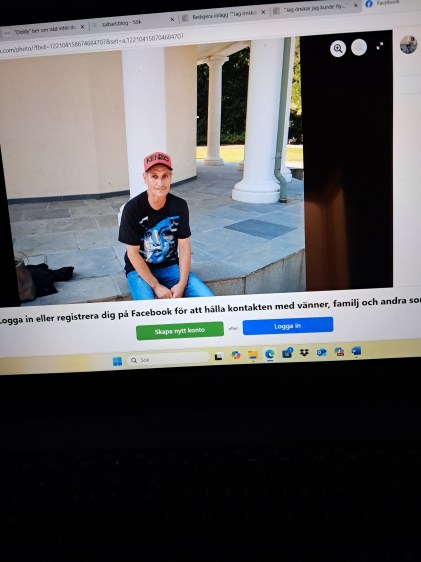
By Abdelhamid ben Ali-Fetsi, Thomas, and an AI research assistant.
Meet writer at:
Abdelhamid Fetsi (@abdelhamid.fetsi) • Facebook, Connect with friends | Facebook
When Does Collaboration Become Collaboration?
History often confronts us with uncomfortable questions.
Not only what people did, but how they later explained what they did.
Recently we read a detailed study by Valentin Jeutner on Kühn, pastor of the German Evangelical congregation in Malmö during the Nazi era. The article is deeply researched, drawing on German, Swedish, and British archives. Yet the most fascinating aspect is not whether Kühn was a Nazi, a spy, a collaborator, or a victim.
The most fascinating aspect is how difficult it can be to separate those categories.
Malmö During the War
During the Second World War, Malmö occupied a unique position.
The city was a refuge for Danish Jews, a center for wartime intelligence activity, a crossroads between occupied Europe and neutral Sweden, and home to a German congregation led by Herbert Kühn.
At the same time, other religious leaders in Malmö were taking entirely different paths.
Pastors such as John Hedlund and others within the Free Church movement accepted imprisonment rather than carry weapons. Their struggle was one of conscience versus state authority.
Kühn’s struggle was different.
According to wartime documents, he maintained close relations with German authorities, German diplomatic representatives, and organizations connected to Nazi Germany. German officials described him as important to the German cause in Sweden. He received support, recognition, and trust from German state institutions.
These facts are documented.
The Question of the Gestapo
Yet the article also challenges some longstanding assumptions.
For decades, rumors circulated that Kühn was a Gestapo agent who regularly traveled to Berlin and reported directly to the Nazi security apparatus.
The archival evidence examined by Jeutner does not confirm this.
The author explicitly cautions against repeating claims that cannot be substantiated.
This creates an interesting dilemma.
Many readers may instinctively think:
”If he collaborated so extensively with Nazi institutions, why does it matter whether he was formally a Gestapo agent?”
Others will reply:
”Because historians must distinguish between what can be proven and what cannot.”
Both positions contain an important truth.
The Chameleon Problem
Perhaps the most important contribution of Jeutner’s article lies elsewhere.
He discusses a phenomenon that appeared repeatedly after the collapse of the Third Reich.
Many people who had functioned comfortably within the Nazi system later reconstructed their biographies.
Past actions were minimized.
Former loyalties became misunderstandings.
Enthusiasm became reluctance.
Cooperation became resistance.
The story changed.
Layer by layer.
The article argues that Kühn also engaged in this process. Wartime documents and postwar self-descriptions often tell remarkably different stories.
Before 1945, Kühn presented himself as a loyal representative of German interests.
After 1945, he increasingly emphasized distance, victimhood, and resistance.
The discrepancy is impossible to ignore.
A Collaborator Is a Collaborator?
During our discussions, one observation kept returning:
”A collaborator is a collaborator.”
At first glance, that sounds simplistic.
Yet perhaps it contains a challenge for historians.
Modern scholarship rightly avoids easy labels. History is rarely black and white.
But there is also a danger in excessive complexity.
If someone promoted a regime’s interests, worked with its institutions, accepted its support, advanced its objectives, and only distanced themselves when that regime collapsed, then what word should we use?
We may debate the degree of responsibility.
We may debate intentions.
We may debate motives.
But we cannot ignore actions.
A collaborator need not be a spy.
A collaborator need not be a war criminal.
A collaborator need not even be an ideologue.
A collaborator is simply someone whose actions helped sustain a system.
The difficult question is where that threshold lies.
Beyond Herbert Kühn
Ultimately, this story is not only about one pastor in Malmö.
It is about a much larger historical phenomenon.
What happens after a political system collapses?
How do individuals explain their role?
How do communities remember?
How do institutions respond?
And perhaps most importantly:
How should later generations judge people who neither fully resisted nor fully controlled the systems they served?
These questions remain alive today, far beyond the history of Nazi Germany.
Conclusion
Jeutner’s research does not prove that Herbert Kühn was a Gestapo agent.
Nor does it portray him as an innocent victim.
Instead, it presents a more uncomfortable picture: a man who operated within and helped sustain Nazi-aligned structures, later struggling to explain that role in a radically changed world.
Perhaps this is why the case remains so compelling.
Not because it provides easy answers.
But because it forces us to ask difficult questions about memory, responsibility, and the stories people tell after history has already rendered its verdict.
”History is not only about what happened. It is also about how people later explain what happened.”
Transparens: Denna artikel är skriven med hjälp av Microsoft Copilot (AI) utifrån forskning av Valentin Jeutner och de källor som anges i hans artikel. AI kan göra misstag. Läsare uppmuntras därför att kontrollera primärkällor och forskning själva innan de drar egna slutsatser.
Det där är ungefär samma modell som allt fler forskare, journalister och författare börjar använda: man döljer inte AI-användningen, men man gör också klart att AI inte är källan. Källan är Jeutners artikel, arkivmaterialet och den forskning som diskuteras. AI är bara ett verktyg som hjälpt till att bearbeta materialet. Det är en viktig skillnad.
Ge feedback om BizChat
Källa, tips och länkar:


