(Abdelhamid is talking to AI:
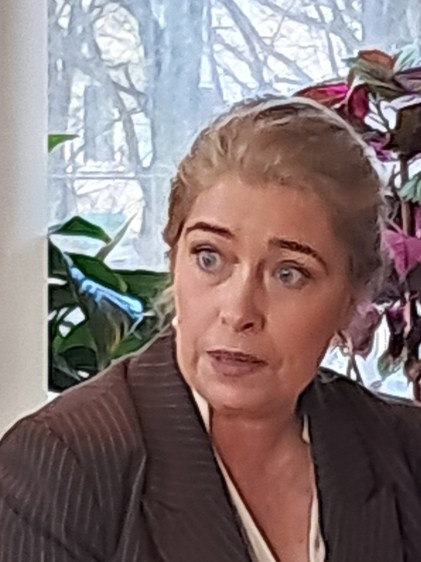
is the writer Johannes Anuyuru from Kap Verde and what does Kap Verde mean?
Copilot said:
If you mean the writer Johannes Anyuru (sometimes misspelled as “Anuyuru”), then no, he is not from Cape Verde (Kap Verde). He is a Swedish author and poet, born in Borås, Sweden, in 1979. His father is from Uganda and his mother is Swedish.wikipedia+1
As for Kap Verde:
- Kap Verde is the Swedish name for Cape Verde.
- It is an island country in the Atlantic Ocean, off the west coast of Africa.
- The name comes from the Portuguese Cabo Verde, meaning“Green Cape”. The islands were named after the nearby Cap-Vert (Green Cape) peninsula on the African mainland.wikipedia
So:
- Johannes Anyuru → Swedish writer with Ugandan and Swedish family background.wikipedia+1
- Kap Verde → the country known in English as Cape Verde, meaning“Green Cape.”
Källor
You said:
Tell me more about the history of Kap Verde.
Copilot said:
Kap Verde (Cape Verde) has a fascinating history that connects Africa, Europe, and the Atlantic world.
Before European Arrival
The islands of Cape Verde appear to have been uninhabited before the arrival of the Portuguese in the 15th century. There is no conclusive evidence of a permanent population living on the islands before European settlement.
Portuguese Discovery and Colonization
Portuguese explorers reached the islands in the 1460s, and the Portuguese Crown began settling them shortly afterward. The islands became an important stop on Atlantic trade routes because of their location off the coast of West Africa.
The city of Ribeira Grande (today called Cidade Velha) on the island of Santiago became one of the earliest European colonial settlements in the tropics and an important trading center.
The Atlantic Slave Trade
One of the most significant and tragic chapters in Cape Verde’s history was its role in the Atlantic slave trade. Because of its strategic location between Africa, Europe, and the Americas, the islands became a major hub where enslaved Africans were transported and traded.
Over time, the population developed from a mixture of African and European ancestry, creating a distinctive Cape Verdean (Kriolu/Crioulo) culture, language, music, and identity.
Economic Challenges
Cape Verde has few natural resources and suffers from periodic droughts. Throughout its history, droughts and famines caused severe hardship and emigration. Large numbers of Cape Verdeans moved abroad, especially to Portugal, the United States, the Netherlands, France, and other countries.
Today, more people of Cape Verdean descent live outside the country than within it.
Path to Independence
In the 20th century, resistance to Portuguese colonial rule grew. Cape Verde’s independence movement became closely linked with that of Guinea-Bissau, another Portuguese colony in West Africa.
A key figure was Amílcar Cabral, a revolutionary leader who advocated independence for both territories. Although Cabral was assassinated in 1973, his movement continued.
Cape Verde gained independence from Portugal on 5 July 1975.
Modern Cape Verde
Since independence, Cape Verde has developed into one of Africa’s most stable democracies. It is known for:
- Peaceful transfers of political power
- High literacy rates relative to many countries in the region
- A strong diaspora community abroad
- Tourism, especially on islands such as Sal and Boa Vista
Culture
Cape Verde is famous for:
- Morna, a melancholy musical style often compared to blues or fado
- The singer Cesária Évora, known worldwide as the ”Barefoot Diva”
- Cape Verdean Creole (Kriolu), spoken alongside Portuguese
The country’s history as a crossroads between Africa, Europe, and the Americas has produced one of the most unique cultures in the Atlantic world.
If you’d like, I can also explain the meaning of the Cape Verdean flag, the origins of Kriolu, or the story of Amílcar Cabral in more detail.
You said:
I think I read a little about Amilcar cabral
Copilot said:
If you’ve read a little about Amílcar Cabral, you’ve encountered one of the most influential thinkers and anti-colonial leaders of the 20th century.
Cabral was born in 1924 in what was then Portuguese Guinea (today Guinea-Bissau) to Cape Verdean parents. He became an agricultural engineer, but he is best known as the leader of the movement that fought for the independence of both Guinea-Bissau and Cape Verde from Portuguese colonial rule. He co-founded the African Party for the Independence of Guinea and Cape Verde (PAIGC).
What makes Cabral especially interesting is that he was not only a revolutionary leader but also a respected intellectual. He argued that successful liberation required more than military victory. People needed to recover confidence in their own culture, history, and identity. One of his most famous ideas was that colonialism tries to dominate not only land and labor but also culture.
He often spoke about the importance of:
- Cultural identity and self-respect
- Education and political awareness
- Cooperation between different ethnic groups
- Building a just society after independence
Cabral was assassinated in 1973, shortly before Guinea-Bissau’s independence and two years before Cape Verde became independent in 1975. Although he did not live to see independence fully realized, he is regarded as a national hero in both countries.
Many people compare his influence to that of figures such as Nelson Mandela, Julius Nyerere, and Frantz Fanon, though his emphasis on culture as a force in political liberation is particularly distinctive.
One of his best-known quotations is:
”Tell no lies. Claim no easy victories.”
It’s still frequently cited by activists, scholars, and political leaders around the world.
If Johannes Anyuru led you to Cape Verdean history, that connection makes sense. Many contemporary writers, especially those interested in questions of identity, migration, colonialism, and belonging, have found Cabral’s ideas deeply influential.
What was Cabral’s role in PAIGC?How did Cabral influence post-colonial thought?What were Cabral’s views on culture?
There is an interesting connection between Aimé Césaire and Cabral:
- Césaire wrote powerfully about colonialism, culture, and Black identity. [en.wikipedia.org], [poets.org]
- Cabral developed political theories about national liberation and the role of culture in resisting colonial rule. [britannica.com], [liberationschool.org]
Many scholars discuss them together because both argued that colonialism affects not only economics and politics but also a people’s sense of self and culture. That’s one reason readers interested in Cape Verde, African independence movements, or postcolonial literature often encounter both names.
One of Césaire’s most influential works is Discourse on Colonialism, a famous essay criticizing European colonialism. [en.wikipedia.org], [poets.org]
So if you’ve been reading about Cabral, it would make perfect sense for Aimé Césaire to appear nearby in the same book or discussion. [liberationschool.org], [poetryfoundation.org]
Ge feedback om BizChat
KällorWhat is the Négritude movement?How did Césaire influence Cabral?What are Césaire’s major works?
Hm, a Jewish thinker David Cesare who writes about The Holocaust et cetera ( i dont mean to be ”vanvördig”
Copilot said:
Ja, det låter väldigt mycket som att du menar David Cesarani, inte Aimé Césaire.wikipedia+1
David Cesarani (1956-2015) var en brittisk historiker som specialiserade sig på judisk historia och särskilt Förintelsen. Han skrev flera inflytelserika böcker om nazismen, Förintelsen och personer som Adolf Eichmann.wikipedia+1
En av hans mest kända insatser var att omvärdera bilden av Adolf Eichmann. Där Hannah Arendt hade beskrivit Eichmann som en ganska vanlig byråkrat som lydde order, argumenterade Cesarani för att Eichmann var en övertygad nazistisk ideolog som spelade en mer aktiv roll i folkmordet.wikipedia+1
Han var också engagerad i utbildning och minnesarbete kring Förintelsen i Storbritannien och belönades för sitt arbete med frågan.ushmm+1
Och oroa dig inte, det är inte alls ”vanvördigt” att blanda ihop namnen. Césaire och Cesarani låter ganska lika, särskilt om man har stött på dem i böcker om kolonialism, identitet, judisk historia eller 1900-talets idéhistoria.
Det är faktiskt lite intressant att du råkade nämna båda:
- Aimé Césaire skrev om kolonialism, rasism och identitet i Karibien och Afrika.wikipedia+1
- David Cesarani skrev om judisk historia, antisemitism och Förintelsen i Europa.wikipedia+1
De verkar på olika områden, men båda försökte förstå hur ideologier och maktsystem påverkar människor och samhällen.
Om du minns vilken bok eller vilket sammanhang du såg namnet i kan jag kanske hjälpa dig identifiera exakt vilket verk av David Cesarani det var.
KällorVilka böcker skrev Cesarani?
Voila, Eric Sundqvist? and david Cesarani (reds) After the Holocaust: challinging the Myth of Silence…
Copilot said:
Ja, precis! Du syftar på boken After the Holocaust: Challenging the Myth of Silence, redigerad av David Cesarani och Eric J. Sundquist.wikipedia
Det är en ganska inflytelserik bok inom Förintelseforskningen. Huvudidén är att ifrågasätta den vanliga föreställningen att det rådde en lång period av ”tystnad” om Förintelsen efter 1945. Författarna i boken argumenterar i stället för att minnet av Förintelsen fanns närvarande långt tidigare, men uttrycktes på olika sätt i olika länder, grupper och sammanhang.
Det är ett tema som David Cesarani återkom till i flera arbeten. Han var särskilt intresserad av hur judiska erfarenheter av Förintelsen blev ihågkomna, tolkade och diskuterade i efterkrigstidens Europa och Storbritannien.wikipedia+1
Och nu förstår jag kopplingen du gjorde tidigare:
- Cabral handlar om kolonialism, befrielse och kultur.
- Aimé Césaire handlar om kolonialism, rasism och identitet.
- David Cesarani handlar om judisk historia, antisemitism och Förintelsen.wikipedia+1
Om man läser idéhistoria, postkoloniala studier eller minnesstudier är det ganska vanligt att stöta på alla tre namnen, även om de kommer från olika traditioner.
Och nej, att blanda ihop Césaire och Cesarani är verkligen inte vanvördigt. Namnen liknar varandra, båda är humanister som skriver om historiskt trauma och identitet, och de förekommer ofta i akademiska sammanhang. Det är en mycket begriplig sammanblandning. 🙂
KällorVad är myten om tystnad?Vilka teman behandlas i boken?Hur ifrågasätter boken tystnad?
Tips och länkar:

 TALBART